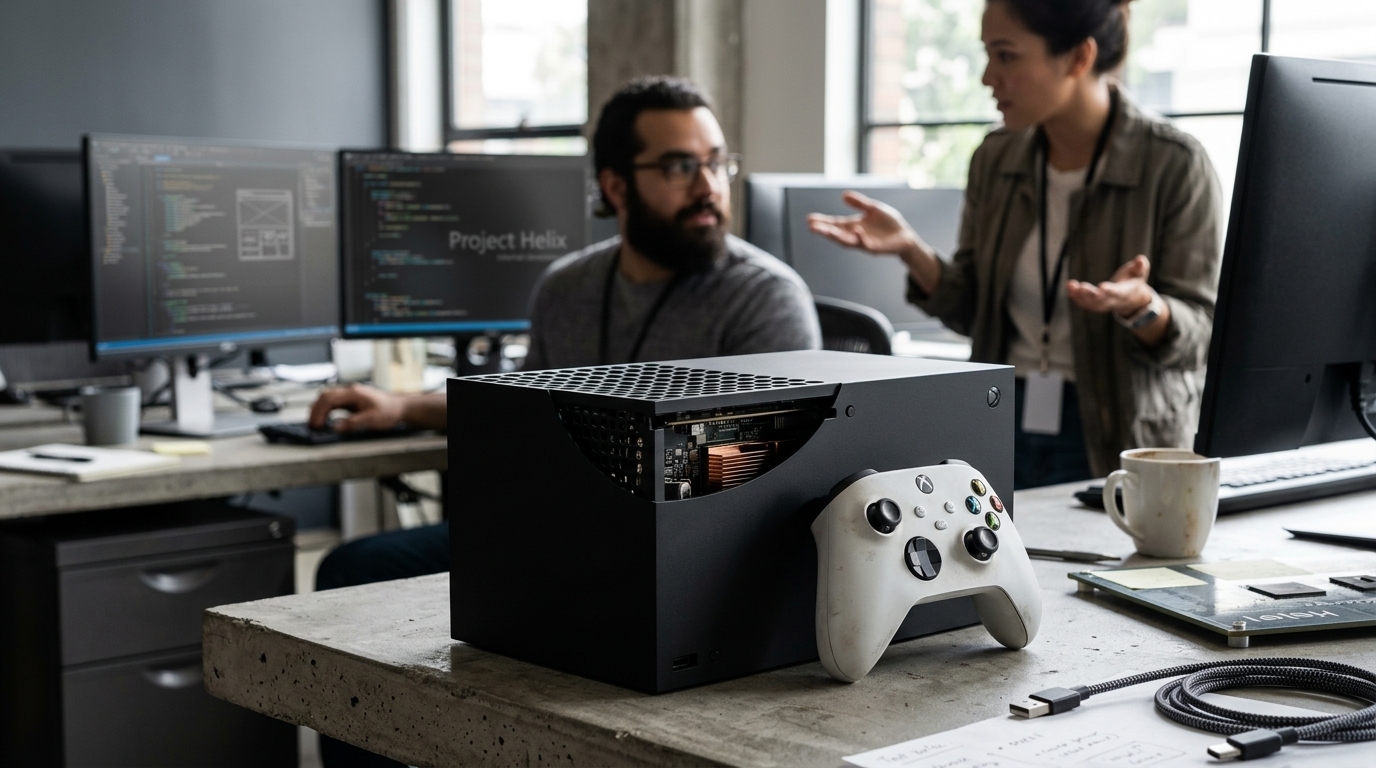
The video game industry stands at a critical juncture, with Microsoft leading a pivot that many analysts describe as the most significant since the transition from cartridges to optical discs. The recent revelations from Xbox CEO Asha Sharma and Strategy Chief Matthew Ball regarding the re-evaluation of "Project Helix" are not merely a change of plans; they are an admission that the traditional model of selling hardware at a loss to recoup profits through software is effectively dead.
The Shadow of RAMageddon and the Supply Chain Crisis
The crisis dubbed "RAMageddon"—an unprecedented shortage and price spike in high-speed memory that began in late 2025—has made manufacturing next-generation consoles economically unsustainable. For decades, Microsoft and Sony relied on stable component pricing to keep consoles affordable for the mass market. However, with the production cost of Project Helix now estimated to exceed $700 per unit, Sharma admitted that the company is exploring "radically different" models.
This admission signals the end of the console as the "sacred box" of the living room. Microsoft appears to realize that clinging to physical devices in an era of extreme resource volatility is a battle that cannot be won. Instead, the strategy is shifting toward total flexibility, where hardware becomes a secondary vehicle for its services ecosystem.
Hardware-as-a-Service: The Console as a Subscription
One of the most discussed proposals being vetted by Matthew Ball’s team is the "Hardware-as-a-Service" (HaaS) model. Instead of a one-time purchase of $600 or $800, consumers might have the option to "lease" Project Helix through a monthly subscription that includes Game Pass Ultimate, cloud gaming perks, and regular hardware upgrades every two years.
- Continuous Upgrades: This model would allow Microsoft to recycle older units and offer modular upgrades to users.
- Low Barrier to Entry: Eliminating high upfront costs could expand the user base in markets hit by inflation.
- Ecosystem Loyalty: Committing to a multi-year hardware contract ensures long-term subscription revenue.
However, this approach raises serious questions about ownership. In a world where you own nothing and everything is rented, the consumer becomes a hostage to the pricing policies of a single corporation. Microsoft argues this is the future of sustainable technology, but consumer rights advocates warn of a digital feudalism.
Cloud as the Great Equalizer
Project Helix is not just a console; it is reportedly a hybrid device. Sharma hinted that the "radically different" model might include a low-cost device that relies almost exclusively on Azure’s computational power. With the proliferation of 6G and high-speed fiber optics, the need for local GPU and RAM is diminishing.
"We are not just building a new Xbox. We are building the infrastructure for the next 20 years of gaming, where the device in your pocket or under your TV is just a window into a much larger world," Matthew Ball stated during an internal presentation.
This shift toward the cloud allows Microsoft to bypass the RAMageddon crisis by moving the processing burden to its own data centers, where resource management is more efficient. It is a move that leaves Sony in a difficult position, as the Japanese giant remains more closely tied to the traditional hardware model.
Conclusion: Survival of the Most Adaptive
Microsoft's decision to rethink Xbox hardware is not a sign of weakness, but a pragmatic reaction to the geopolitical and economic realities of 2026. The era where we bought a console and kept it for seven years without further commitments is coming to a close. Whether gamers will accept this new paradigm remains to be seen, but one thing is certain: Project Helix will be either the last "classic" console or the first of an entirely new category of services.