As we navigate the first half of 2026, the dominant question in global economic discourse is no longer whether Artificial Intelligence (AI) will change work, but whether it can replicate the historical pattern of "creative destruction." Historically, every major technological wave—from the steam-powered looms of the 19th century to the advent of the internet in the late 20th—destroyed old roles only to give birth to many more new ones. However, the AI of 2026 presents unique characteristics that raise concerns for young workers entering the market today.
Historical Context vs. The Generative Present
In the past, technology primarily replaced manual labor or routine tasks. The Industrial Revolution freed workers' hands to operate machines, and information technology freed office workers from manual data calculation. The AI of 2026, however, targets the core of cognitive labor. "Junior" positions, which traditionally served as the stepping stone for training new graduates, are the hardest hit. From writing basic code to legal research and report drafting, algorithms now perform 80% of the tasks once assigned to interns and entry-level associates.
This shift creates an "experience gap." If young people cannot find entry-level positions because they have been automated, how will they gain the experience required to become tomorrow's seasoned leaders and experts? The challenge for 2026 is redefining the concept of "apprenticeship" in a world where a digital assistant is often more capable than a human novice.
New Jobs: From Execution to Orchestration
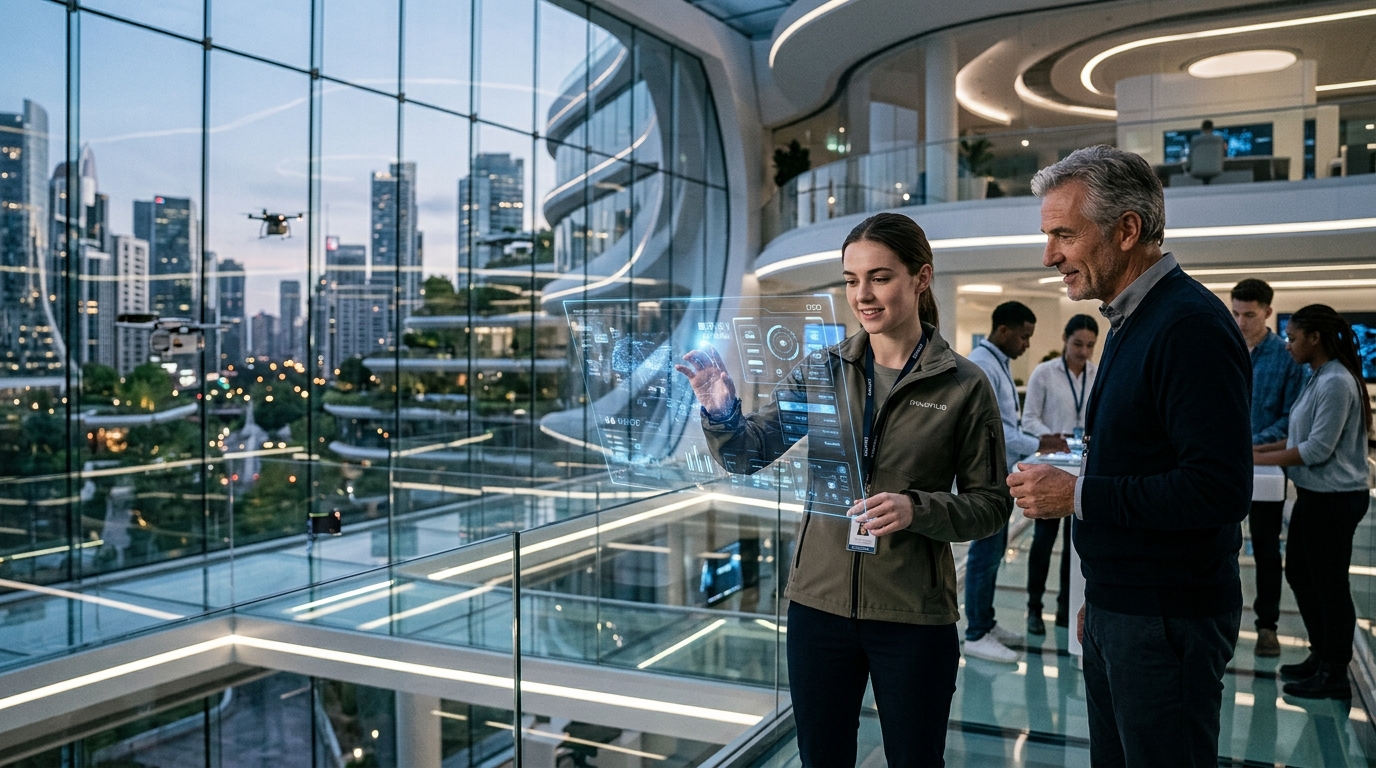
Despite the anxieties, AI is already creating new professions that were unthinkable five years ago. We are seeing the rise of "Human-AI Orchestrators," "Algorithmic Ethics Auditors," and "Augmented Reality Experience Designers." For young workers, the opportunity no longer lies in possessing a specific technical skill that can be automated, but in the ability to synthesize results from various AI systems.
- Complexity Management: The ability to oversee multiple AI models to solve a complex business problem.
- Critical Thinking and Verification: As AI generates vast amounts of content, the value of a human who can distinguish truth from "hallucinated" information increases exponentially.
- Emotional Intelligence: In an automated world, human touch, negotiation, and empathy become rare and expensive commodities.
In countries like Vietnam or Greece, this transition is even more critical. Economies that relied on low-cost service provision or outsourcing must now invest in high-level specialization. Young people in these nations are no longer just competing with their peers abroad, but with the cloud computing clusters of Silicon Valley.
Educational Reform as the Only Way Forward
For the optimistic scenario of job creation to be realized, educational systems must change radically. Traditional rote learning is now obsolete. In 2026, education must focus on "meta-learning"—learning how to learn. Young people must be trained as "solution architects" rather than "task executors."
"AI will not replace humans, but humans using AI will replace those who do not."
This phrase, frequently heard back in 2023, is now the harsh reality of the labor market. Young workers who successfully integrate AI into their workflow exhibit productivity levels reaching 300% compared to older colleagues, creating a new hierarchy in the workplace.
Conclusions for the Future
Artificial Intelligence will create jobs, but their nature will be radically different. It will not be the gradual evolution of previous decades, but a quantum leap. For young workers, the stake is adaptability. If the state and corporations fail to provide the bridges for this transition, we risk creating a "useless class," as Yuval Noah Harari has warned. However, if utilized correctly, AI can be the tool that allows the new generation to solve problems that previous ones left behind, from climate change to the energy crisis.