The completion of the interconnection of the southern Cyclades with the mainland electricity system by IPTO (Independent Power Transmission Operator) marks the end of an era of energy isolation for some of Greece's most iconic islands. This project, part of the fourth and final phase of the Cyclades interconnection, integrates Santorini, Folegandros, Milos, and Serifos into the country's energy "backbone," offering stability, economy, and environmental upgrading.
Technical Triumph and Strategic Importance
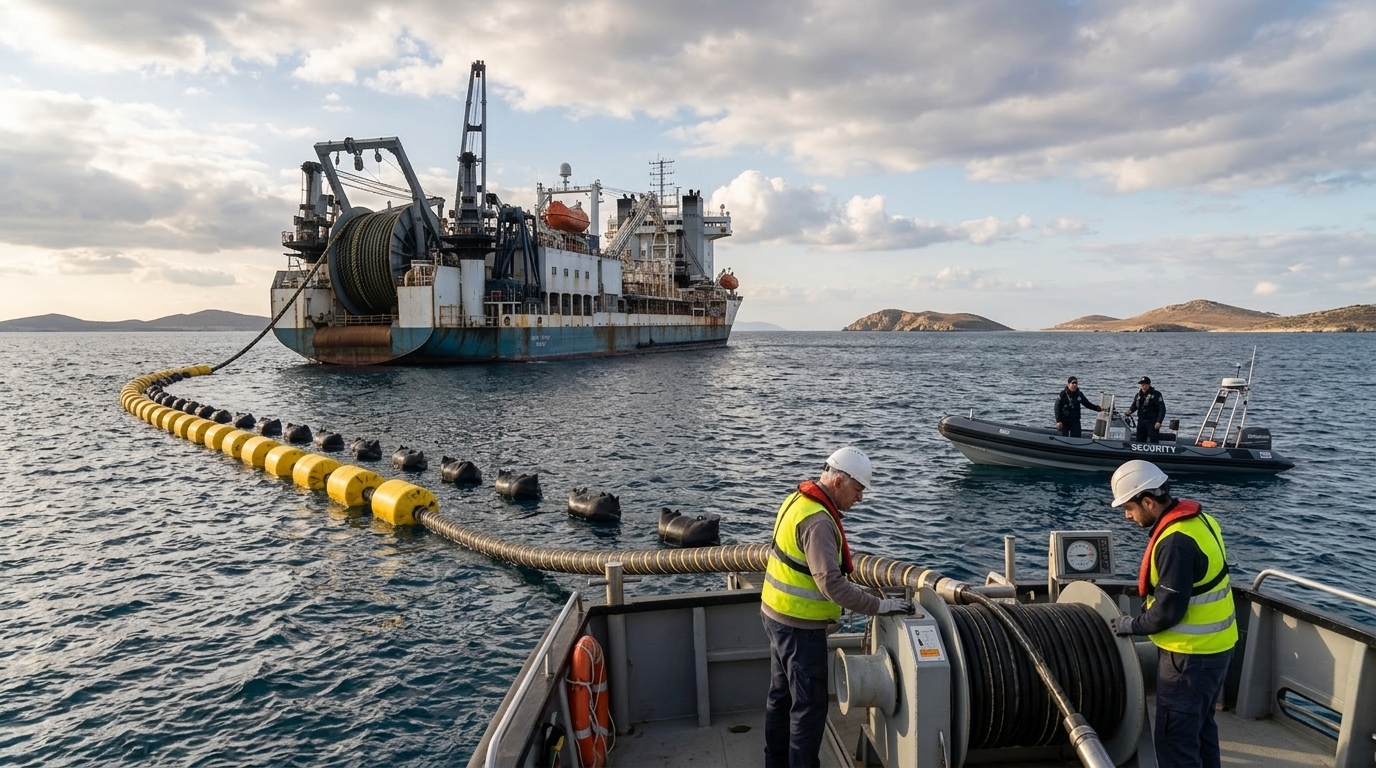
The construction completion of Phase 4 was no simple task. It involved laying hundreds of kilometers of high-voltage submarine cables at great depths, as well as constructing state-of-the-art Gas Insulated Substation (GIS) facilities designed to harmonize with the unique Cycladic architecture. Santorini, one of the world's top tourist destinations, now gains a reliable power source capable of meeting its massive demands during the summer months without the fear of blackouts.
The strategic importance of the project extends beyond mere power supply. It is the realization of a decades-old vision that transforms the Aegean from a region of scattered, polluting oil generators into a unified, green energy network. With this interconnection, Greece takes a decisive step toward achieving the goals of the National Energy and Climate Plan (NECP), drastically reducing the carbon footprint in the archipelago.
Economic Benefits and the Abolition of PSOs
One of the most significant benefits for all Greek consumers is the gradual reduction of Public Service Obligation (PSO) charges. Until now, the high cost of electricity production from local oil-fired plants on the islands burdened the bills of all citizens. The interconnection allows for the decommissioning of these costly and polluting stations, leading to savings of hundreds of millions of euros annually.
- Reduction of energy production costs by 50-70% for the islands.
- Savings of over 100 million euros annually from PSO fees.
- Enabling further penetration of Renewable Energy Sources (RES) into the local mix.
IPTO Chairman and CEO Manos Manousakis emphasized that consistency in implementing the Operator's investment program is a guarantee for the country's energy transition. The Cyclades project, with a total budget of approximately 524 million euros for the fourth phase, serves as a model for managing complex infrastructure.
Environmental Upgrading and Tourism
The environmental dimension is equally critical. Local power plants in Santorini and Milos, operating on fuel oil and diesel, were sources of pollution and noise. Their retirement upgrades the quality of life for residents and the experience for visitors. Furthermore, the interconnection allows the islands to harness their own potential in solar and wind energy, exporting surplus clean energy to the mainland.
"The electrical interconnection of the Cyclades is not just a technical project; it is an act of justice for our islanders and a gift to the Aegean environment," officials from the Ministry of Environment and Energy stated.
In the future, IPTO plans to further strengthen the grid by interconnecting the Dodecanese and the North Aegean, completing the puzzle of energy unification in Greece. The success in the southern Cyclades is the "passport" for these even more ambitious projects, which will fortify Greece against the challenges of the climate crisis and energy market volatility.