In the heart of Utah, a state already grappling with the ravages of climate change and the receding waters of the Great Salt Lake, a new industrial titan is preparing to rise. This isn't a heavy manufacturing plant with smokestacks, but a state-of-the-art data center dedicated to Artificial Intelligence. However, the 'clean' image of high technology is clashing with a harsh thermodynamic reality: the processing power required for AI models generates so much heat that scientists now fear the transformation of entire residential areas into thermal deserts.
The Thermodynamics of Intelligence
The operation of GPUs (Graphics Processing Units) that power large language models is not just energy-intensive; it is a process that converts electricity into heat with terrifying efficiency. When thousands of such chips operate simultaneously in a closed environment, the generated energy must be dissipated into the surroundings. In the case of the planned center in Utah, the scale is such that researchers are talking about an 'urban heat island effect' on steroids.
According to recent studies, the heat released from the cooling systems of these facilities can raise local temperatures by several degrees Celsius. In a region already characterized by an arid climate, this artificial heating can lead to faster evaporation of scarce water resources and the death of local flora, creating conditions reminiscent of the Sahara. Scientists warn that this isn't just uncomfortable heat, but a structural change to the ecosystem.
The Water and Air Dilemma
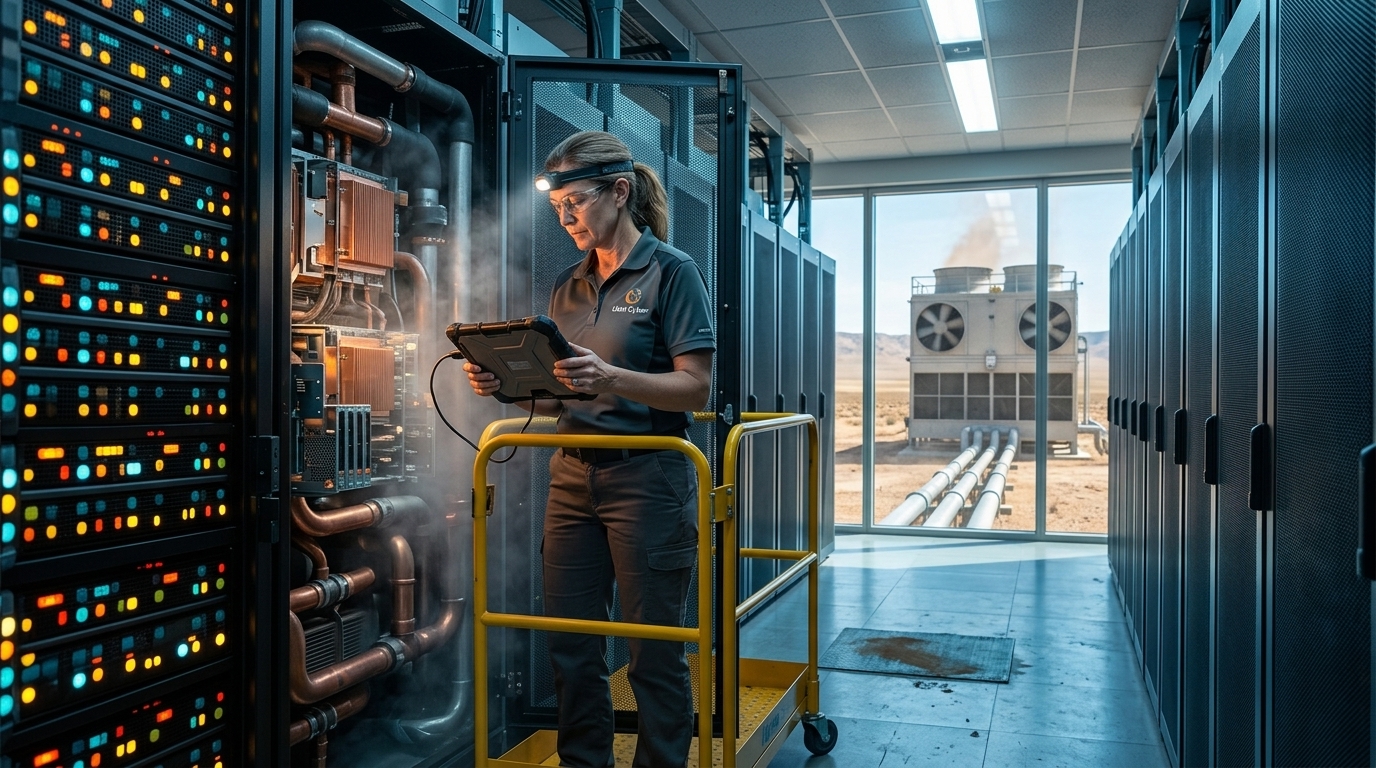
There are two primary ways to cool a data center: water cooling and air cooling. The former requires millions of gallons of water daily, which evaporates to absorb heat—a luxury Utah does not have. The second method, air cooling, avoids water waste but blasts enormous amounts of hot air into the atmosphere.
"It's like placing a giant hair dryer operating 24/7 over a city," says one climate researcher monitoring the project.
The local community is divided. On one hand, the promises of jobs and tax revenue are enticing. On the other, the prospect of permanent drought and unbearable heat is sparking a backlash. Residents of surrounding areas worry that the cost of 'digital progress' will be the very viability of their land. The question being raised is whether Silicon Valley has the right to export its environmental costs to ecologically vulnerable regions.
Toward a Sustainable AI Infrastructure?
The Utah case is not isolated. Around the world, from Ireland to Uruguay, the construction of data centers is causing social tension due to resource consumption. The solution may lie in new cooling technologies, such as liquid immersion cooling, or in moving these facilities to northern climates where natural temperatures assist in cooling. However, the need for rapid access to power grids and fiber optics often leads companies to make decisions that clash with ecological logic.
As the race for AI dominance accelerates, the need for a regulatory framework becomes imperative. It is not enough for models to be 'smart'; their infrastructure must not be destructive. Utah serves as the 'canary in the coal mine' for the future of technological development. If a way to limit thermal pollution is not found, the digital revolution risks leaving behind a scorched earth, turning our cities into monuments of reckless growth.
- Thermal pollution from AI data centers can alter microclimates within a radius of several miles.
- Water usage for cooling in arid regions exacerbates existing water scarcity.
- GPUs produce heat equivalent to industrial furnaces when operated at scale.
- The need for 'Green AI' concerns not just code, but the physical existence of servers.