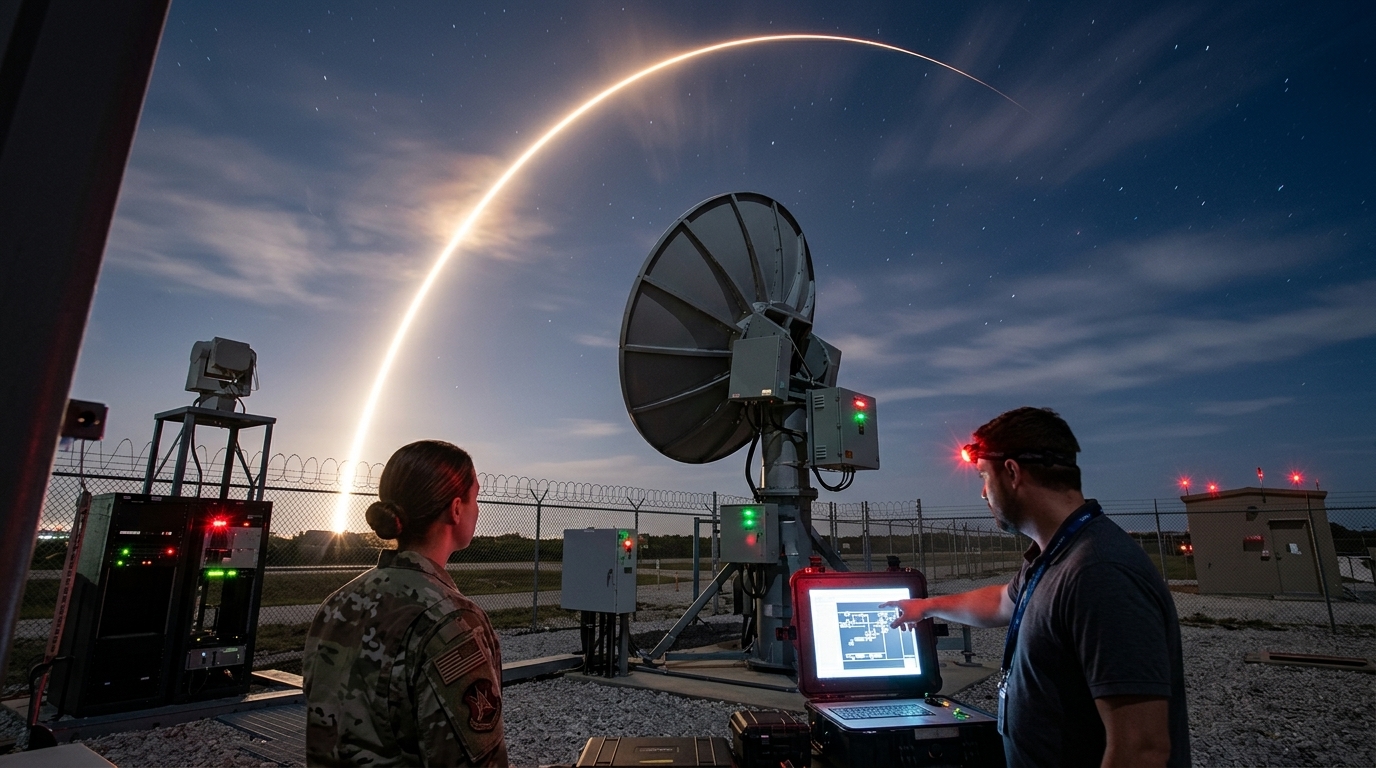
In a move that redefines the modern geopolitical chessboard, the US Space Force (USSF) has officially confirmed that Elon Musk’s SpaceX will serve as the primary architect of a new, highly advanced "sensor-to-shooter" targeting network. This development signals the end of an era where satellites were mere observers and the beginning of a period where space becomes the central nervous system for direct, real-time military operations.
The Architecture of Starshield and the Speed of War
The program, which falls under the broader umbrella of Starshield—the military version of Starlink—aims to drastically reduce the time required to detect, identify, and neutralize a target. In traditional warfare, this process could take anywhere from several minutes to hours, as data had to pass through multiple layers of analysis and approval. With SpaceX's new network, the goal is for the process to be completed in seconds.
As the Space Force program manager stated, "We aren’t trading speed for scale; we are demanding both." This phrase encapsulates the new American strategy: utilizing thousands of small satellites in Low Earth Orbit (LEO) that communicate with each other via optical inter-satellite links (lasers), creating a seamless data mesh over every corner of the planet. SpaceX, having already proven its ability to launch hundreds of satellites annually, is the only company capable of delivering this scale within the required timeframe.
The Convergence of Artificial Intelligence and Space
The key to the operation of this network is not just the Falcon 9 rockets or the satellites themselves, but Artificial Intelligence. SpaceX’s sensors will be equipped with machine learning algorithms capable of autonomously distinguishing an enemy tank from a civilian vehicle, or a missile launch from a natural thermal signature. This data will be transmitted directly to weapon systems on the ground, at sea, or in the air, bypassing slow, traditional chains of command.
This integration is sparking intense debate within military ethics circles. The automation of the "kill chain" raises questions about whether a human remains meaningfully "in the loop" or is simply validating decisions already made by algorithms in orbit. However, for the Pentagon, the answer is clear: in a war against peer competitors like China, a delay of a few seconds can mean the difference between victory and defeat.
Geopolitical Implications and the Private Sector's Role
Awarding this project to SpaceX highlights the United States' increasing reliance on a private entity for its national security. While traditional giants like Lockheed Martin and Boeing struggle to keep pace with Musk’s rate of innovation, SpaceX is becoming the de facto monopoly provider of space infrastructure. This creates a paradoxical situation where a private citizen holds the "keys" to US global military dominance.
Competitors like Russia and China have already expressed concern, characterizing Starshield as an "unacceptable militarization of space." China, in particular, is developing its own satellite constellation (GaoFen) and testing anti-satellite weapons, preparing for a potential conflict that would begin not on the ground, but 500 kilometers above it. The Space Force's decision to confirm the SpaceX partnership is a clear warning that Washington does not intend to cede the advantage in LEO.
Conclusion: The New Normal of Space Warfare
The "sensor-to-shooter" network is no longer science fiction. It is an operational reality that will be fully deployed in the coming years. SpaceX’s ability to combine mass satellite production with cutting-edge computing makes it the most valuable ally—and perhaps the most powerful player—in the 21st-century defense ecosystem. As the lines between commercial technology and military prowess continue to blur, humanity enters an era where peace may depend on the speed of lasers in the vacuum of space.