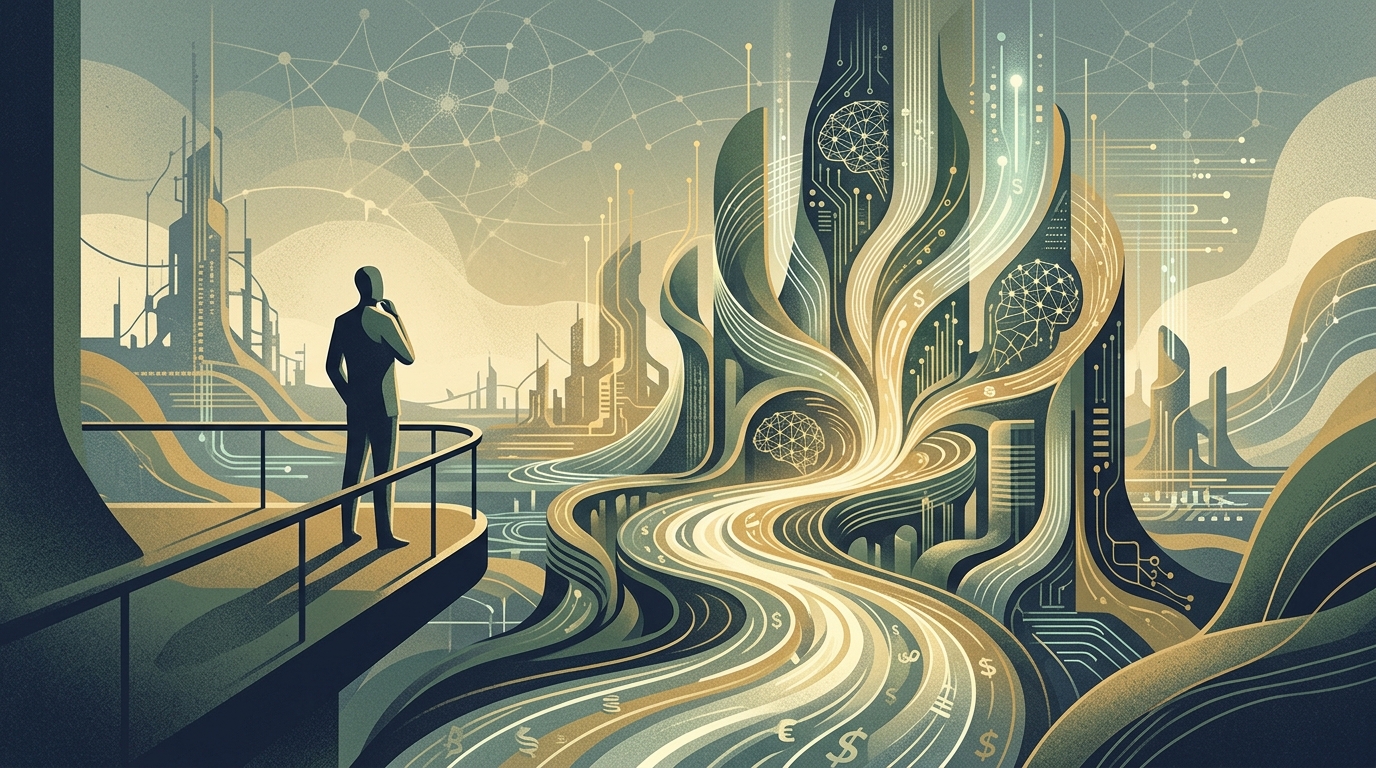
In an era where generative artificial intelligence algorithms evolve in cycles measured in weeks, higher education institutions worldwide are facing an existential challenge. Recent reports, including analysis from Vietnam.vn, highlight a sobering reality echoing from Hanoi to London and Silicon Valley: universities, the traditional gatekeepers of knowledge, are struggling to integrate AI into their curricula, risking obsolescence in a hyper-accelerated world.
The Velocity Gap: Academic Inertia vs. Technological Acceleration
The core of the issue lies in the structural nature of higher education. Creating or revising a degree program is a process that often takes two to three years, involving approvals from faculty senates, accreditation bodies, and ministries of education. In contrast, Artificial Intelligence shifts the landscape every few months. By the time a student graduates, the tools they learned in their freshman year may already be considered legacy technology. This asymmetry produces graduates who, while possessing theoretical grounding, lack the practical tools demanded by the modern labor market.
The difficulty is not merely technical but psychological. A significant portion of the teaching staff, particularly those from older generations, feels threatened or ill-equipped to manage tools like GPT-5 or specialized coding models. The lack of robust professional development programs for professors themselves is a 'black hole' in the system. Without 'trained trainers,' AI integration remains superficial, often reduced to a futile attempt to ban its use rather than harnessing its potential.
From Rote Learning to Critical Synthesis
The traditional method of assessment—the take-home essay—has effectively collapsed. With AI capable of synthesizing high-level essays in seconds, universities are forced to reinvent how they grade. However, the solution is not a retreat to pen-and-paper exams alone, but a shift toward a pedagogy that rewards critical thinking, prompt engineering, and the ability to verify machine-generated output.
- Redefining Learning: The focus is shifting from 'what' to 'how' and 'why.'
- Interdisciplinarity: AI is no longer just a computer science topic; it affects law, medicine, and the humanities.
- Industry Partnerships: Universities must open their doors to tech giants to stay relevant and gain access to cutting-edge infrastructure.
"The university of the future will not be a place for information transfer, but a laboratory for intelligence synthesis—human and artificial," say industry analysts.
The Geopolitics of Education and the Digital Divide
The case of Vietnam is indicative of emerging economies attempting to use AI as a 'leapfrogging' tool to catch up with the West. However, the lack of infrastructure and the high cost of enterprise-grade AI licenses are creating a new kind of digital divide. If universities in developing nations fail to integrate AI effectively, the gap between knowledge-based economies and the rest of the world will widen dangerously.
In Europe, bureaucracy and stringent data protection regulations (GDPR) often act as a brake on the experimental use of AI in classrooms. While the intentions are noble, the result is often a hesitancy that leaves European students behind their American or Chinese counterparts, who are exposed to these tools more aggressively. The challenge is one of balance: teaching AI with ethical rigor without stifling innovation within overly restrictive regulatory frameworks.
Conclusion: The Need for a Radical Reboot
Integrating Artificial Intelligence into universities is not a simple software upgrade; it is a cultural transformation. It requires agility, bold funding, and, most importantly, the admission that the traditional model of a static four-year degree may have reached its expiration date. The institutions that survive will be those that embrace AI not as an enemy of academic integrity, but as the ultimate partner in the pursuit of truth and human creativity.