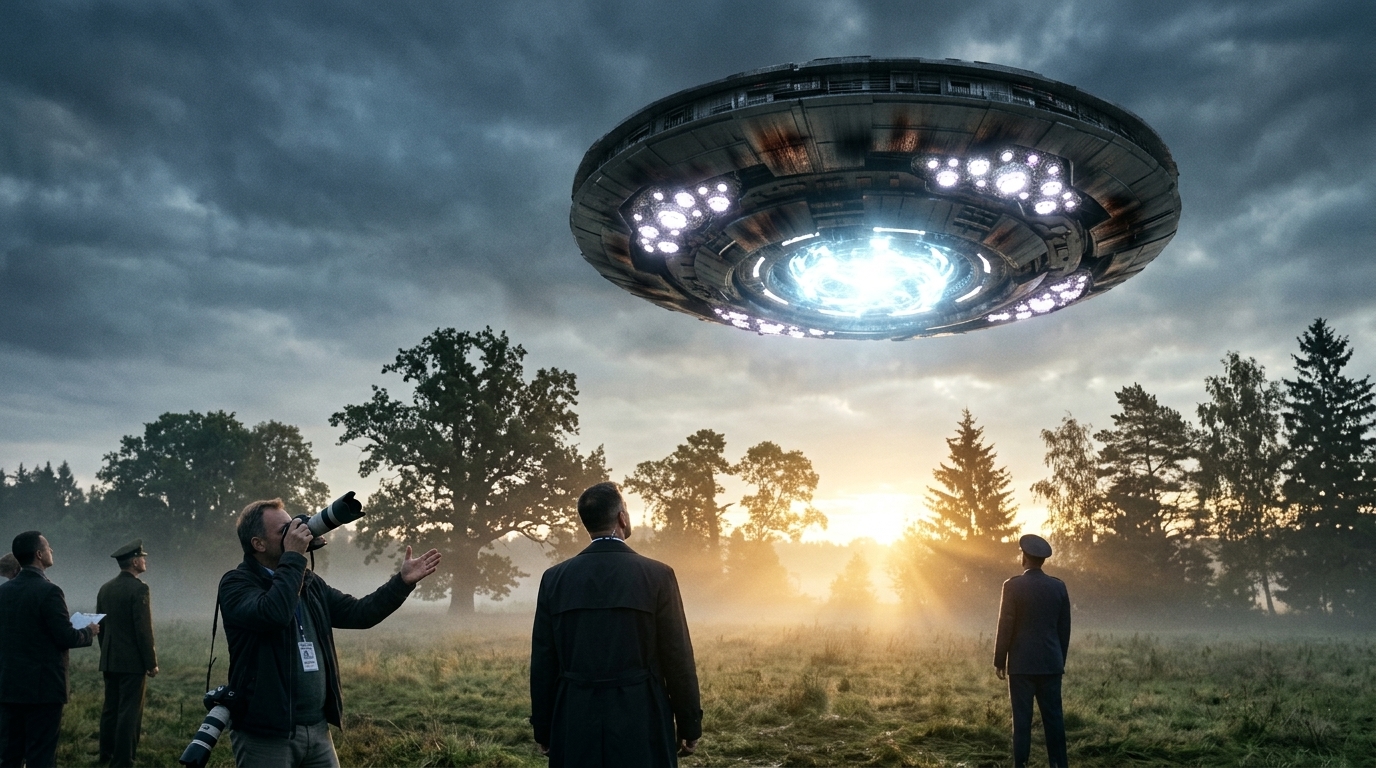
The debate over Unidentified Flying Objects (UFOs), or Unidentified Anomalous Phenomena (UAPs) as they are now officially termed, has shifted from the fringes of science fiction to the heart of American political discourse. With Donald Trump’s return to the spotlight, the promise of full transparency regarding the Pentagon's classified files is gaining new momentum, sending ripples through the intelligence community and the U.S. defense industry.
Trump, who expressed both skepticism and intense curiosity about the subject during his first term, now appears determined to use declassified information as a lever against the so-called "Deep State." His rhetoric focuses on the idea that intelligence agencies are withholding critical information not only from the public but also from the country's elected leadership. This approach reframes the UAP issue from a scientific mystery into a political battle over the control of information and executive authority.
Congressional Pressure and Whistleblower Testimonies
In recent years, the push for disclosure has not originated solely from the White House. A bipartisan group of lawmakers, led by figures such as Chuck Schumer and Marco Rubio, has championed legislation requiring the Pentagon to turn over all records related to "non-human intelligence" or "craft of unknown origin." The 2023 testimony of David Grusch, a former intelligence officer, served as a watershed moment. Grusch claimed under oath that the U.S. possesses crash retrieval programs for craft not manufactured by humans.
The Pentagon's All-domain Anomaly Resolution Office (AARO) has attempted to manage expectations, issuing reports stating there is no "verifiable evidence" of extraterrestrial technology. However, critics argue that AARO lacks the necessary authorization to investigate the most sensitive Special Access Programs (SAPs), where the real secrets are rumored to be kept. The Trump administration promises to dismantle these barriers, bringing to light files dating back to the Roswell incident and beyond.
Geopolitics and the Technological Arms Race
Beyond the scenario of extraterrestrial life, there is a more grounded yet equally alarming possibility: that UAPs represent technological leaps by adversaries such as China or Russia. The ability of these objects to move at hypersonic speeds without visible means of propulsion or to transition instantaneously from the atmosphere to the ocean represents a national security nightmare for the U.S. If this is terrestrial technology, then America faces a strategic defeat in aerospace dominance.
The use of Artificial Intelligence in analyzing data from radar sensors and satellites is the next logical step. The Pentagon has already begun developing algorithms capable of distinguishing natural phenomena or conventional drones from truly "anomalous" objects. Declassifying this data could accelerate scientific research, allowing academics and private companies to study phenomena that were previously considered taboo or career-ending for scientists.
The Societal and Philosophical Challenge
Opening "Pandora's Box" is not just about technology or politics; it is about humanity's self-perception. If the existence of non-human intelligence is confirmed, the implications for religion, philosophy, and social structure will be immeasurable. Trump seems to recognize the power of such a revelation as a history-altering event, positioning himself at the center of a new epoch of human understanding.
However, the risks are substantial. The premature or incomplete release of information could trigger public panic or expose sensitive U.S. military capabilities. The challenge for the incoming administration is to balance the public's demand for truth with the necessity of protecting national interests. Regardless of the outcome, the era of absolute secrecy appears to be ending, and the world is bracing for a reality that may exceed our wildest imaginations.