China has always been the laboratory of "super-apps"—applications that integrate everything from messaging and payments to food delivery and investment management. Today, as the Generative AI revolution sweeps the globe, Beijing is not merely following trends; it is reshaping them. The transition from the traditional mobile internet to an "AI-first" internet is occurring in China at a dizzying pace, transforming the web into an ecosystem of autonomous AI agents.
The Legacy of WeChat and the New Generation
For over a decade, Tencent's WeChat has been the gold standard for what an application can achieve. However, the new generation of apps, led by ByteDance’s Doubao (the owner of TikTok) and Baidu’s Ernie Bot, is taking it a step further. These apps are not just chat interfaces like ChatGPT; they are gateways to entire ecosystems. Doubao, for instance, has already surpassed 26 million monthly active users, offering not just answers but content creation, coding assistance, and personalized education.
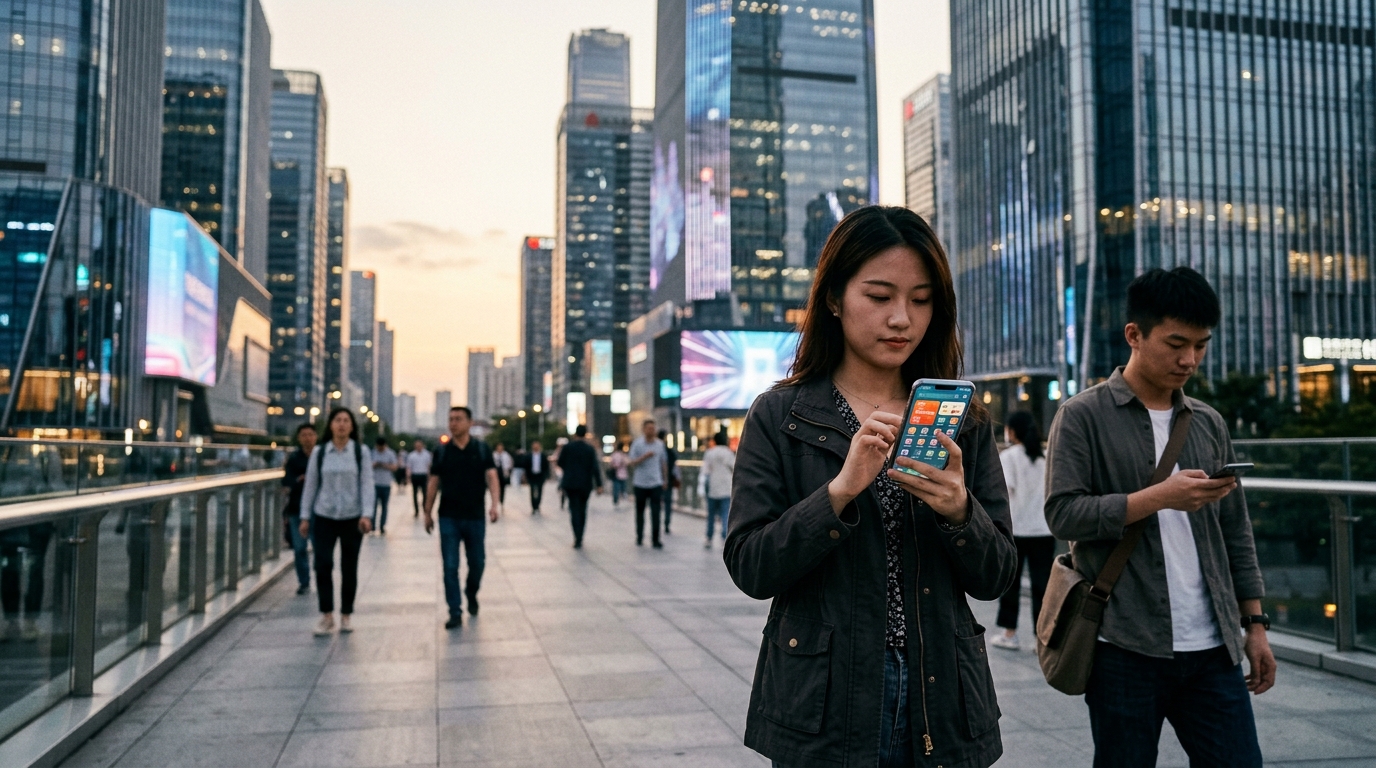
The difference lies in integration. While the West discusses how AI will assist search, in China, AI is *replacing* search. Users no longer look for information; they ask AI to perform tasks. This shift toward the "Agentic Web" means that interaction with the internet is becoming less visual and more conversational, with artificial intelligence acting as an invisible intermediary that knows the user's preferences and habits deeply.
The Price War and the Strategy of Scale
One of the most striking features of the Chinese AI market is the ruthless price war. Giants like Alibaba and Tencent have slashed the costs of their Large Language Models (LLMs) by up to 97%, making their use nearly free for developers. This "scorched earth" strategy aims for rapid dominance and the elimination of smaller startups. The logic is simple: whoever controls the model upon which apps are built also controls the data of the next decade.
- Baidu announced that Ernie Bot now processes over 200 million requests daily.
- ByteDance leverages the massive user base of TikTok and Douyin to fuel its algorithms.
- Startups like Moonshot AI (with its Kimi chatbot) are trying to compete by offering massive context windows, allowing for the analysis of entire libraries in seconds.
Geopolitics, Censorship, and Technological Constraints
Despite rapid progress, the Chinese model faces unique challenges. The first is political. Beijing requires AI models to align with "core socialist values," which means strict censorship of responses concerning sensitive political issues. This creates a "filter" that may limit the creativity or accuracy of models compared to their Western counterparts.
"The challenge for China is not a lack of talent, but the balance between innovation and absolute state control," market analysts note.
Furthermore, US sanctions on the export of advanced semiconductors (such as Nvidia's chips) are forcing Chinese companies to become more inventive with existing hardware or turn to domestic solutions from Huawei. This resource constraint is pushing China to focus more on software and algorithmic efficiency rather than raw computing power.
The Future: A World of AI Agents
The final stage of this evolution is the disappearance of the very concept of an "app." In the vision of Chinese companies, there will be only one digital assistant managing everything. Want to book a trip? The AI agent will talk to the airline's agent, find a hotel that fits your taste, and complete the payment via Alipay or WeChat Pay, without you ever opening a website. This integration is the "Holy Grail" of technology, and China, due to its pre-existing super-app culture, is in a vantage position to achieve it first.