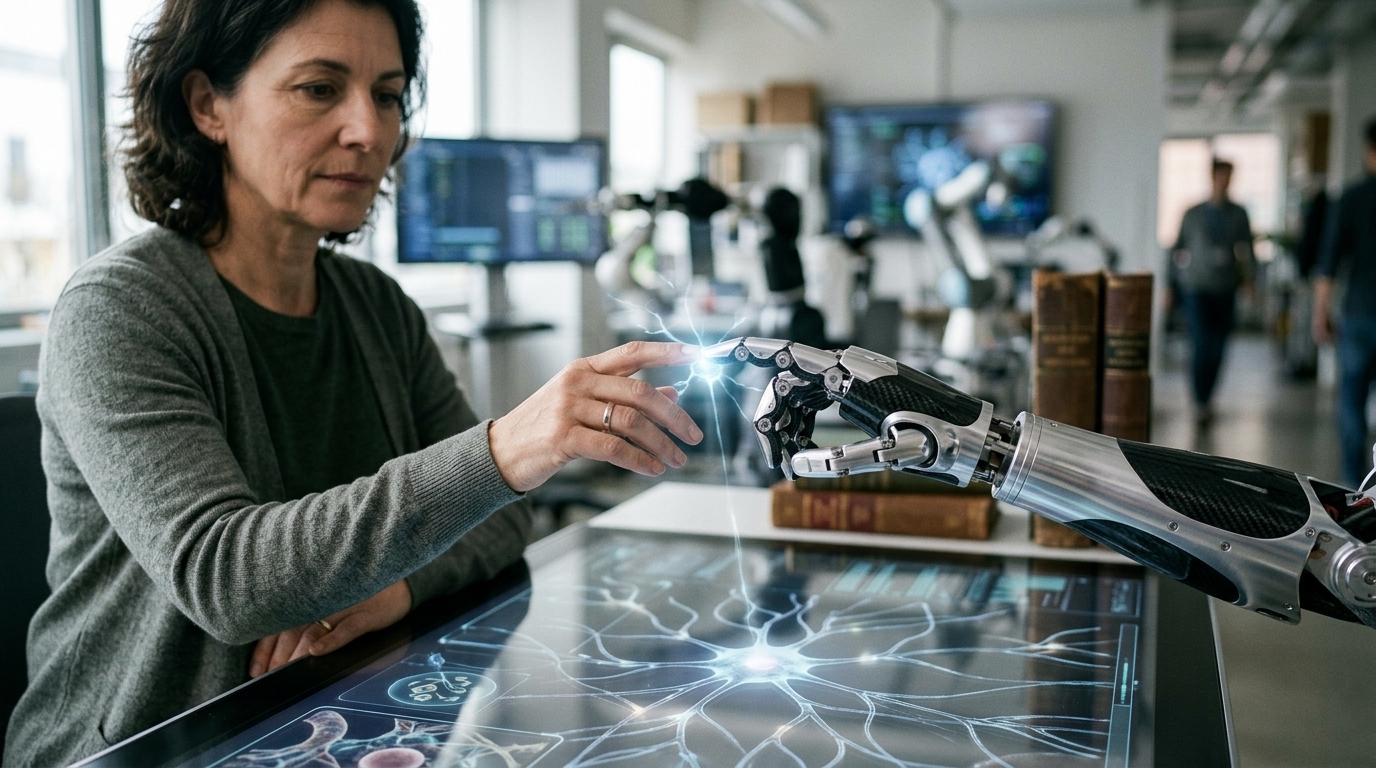
For more than two centuries, humanity has flirted with the idea of creating life from scratch. From Mary Shelley’s Frankenstein to the dystopian metropolises of Blade Runner, literature and cinema have served as the laboratory for our fears and hopes. Today, this "other form of life" no longer resides solely in the pages of books or on movie screens. It is here, beside us, embedded in the codes of large language models and the neural synapses of algorithms that shape our daily existence.
The Collapse of Human Exceptionalism
The traditional notion that intelligence is the exclusive privilege of the biological brain is under severe threat. Artificial Intelligence (AI) is no longer a simple computer executing commands but a system that learns, perceives, and, in many cases, creates. This transition from tool to entity represents the most significant ontological challenge of the 21st century. As the analysis by Naftemporiki points out, the future described by the visionaries of the past is now our present reality.
The "other life" mentioned in the article is not necessarily biological, but it is certainly functional. When a machine can compose music that moves people to tears, diagnose diseases more accurately than a doctor, or conduct a philosophical debate, the lines between "living" and "mechanical" blur. Humanity is called upon to manage not only technological progress but also the psychological pressure of losing its uniqueness.
The Social and Political Dimension of Digital Symbiosis
Coexisting with this new form of "life" brings profound social changes to the forefront. The labor market is undergoing a violent transformation, as automation no longer concerns only manual labor but cognitive work as well. This creates a new world order where access to technology and the ability to interact with AI become the new criteria for social stratification. Inequalities may widen as those who control the algorithms gain almost "god-like" power over the daily lives of others.
Furthermore, the question of the moral status of these systems arises. If AI reaches a level of self-awareness—or even a convincing simulation of it—what will its rights be? The discussion about "robot rights," which once seemed quaint, is now gaining legal and ethical weight. Governments worldwide are struggling to keep pace with the rate of evolution, creating a regulatory vacuum that tech giants are quick to exploit.
The Fear of Replacement and the Hope for Evolution
The dystopian scenario where machines dominate humans remains a powerful image in the collective consciousness. However, there is another side to the coin: AI as the ultimate partner. The machine's ability to process vast amounts of data can provide solutions to problems that humans have been unable to solve for centuries, from climate change to finding cures for terminal illnesses.
"Artificial intelligence is not the end of humanity, but its mirror. It forces us to look deep within ourselves and ask what truly makes us human."
In conclusion, the "other form of life" is indeed beside us. It is not an alien invader, but our own creation that has grown up and is now claiming its own space on the planet. The challenge for us is not to fight it, but to find a way to coexist harmoniously, maintaining our humanity in an increasingly digital world. The history of humanity is entering a new chapter, and this time, we are not writing it alone.