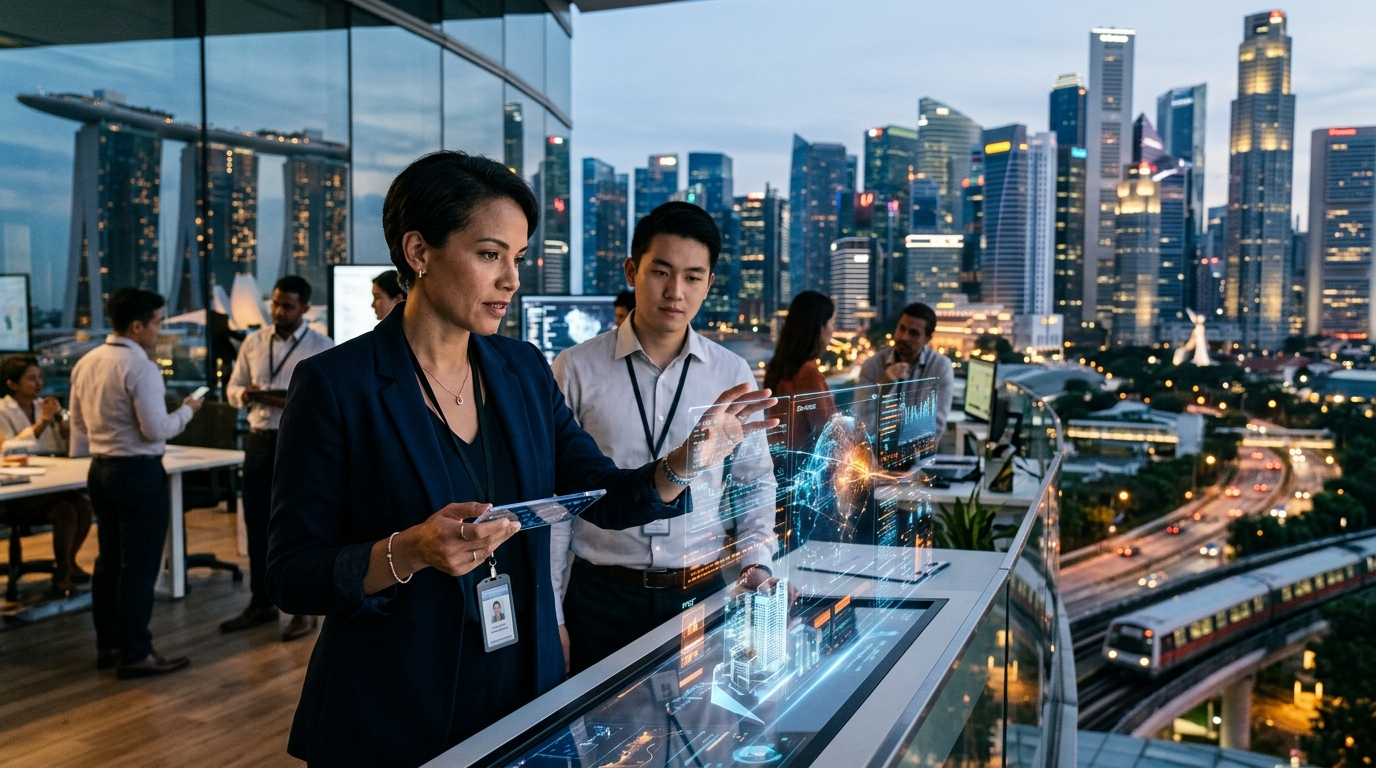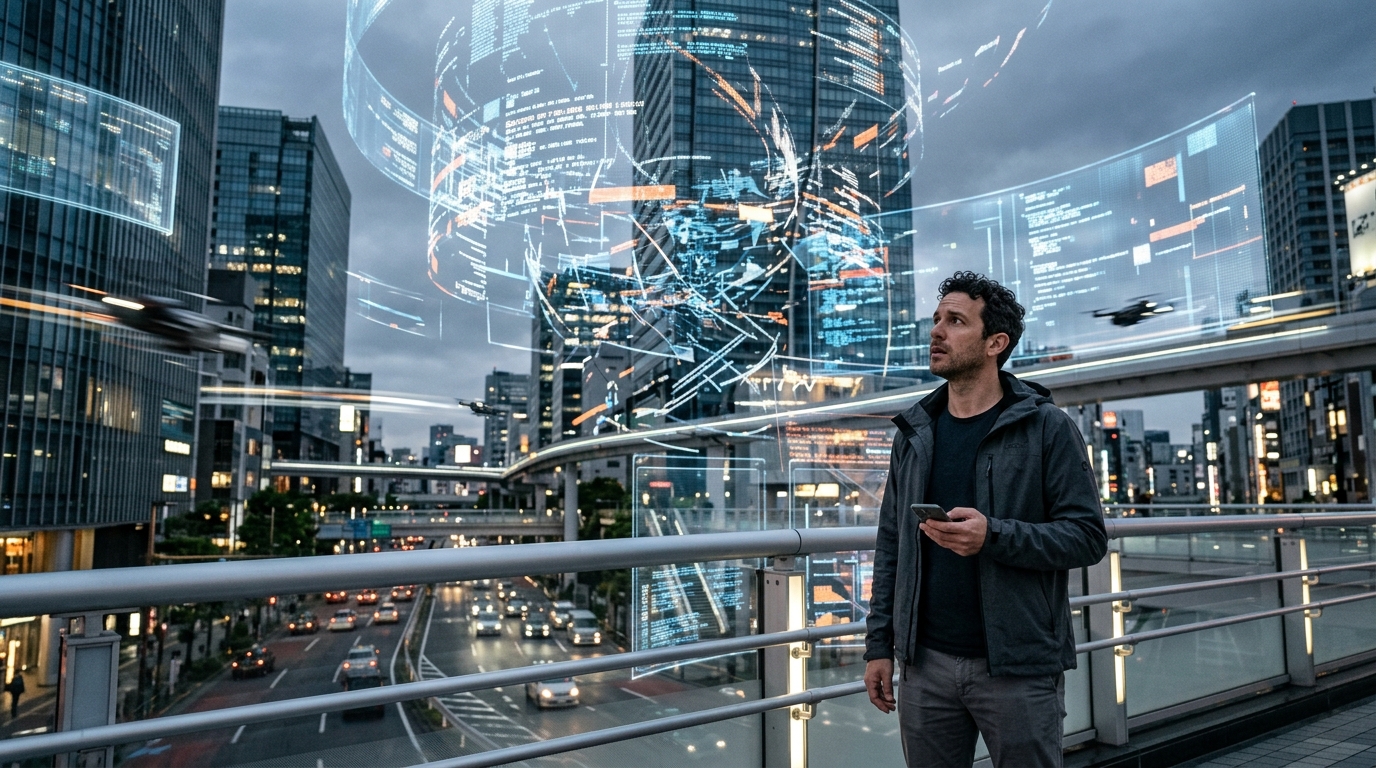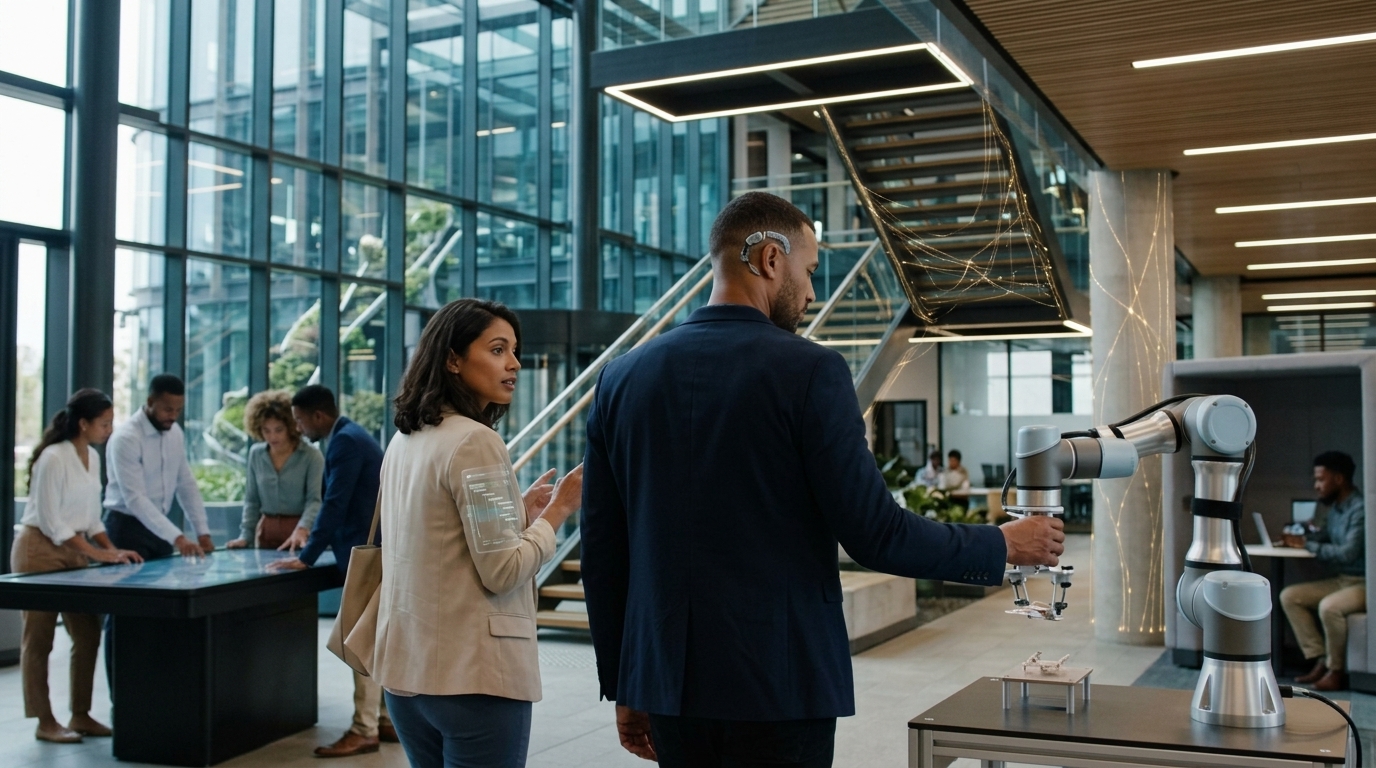
The concept of 'work' as we have known it since the Industrial Revolution is on the brink of a definitive collapse. The traditional eight-hour workday, physical presence in a static space, and the distinction between human thought and digital processing are set to be replaced by an ecosystem that resembles a science fiction script more than today's reality of open-plan offices. According to a recent report by IWG, which analyzes trends for 2050, the work of the future will not be about where you are, but how your brain connects to the global network.
AI as a Partner, Not Just a Tool
By 2050, Artificial Intelligence (AI) will not just be software that helps draft emails or analyze data. It will have evolved into an 'autonomous agent' acting as a full partner. The IWG research predicts that every worker will have a personal AI 'twin' that will handle 80% of administrative and repetitive tasks. This will allow humans to focus exclusively on strategic thinking, creativity, and emotional intelligence—areas where the human factor remains (for now) irreplaceable.
However, this integration brings with it the elimination of traditional hierarchy. In an environment where information is processed instantaneously by algorithms, organizational structures will become flat. The 'managers' of the future will be orchestrators of AI and human ecosystems rather than supervisors of labor. Productivity will skyrocket, but with it, the demand for continuous retraining will increase, as skills considered 'cutting-edge' today will be obsolete in less than a decade.
Neurotechnology: The Brain-Computer Interface at Work
Perhaps the most radical prediction of the report concerns the use of neuro-implants and brain-computer interfaces (BCI). While we currently discuss Neuralink in a medical context, by 2050, this technology may be commonplace in the professional arena. Imagine being able to 'download' information directly into your cerebral cortex or control virtual work environments with thought alone. This will mark the end of keyboards, screens, and mice.
"The convergence of biology and technology will redefine the limits of human productivity, making work a state of mind rather than a physical activity," the report states.
This evolution raises massive ethical questions. Who will own the data generated by our brains? Will there be a 'right to disconnect' when our brains are permanently linked to the corporate network? Social inequality could also take on new dimensions, dividing workers into 'augmented' and 'natural,' with the former having an overwhelming advantage in the labor market.
The End of Time as a Unit of Measurement
The traditional 9-5 workday is already seen as anachronistic, but by 2050, it will have completely vanished. Work will be measured based on output and value produced, not by the hours spent in front of a screen. Thanks to AI, efficiency will be such that the workweek could shrink to 15 or 20 hours for the majority of the population, without a decrease in production.
The 'office' will no longer be a specific destination but a network of 'hubs.' IWG argues that people will work from local centers near their homes, reducing commuting and boosting local communities. Physical presence will be reserved only for high-value social interaction and creative brainstorming, where the chemistry of human contact remains superior to any digital avatar. The offices of the future will be 'metabolic'—spaces that adapt to the user's biological needs, adjusting lighting, temperature, and oxygen to optimize cognitive function.
Conclusion: The Challenge of Humanity
As we head toward 2050, the greatest challenge will not be technological but philosophical. In a world where AI does the work and neuro-implants enhance the mind, what does it mean to be a 'worker'? The need for meaning and purpose will become more urgent than ever. The businesses that thrive will not be those with the fastest algorithms, but those that manage to maintain human connection and ethical integrity in a digitally dominated environment. The office of 2050 promises ultimate freedom, provided we ensure that humans remain the masters of technology and not its components.