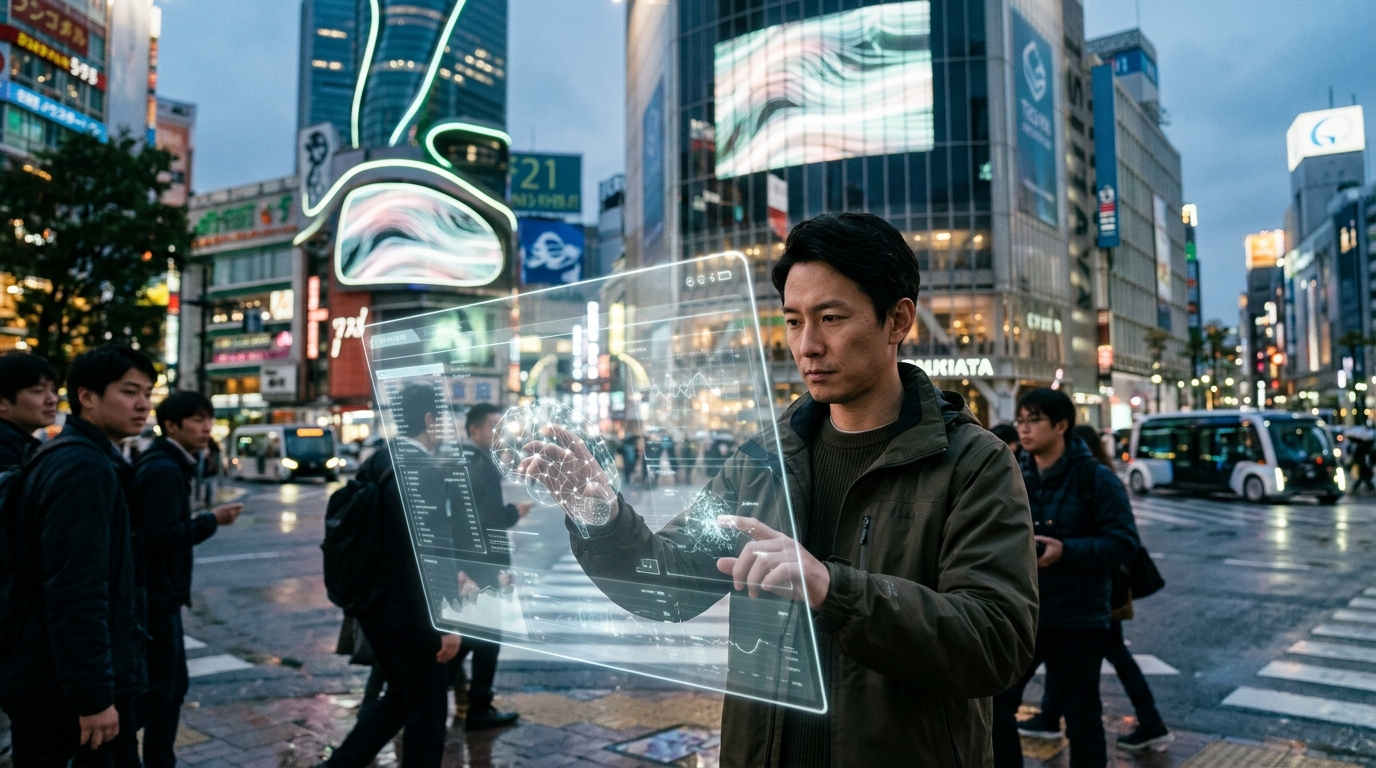
We are living through an era where Artificial Intelligence (AI) is ceasing to be a flashy demonstration tool and is transforming into an invisible infrastructure, akin to electricity or the internet. The recent upgrades to ChatGPT, Google’s strategy for "invisible" AI integration, and the powerful resurgence of China’s DeepSeek mark a critical turning point: AI no longer just answers questions; it is beginning to dictate how we structure our thoughts.
The Shift from Search to Synthesis
For decades, our relationship with technology was transactional. We would pose a query to a search engine and receive a list of sources. Today, with the latest upgrades to ChatGPT and the advent of "reasoning models," this process is being upended. AI no longer provides just information, but the conclusion itself. What OpenAI calls the "chain of thought" allows models to deliberate before answering, simulating human cognitive processes.
This evolution has profound implications. As we rely on these models to synthesize complex arguments or solve programming hurdles, we begin to outsource our higher cognitive functions. The danger is not merely job replacement, but cognitive atrophy. When an answer arrives pre-packaged and well-reasoned, the impetus for personal research and skepticism diminishes dramatically. We are moving from a world of "finding out" to a world of "being told."
Google: AI as Digital Oxygen
While OpenAI focuses on the raw power of reasoning, Google is pursuing a different path: ubiquity through invisibility. Sundar Pichai’s vision for Gemini is total integration into Workspace, Android, and Search, to the point where the user is unaware they are even interacting with an AI. This is "ambient intelligence," where technology anticipates our needs before we even articulate them.
Google is betting that AI will truly succeed when it stops being the center of attention and becomes the background. From auto-drafting emails that mimic our personal tone to organizing calendars based on inferred preferences, Google’s AI aims to be an invisible mediator between us and the digital realm. However, this invisibility raises serious questions about autonomy: Who is ultimately making the decision when our choices have been "pre-curated" by an algorithm?
DeepSeek and the Geopolitics of Efficiency
In this landscape, the return of DeepSeek from China is sending shockwaves through Silicon Valley. DeepSeek has proven that billions of dollars and hundreds of thousands of GPUs aren't always necessary to build a world-class model. With DeepSeek-V3, the company demonstrated that architectural innovation and algorithmic optimization can deliver GPT-4 level performance at a fraction of the cost.
This development is significant for two reasons. First, it proves that the US monopoly on cutting-edge AI is not a given. Second, DeepSeek promotes the idea of "efficient intelligence," making powerful models accessible to more developers through open-weights. This accelerates the integration of AI into every conceivable application, further fueling the trend of "invisible" technology described above. It turns the AI arms race into a battle of efficiency rather than just a battle of scale.
The Challenge of the New Era
As AI becomes smarter (OpenAI), more pervasive (Google), and more accessible (DeepSeek), humanity faces a novel challenge. We must learn to coexist with entities that are not just tools, but cognitive partners. The challenge is not technical, but philosophical and educational. We must ensure that, in our quest to make life easier through invisible AI, we do not lose the capacity for independent thought and the will to challenge the data presented to us "ready for consumption."
Conclusion: Navigating the Invisible
The coming years will be defined by how we manage this cognitive outsourcing. The benefits are undeniable—unprecedented productivity and the democratization of expertise. But the cost is a fundamental change in the human experience. As AI becomes invisible, our awareness of its influence must become sharper than ever.
- AI integration will reduce daily friction but may also diminish intellectual rigor.
- The geopolitical competition is shifting from raw compute power to algorithmic ingenuity.
- Algorithmic transparency is becoming a necessity as AI operations become more opaque.