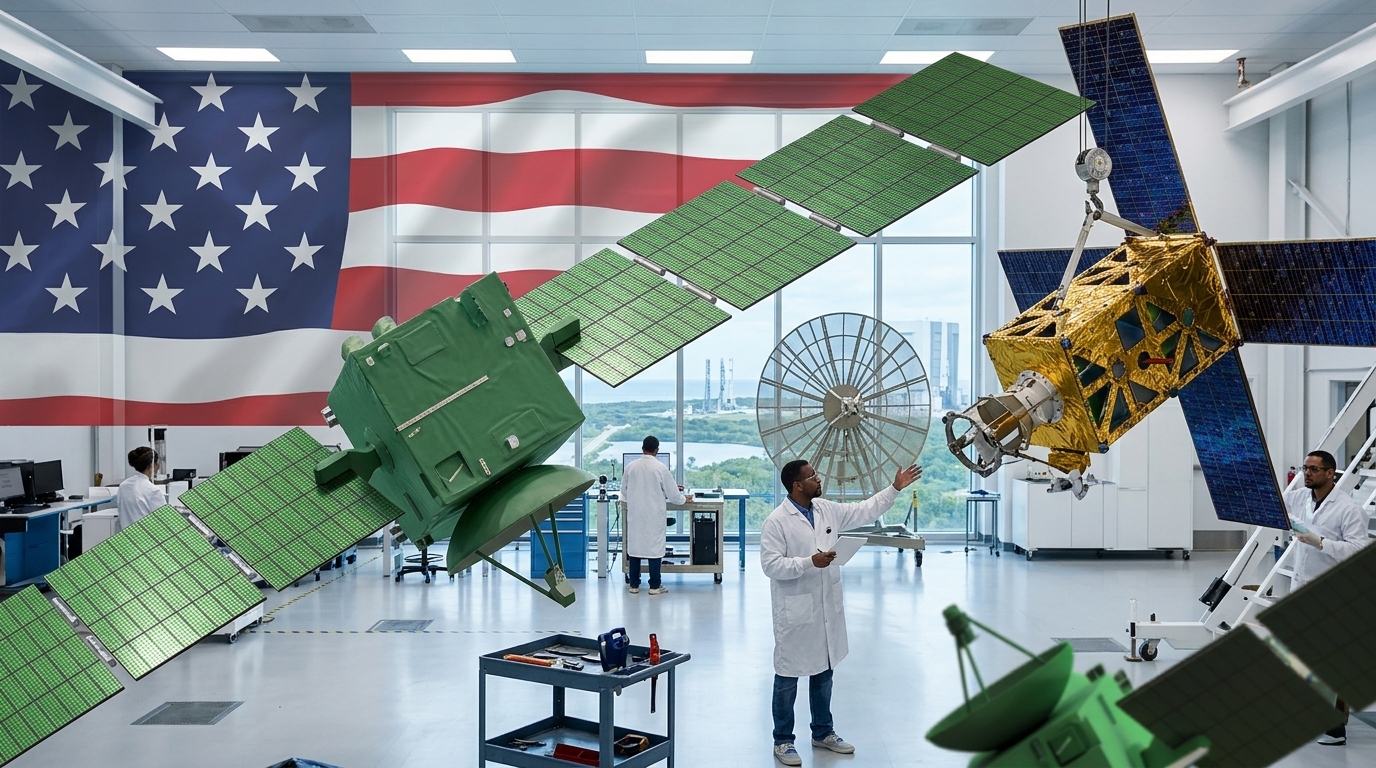
For decades, space was the exclusive playground of superpowers and colossal defense contractors. Satellites were the size of buses, cost billions, and took years to build. Today, that image is obsolete. We are witnessing the "Great American Satellite Age," a period where San Francisco—rather than just Houston or Cape Canaveral—has become the epicenter of a space revolution driven by software and venture capital.
The Silicon Valley of the Skies
This paradigm shift is fueled by two primary factors: the dramatic reduction in launch costs, thanks to SpaceX’s reusable rockets, and the miniaturization of technology. What once required a ton of hardware now fits into a shoebox. Startups like Muon Space, Apex, and Loft Orbital are not just selling "space" in orbit; they are offering integrated platforms that function more like cloud servers than traditional spacecraft.
These companies are applying the Silicon Valley philosophy of "move fast and break things" to an environment that has traditionally been hyper-conservative. The ability to launch a satellite within months rather than a decade allows for rapid technological iteration. If a sensor becomes obsolete, it is replaced in the next launch. This "software-defined" approach means that satellites can now be upgraded while in orbit, changing their mission parameters with a few lines of code.
The Data Revolution and Transparency
The real product of this new era is not the satellite itself, but the data it generates. The ability to monitor the Earth in real-time, 24/7, has profound implications. From measuring methane emissions at individual factories to tracking troop movements in conflict zones like Ukraine, "orbital intelligence" is transforming geopolitics and the global economy.
Synthetic Aperture Radar (SAR) satellites can now see through clouds and in total darkness, eliminating any sense of privacy for large-scale movements on the planet's surface. For businesses, this means accurately predicting oil inventories or crop yields before official figures are released. For humanity, it represents an unprecedented tool for fighting climate change through the rigorous surveillance of environmental commitments.
Geopolitics and the Militarization of Space
However, this boom is not without its risks. The U.S. military’s increasing reliance on private satellite constellations creates a new gray zone. When a private company's satellites become critical for conducting a war, they automatically become legitimate military targets. The conflict in Ukraine has proven that controlling information from space is the "high ground" of the 21st century.
Furthermore, the overcrowding of Low Earth Orbit (LEO) raises concerns about the Kessler Syndrome—a chain reaction of collisions that could render space inaccessible for generations. With thousands of new satellites being launched annually, the need for international regulation and orbital traffic management is more urgent than ever. America may be leading this new age, but the responsibility for maintaining the space environment is global.
The Future: From Observation to On-Orbit Processing
The next frontier is "Edge Computing" in space. Instead of sending massive volumes of raw data back to Earth, new satellites will feature powerful AI processors to analyze information on-site. A satellite could detect a wildfire at its inception and send only the alert to authorities, saving precious minutes. This evolution will transform satellites from mere cameras into autonomous agents making real-time decisions, permanently cementing the dominance of information from above.