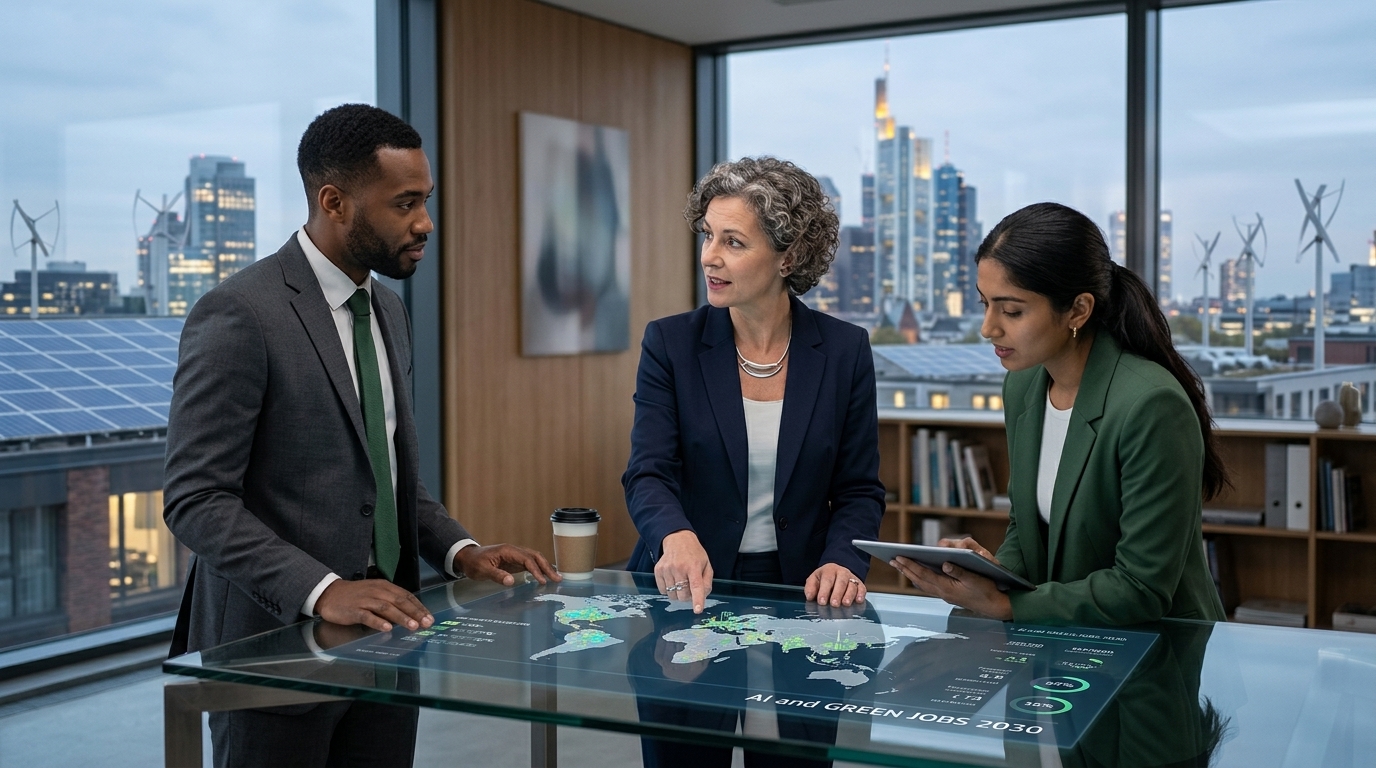
The labor market is not just changing; it is being fundamentally restructured. As we move through the mid-2020s, the convergence of Artificial Intelligence (AI), the climate crisis, and demographic shifts is creating a new employment landscape. As noted by Vassilis Korkidis, President of the Piraeus Chamber of Commerce and Industry, the Greek economy is at a pivotal turning point. The challenge is not merely job creation, but the adaptation of the workforce to roles that, five years ago, seemed like science fiction.
The Dominance of AI and Data
Artificial Intelligence is no longer an exotic technology but the backbone of the new economy. In the next decade, professions related to data analysis and algorithm training will experience unprecedented growth. Machine Learning Engineers and Data Scientists will remain in high demand, but the focus will shift toward ethics and governance. AI Ethics Specialists will be essential to ensure that algorithms do not reproduce biases and operate within the frameworks of European legislation (the AI Act).
At the same time, cybersecurity is emerging as a matter of national and corporate survival. With the digitization of every aspect of commerce and public administration, Cybersecurity Analysts will be the "guardian angels" of infrastructure. In Greece, this need is particularly acute in the shipping and logistics sectors, where the digital transformation of ports requires protection against hybrid threats.
The Green Transition and the Blue Economy
The European Union's commitment to climate neutrality by 2050 translates into millions of new "green" jobs. Greece, with its comparative advantage of sun and wind, is transforming into an energy hub. Professions such as Renewable Energy Technicians, Hydrogen Engineers, and Building Energy Upgrade Specialists will see their earnings rise.
However, green growth is not limited to energy. The Circular Economy is creating needs for specialists in waste management and product design that leaves no environmental footprint. In the shipping sector, the transition to zero-emission vessels requires a new generation of seafarers and engineers specialized in alternative fuels. The "Blue Economy" remains the pillar of Greek entrepreneurship, but it now demands high technological expertise.
The Care Economy and the Demographic Challenge
While technology gallops ahead, another reality is shaping the future: an aging population. The "Silver Economy" will be one of the largest employers of the next decade. Demand for Healthcare Professionals, Geriatricians, and Specialized Caregivers will be steadily increasing. Technology will assist this sector through telemedicine and robotic assistants, but human contact and empathy will remain irreplaceable.
Furthermore, mental health is now recognized as a critical factor in productivity. Workplace Mental Health Counselors and specialists in work-life balance will be integrated into the human resources departments of large corporations, as Gen Z and Gen Alpha employees prioritize their well-being.
From Degrees to Skills: The New Paradigm
The traditional model of "studying once for a lifetime" is dead. The concept of Lifelong Learning is becoming the new normal. Employers are now looking for "T-shaped" professionals: individuals with deep knowledge in one area but a broad understanding of other sectors. Soft Skills, such as critical thinking, creativity, complex problem-solving, and emotional intelligence, are what will protect workers from automation.
"Adaptability is the new currency in the labor market. Whoever stops learning, stops being competitive," the PCCI analysis characteristically states.
In conclusion, the next decade should not be viewed with fear but with strategic preparation. Linking education to the labor market, investing in reskilling, and enhancing digital literacy are the keys to ensuring that the transition is fair and inclusive for all citizens.