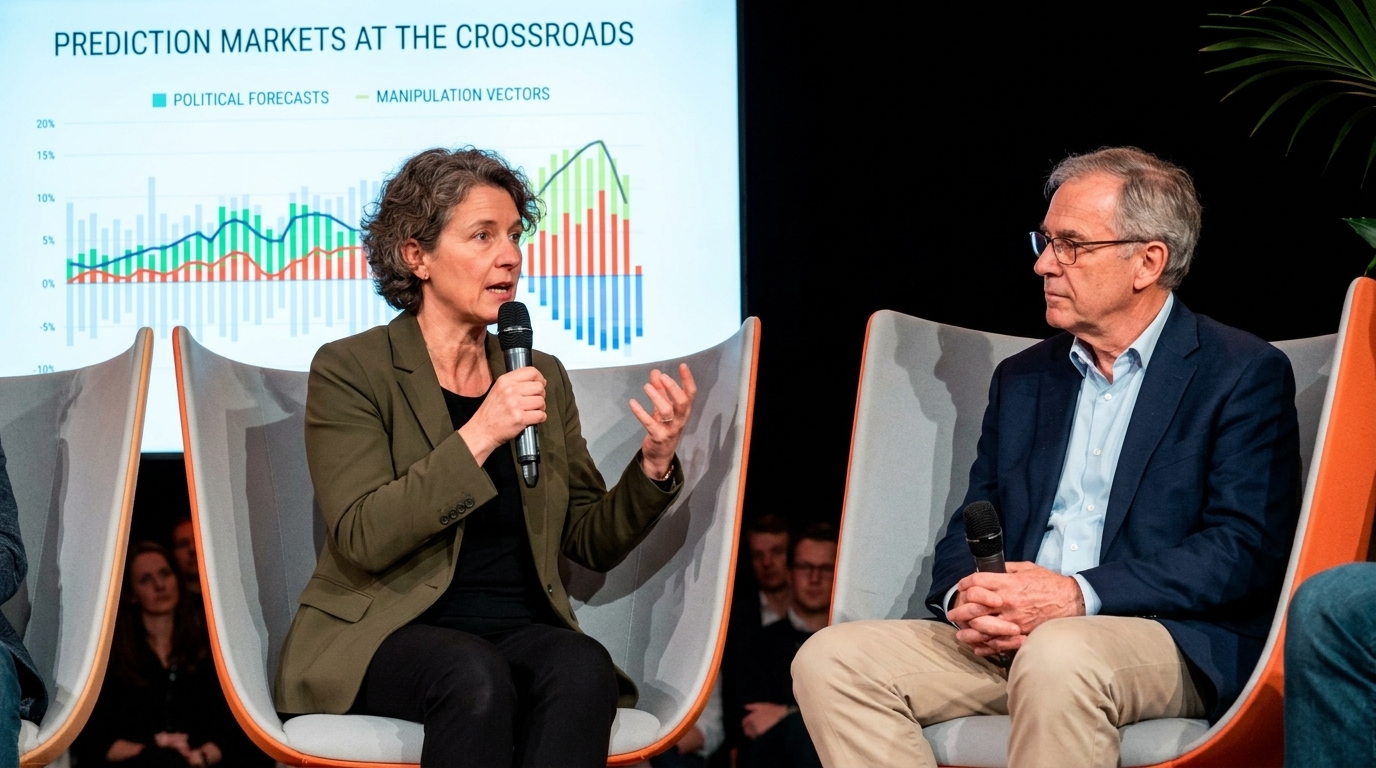
In May 2026, the debate surrounding the future of prediction markets is no longer a theoretical exercise. It has become a frontline battle for the very concept of truth in a digitized society. Following two years of explosive growth, where platforms like Polymarket and Kalshi became the de facto tools for forecasting geopolitical shifts and election outcomes, the industry faces an existential crisis: the manipulation problem.
Tamas Kadar, CEO of SEON—a leading fraud prevention firm—recently addressed the issue with blunt clarity. While these markets promise to harness the 'wisdom of the crowd' more effectively than traditional polling, their vulnerability to coordinated attacks by 'whales' and automated botnets threatens to turn them into propaganda machines rather than forecasting engines.
The Accuracy Paradox and the Wash Trading Menace
The core argument for prediction markets is economic: when people put their money where their mouth is, information becomes more accurate. However, as Kadar points out, this financial incentive structure is a double-edged sword. 'Wash trading'—the practice where a user buys and sells to themselves to create artificial volume—has become an endemic problem, particularly on decentralized platforms.
According to SEON’s analysis, a significant portion of the activity on some of the largest prediction markets in 2025 originated from interconnected accounts. This doesn't just skew the odds; it warps public perception. If a market shows an 80% probability for an event, media outlets report it as a near-certainty, creating a feedback loop that can influence the actual outcome—a self-fulfilling prophecy fueled by algorithms.
The CFTC and the Regulatory Tsunami
The U.S. Commodity Futures Trading Commission (CFTC) is now at a critical juncture. The next 12 months of rulemaking will determine whether these markets are treated as legitimate financial hedging tools or as illegal gambling. The conflict isn't just about law; it’s about the definition of 'public interest.'
- Data Transparency: Regulators are demanding stricter KYC (Know Your Customer) protocols to prevent anonymous manipulation by foreign state actors.
- Political Betting Restrictions: There is heavy pressure to ban betting on election outcomes, with critics arguing it undermines democratic integrity.
- Platform Accountability: SEON argues that platforms must take responsibility for bot detection, using AI to identify patterns that escape human observation.
"If we cannot trust the integrity of the data feeding these markets, then we don't have prediction markets; we have a digital version of a Roman circus," Kadar states.
The Technological Response: AI vs. AI
The solution to the manipulation problem appears to be technological rather than purely legal. SEON and other firms are developing 'Digital Identity Intelligence' systems that analyze hundreds of parameters—from cursor movement to device fingerprinting—to distinguish a real investor from a bot. In a world where content generation and decision-making are increasingly automated, verifying human intent is becoming the most valuable currency.
The question remains: will users accept the loss of anonymity for the sake of validity? Or is the allure of 'dark' markets precisely their lack of oversight? For Europe, the MiCA (Markets in Crypto-Assets) framework provides some guidelines, but prediction markets often operate in a 'grey zone' between betting and investing, making their supervision a nightmare for Brussels bureaucrats.
Conclusion: A Market for Truth?
Prediction markets have the potential to democratize information, breaking the monopoly of 'experts' and pollsters. However, their survival depends on their ability to self-regulate before government intervention renders them obsolete. As Kadar concludes, technology can indeed forecast the future, but only if we ensure that the future isn't for sale to the highest (and most fraudulent) bidder.