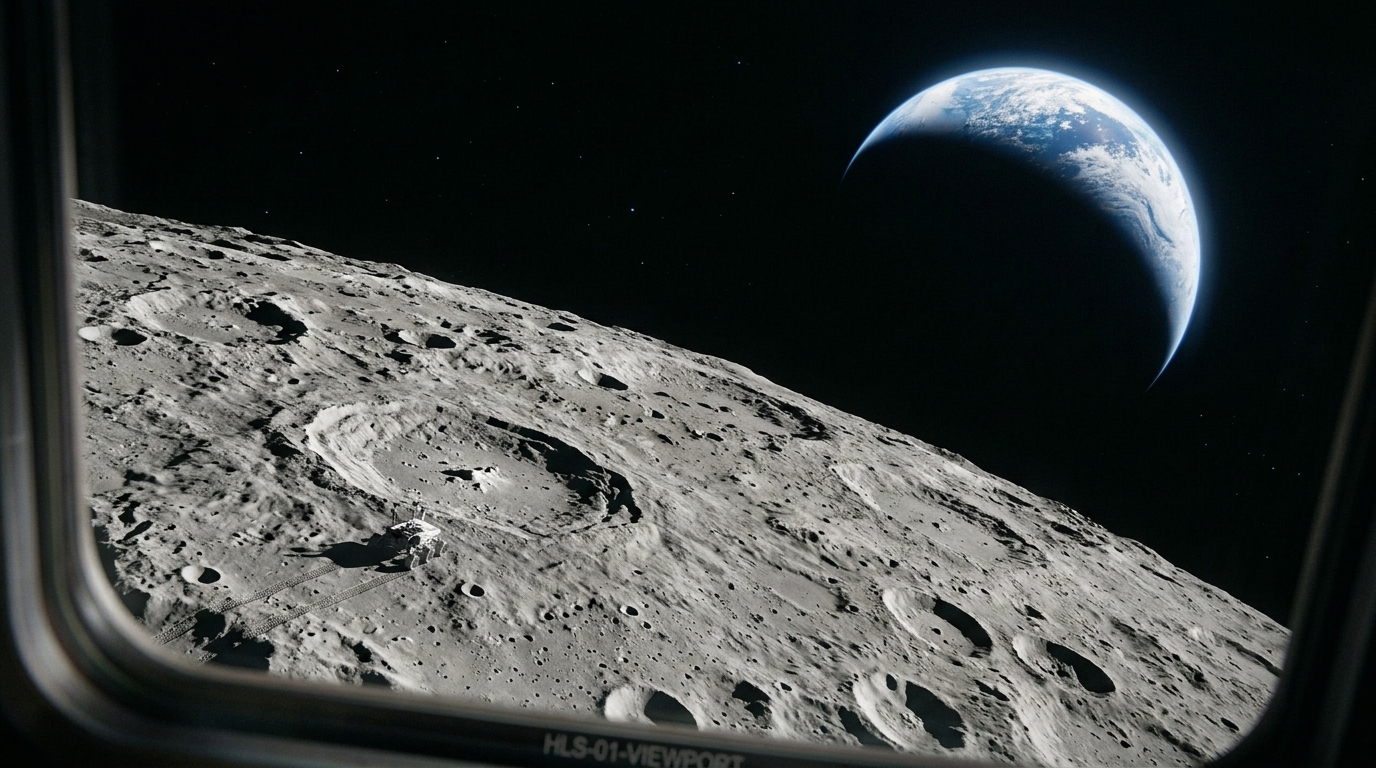
Humanity’s return to the lunar surface is no longer a fever dream of science fiction, but a complex logistical puzzle that NASA is scrambling to assemble. As of May 2026, the U.S. space agency has released new details regarding the "Concept of Operations" (ConOps) for Artemis III, the first crewed lunar landing mission since Apollo 17 in 1972. However, beneath the polished animations and optimistic press releases lies a series of critical decisions that remain unresolved, threatening to push this historic milestone further into the future.
The Mission Architecture: A High-Stakes Orbital Ballet
The Artemis III mission profile is a radical departure from the Apollo era. While Apollo utilized a single, massive Saturn V rocket to launch everything at once, Artemis III relies on a fragmented and highly interdependent architecture. The process begins with NASA’s Space Launch System (SLS) carrying the crew in the Orion capsule to a Near-Rectilinear Halo Orbit (NRHO) around the Moon. Once there, the crew will not descend directly. Instead, they must rendezvous and dock with SpaceX’s Starship Human Landing System (HLS), which will serve as the dedicated ferry to the lunar surface.
The complexity increases exponentially when considering that Starship requires a massive amount of propellant to reach the Moon. To achieve this, SpaceX must launch a fleet of "tanker" Starships—estimated between 10 and 20 flights—to refuel a single HLS in Low Earth Orbit. This orbital refueling technology has never been demonstrated at this scale and remains the single biggest technical bottleneck for the mission's success.
Suits and Survival: The Lunar South Pole Challenge
Another pivotal element is the extravehicular activity (EVA) suits. NASA has contracted Axiom Space to design and build these next-generation suits, which must be flexible enough for scientific field work yet robust enough to withstand the brutal environment of the Lunar South Pole. Unlike the equatorial landing sites of Apollo, the South Pole offers permanent shadows and extreme lighting conditions. The low sun angles create long, deceptive shadows that can hide treacherous craters or boulders, making navigation a nightmare for even the most experienced pilots.
Recent NASA briefings suggest that the agency is weighing the possibility of shortening the initial surface stay if testing of the Axiom suits or the life-support systems shows any vulnerability. While astronaut safety is the non-negotiable priority, any reduction in surface time directly impacts the scientific return of a mission that costs billions of dollars per launch.
Geopolitical Pressure and the Delay Syndrome
The pressure on NASA is not merely technical; it is intensely geopolitical. China has solidified its plans for a crewed lunar landing by 2030, and Washington is loath to lose its dominance in the "second space race." This creates a precarious balancing act: NASA must move with urgency to maintain its leadership, yet it cannot afford a catastrophic failure that would result in the program being grounded for years.
The "hard decisions" referenced in recent internal reports focus on contingency planning. If SpaceX’s Starship or Axiom’s suits are not ready by the target date, NASA may face a choice: do they fly Artemis III as a second lunar flyby mission (effectively a repeat of Artemis II) to keep the momentum alive, or do they wait for the full landing capability? For now, the official line remains unchanged, but industry analysts expect 2026 to be the year where these hard pivots are finally made.
Conclusion: A Giant Leap or a Measured Step?
Artemis III represents the pinnacle of human ingenuity, but it also highlights the modern state's total dependency on private-sector contractors. The success of the mission no longer rests solely in NASA’s hands; it is being forged in SpaceX’s Starbase and Axiom’s Houston facilities. As we edge closer to the end of the decade, the Moon feels both closer and more elusive than ever. The science is sound and the technology is maturing, but the reality of deep-space exploration remains unforgiving: in the vacuum of space, there are no shortcuts—only hard choices and the physics that dictates them.