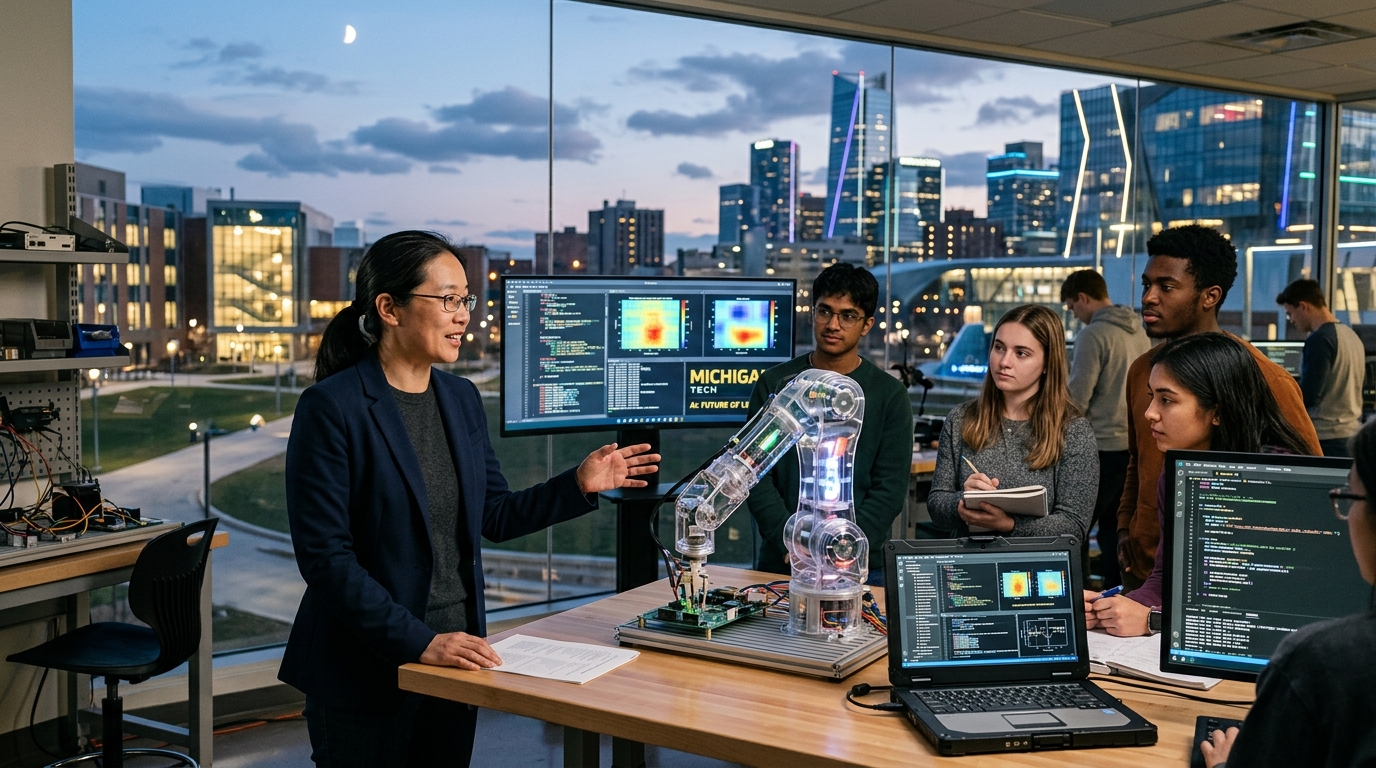
In an era where Artificial Intelligence (AI) is no longer a peripheral tool but the backbone of the global economy, academic institutions are being forced to fundamentally rethink their curricula. Michigan Technological University (MTU) has officially announced the launch of a new degree program, the Bachelor of Science in Artificial Intelligence, set to welcome its first cohort this coming fall. This move is not merely an addition to a course catalog; it is a profound statement of intent regarding the future of the global workforce.
From Computer Science to Specialized Intelligence
For decades, AI was taught as a sub-discipline of Computer Science, typically reserved for elective courses in the final years of study or at the graduate level. However, the explosion of generative models and the integration of machine learning into every industrial vertical have rendered this approach obsolete. Michigan Tech’s program aims to fill this gap by offering a holistic approach that begins from day one of the undergraduate experience.
The curriculum is designed to equip students with deep expertise in areas such as:
- Machine Learning and Deep Learning
- Natural Language Processing (NLP)
- Robotics and Autonomous Systems
- AI Ethics and Governance
- Big Data Analytics
The differentiation from a traditional Computer Science degree lies in the focus. While a computer scientist learns how to build software, a Michigan Tech AI scientist will learn how to build systems that learn and adapt autonomously. This distinction is critical for tech companies seeking "plug-and-play" professionals who do not require extensive corporate retraining upon hiring.
The Ethical Dimension and Social Responsibility
One of the most compelling aspects of the new program is its emphasis on ethics. In a world where algorithms can influence everything from democratic elections to judicial sentencing, the education of these systems' creators cannot be purely technical. Michigan Tech appears to recognize this by integrating courses that examine algorithmic bias, data privacy, and the socio-economic impacts of automation.
“We are not just training programmers; we are shaping the architects of tomorrow’s society,” university officials stated during the program's unveiling.
This approach addresses the concerns of many skeptics who fear that the rapid advancement of AI will outpace our ability to govern it. By teaching responsibility alongside code, the university is attempting to produce a new generation of scientists who prioritize human-centric values in technological development.
The Job Market and Career Prospects
The demand for AI specialists has reached a fever pitch, with salaries for junior roles often reaching six figures. By establishing this degree, Michigan Tech is strategically positioning itself within the innovation ecosystem. Graduates will not be limited to software giants; industries such as automotive, healthcare, finance, and energy are desperate for specialized AI talent.
However, there is a flip side to this coin. The creation of such hyper-specialized degrees carries the risk of "premature obsolescence." Technology evolves so rapidly that what is taught in the first year may be outdated by graduation. To mitigate this, the program focuses on the foundational principles of mathematics and logic, which remain constant regardless of whether GPT-5 or a more advanced successor is dominating the market.
Conclusion: A New Paradigm for Education
Michigan Technological University’s initiative serves as a bellwether for the evolution of higher education globally. The era of generalist degrees may be drawing to a close, giving way to a more targeted and dynamic educational experience. The success of this venture will be measured by the ability of its graduates to navigate the challenges of a world changing at a geometric pace, while maintaining their critical thinking and human values.