In the realm of video games and digital environments, water has long been the primary vehicle for displaying graphical prowess. Every new generation of consoles or graphics cards arrives with promises of more realistic waves, clearer reflections in post-rain puddles, and a general obsession with wetness. However, there is something deeper, more complex, and technically demanding that often gets sidelined: snow. Snow is not merely a white layer draped over a surface; it is a living organism of data that reacts, accumulates, and deforms, offering a unique sense of materiality to the digital world.
From White Pixels to Material Substance
The history of snow in digital media began in a simplistic fashion. In the 8-bit and 16-bit eras, snow was usually a few white pixels falling vertically—a visual shorthand indicating that the player was in a 'frozen world.' There was no interaction. As computational power increased, snow began to gain volume. Today, games like Red Dead Redemption 2 or Horizon Forbidden West utilize techniques such as tessellation and deformation to allow characters to leave deep, persistent tracks that alter the terrain's geometry in real-time.
This evolution is about more than just aesthetics. Snow in modern games functions as a narrative device. When you see snow accumulating on a protagonist’s shoulders or melting near a campfire, the brain receives signals that heighten immersion. The technique of Subsurface Scattering is critical here: light doesn't just bounce off the snow's surface; it penetrates, scatters, and re-emerges, providing that soft, translucent glow we all recognize from the physical world.
The Physics of the Flake and the AI Challenge
As we move into 2026, artificial intelligence is beginning to play a decisive role in the creation of weather phenomena. Instead of developers manually designing every flake or snowbank, they now employ neural networks that simulate fluid dynamics and thermodynamics. This means snow can react to wind in ways previously impossible, creating snowdrifts that shift direction based on the architecture of surrounding buildings.
Furthermore, the challenge of 'accumulation' remains one of the most difficult hurdles in graphics computing. How can a system remember where thousands of characters have stepped in an open world without exhausting RAM? The solution lies in advanced data compression algorithms and 'layered materials,' where snow is treated as a dynamic shader that can be 'baked' onto the environment while remaining active for interaction.
"Snow is the silence of the digital world. It imposes a rhythm upon you that water or fire can never achieve."
The Emotional Geography of White
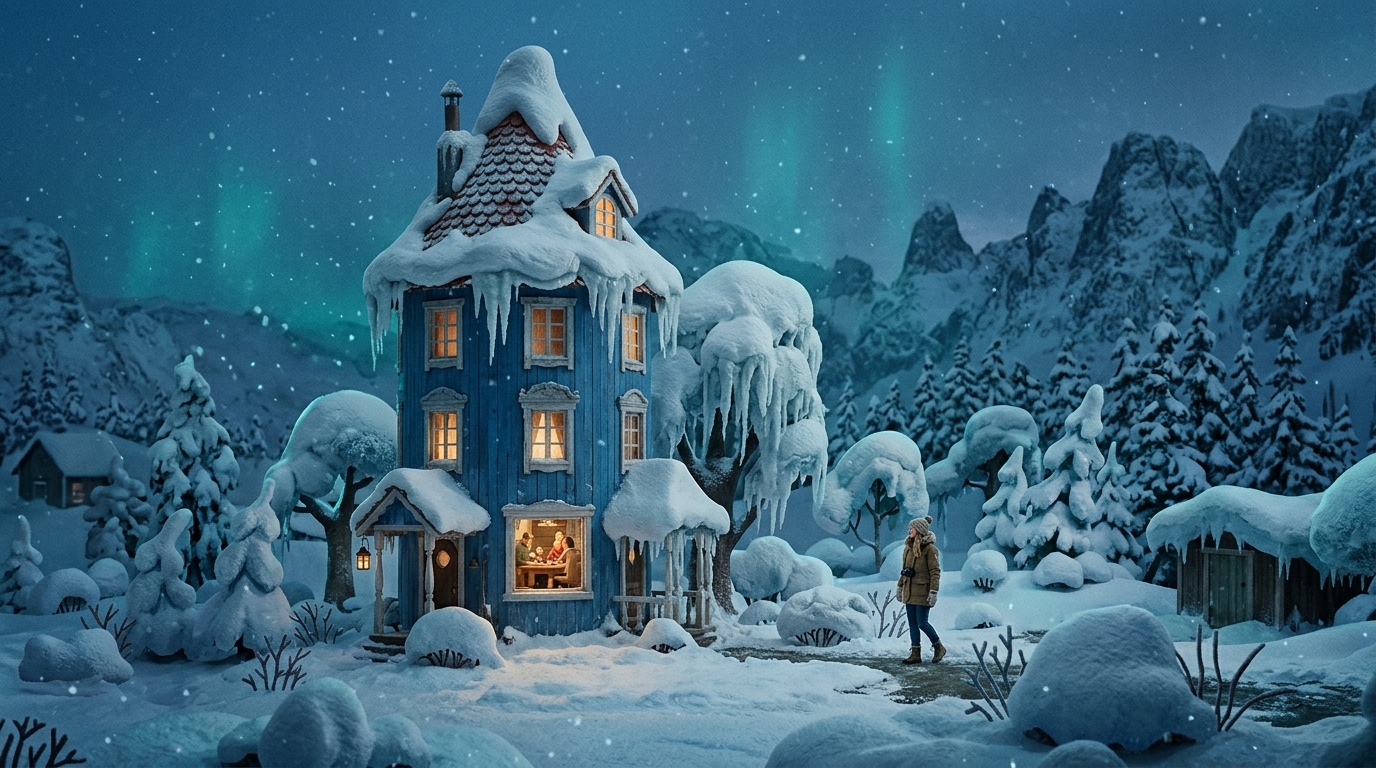
Beyond technology, snow carries significant cultural and psychological weight. In video games, snowy landscapes often symbolize isolation, danger, but also coziness. The Verge's reference to the Moomins and Froggy is no accident. There is an entire category of 'cozy games' built around the feeling of being protected inside a warm room while a blizzard rages outside. This contrast is one of the most powerful tools in a designer's arsenal.
In a world facing a climate crisis, digital snow takes on another dimension: that of memory preservation. For many people in tropical climates or regions where snow is becoming increasingly rare due to global warming, experiencing winter through a screen is their only contact with this phenomenon. The responsibility of creators, therefore, extends from mere entertainment to the faithful representation of a threatened ecosystem.
The Future: From VR to Augmented Reality
Looking ahead, the next frontier is haptic feedback. Imagine wearing VR gloves and feeling the resistance of snow as you pack it into a snowball, or the crunch of ice beneath your boots through sophisticated vibration motors in controllers. Technology is no longer just trying to show us snow; it is trying to make us 'feel' it.
In conclusion, snow in digital media is a triumph of detail over spectacle. It requires more resources, more thought, and greater artistic sensitivity than perhaps any other weather effect. As graphics engines continue to evolve, snow will remain the benchmark for how close we can get to the digital reproduction of life itself.