In the heart of the global supply chain, where speed and precision are the only currencies of success, a statement from China has sent shockwaves through the labor market. Richard Liu, the visionary founder of the Chinese e-commerce giant JD.com, made a prediction that sounds simultaneously like a promise of technological utopia and a warning of social upheaval: sooner or later, his company's 700,000 couriers will be completely replaced by robots.
The Strategy of 'Ultimate Automation'
JD.com is no ordinary company. Unlike its main competitor, Alibaba, JD.com has built its own proprietary logistics network, controlling every stage of a package's journey from the warehouse to the consumer's doorstep. This model, while extremely costly, has allowed it to guarantee same-day delivery to millions of customers. However, maintaining an army of 700,000 people represents its largest operational expense.
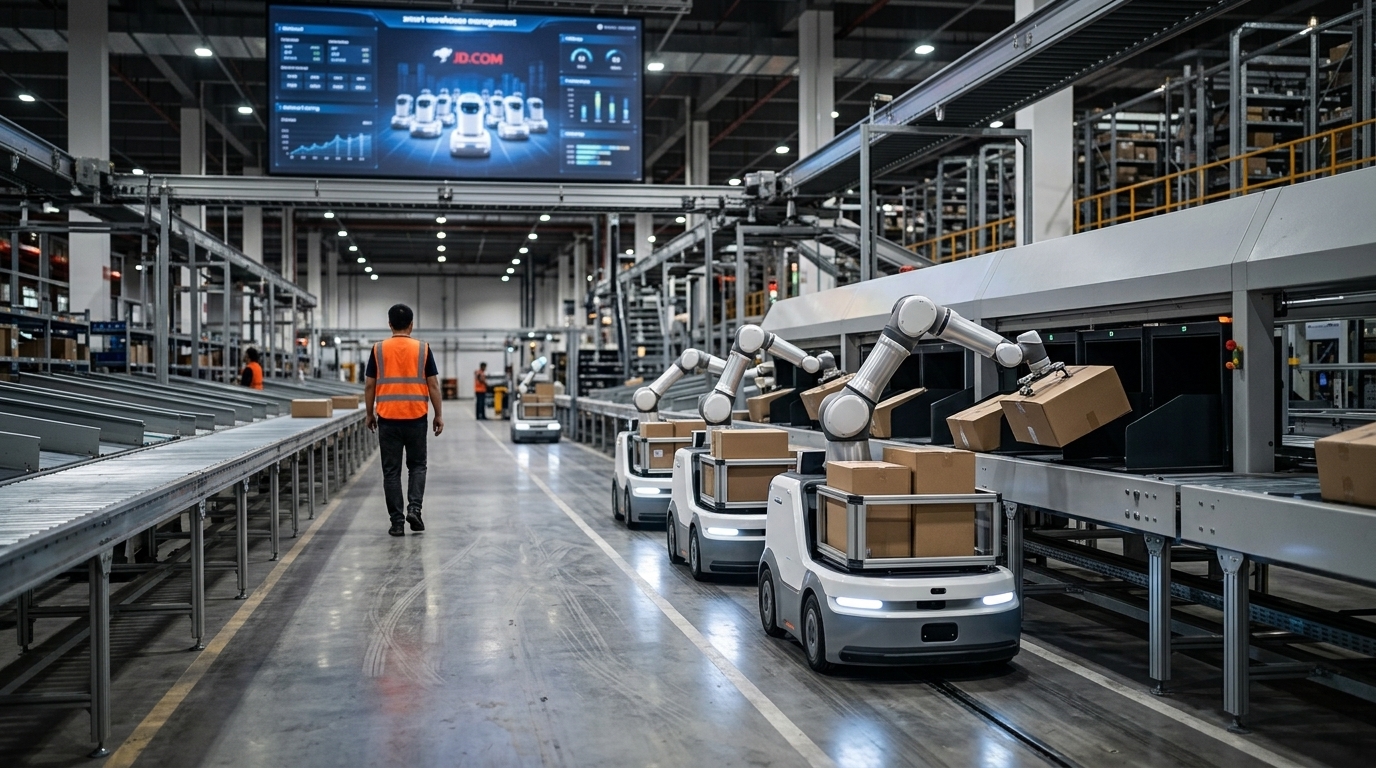
Richard Liu argues that full automation is not just an option, but a necessity. "In the future, when robots deliver packages, there will come a day when couriers are no longer needed," he stated. The company is investing billions in autonomous ground vehicles (AGVs), long-range drones, and fully automated "dark warehouses," where light is unnecessary since no humans work there.
Economic Necessity or Corporate Greed?
The shift toward robots is driven by three key factors. First, labor costs in China are steadily rising as the country transitions to a higher-income economy. Second, China's demographic crisis means the pool of young workers willing to engage in the grueling work of delivery is shrinking. Third, artificial intelligence has reached a level of maturity where navigating complex urban environments is no longer a science fiction scenario.
However, the prospect of sudden unemployment for 700,000 people raises serious ethical questions. JD.com's couriers, known for their distinctive red uniforms, are the "human face" of the company. Replacing them would mean breaking a social contract that expects technology to support, rather than displace, human labor. The Chinese government, which emphasizes "common prosperity," is closely monitoring these developments, as mass unemployment due to automation could lead to social instability.
The Challenge of the 'Last Mile'
Despite Liu's optimism, full human replacement faces massive technical hurdles. The so-called "last mile"—the journey from the delivery van to the apartment door—remains the most difficult part for robots. Stairs, broken elevators, locked entrances, and unpredictable human behaviors require a flexibility that only humans currently possess.
JD.com is experimenting with robots that can climb stairs and drones that deliver to specialized lockers on building rooftops, but their widespread application in densely populated megacities like Shanghai or Beijing remains a challenge. Liu, however, remains steadfast: technology will find its way, and economic efficiency will ultimately prevail over technical difficulties.
"Technology waits for no one. The question is not if it will happen, but how we will manage the transition so as not to leave an entire generation of workers behind." — Richard Liu
Conclusion: A World Without Couriers?
The statement by the head of JD.com marks a milestone for the Fourth Industrial Revolution. If a company with the size and infrastructure of JD succeeds in fully automating its deliveries, it will set the standard for the entire planet. Amazon, FedEx, and DHL are watching with bated breath. The future of logistics appears to be silent, electric, and fully automated, leaving behind the era of human toil on city streets.