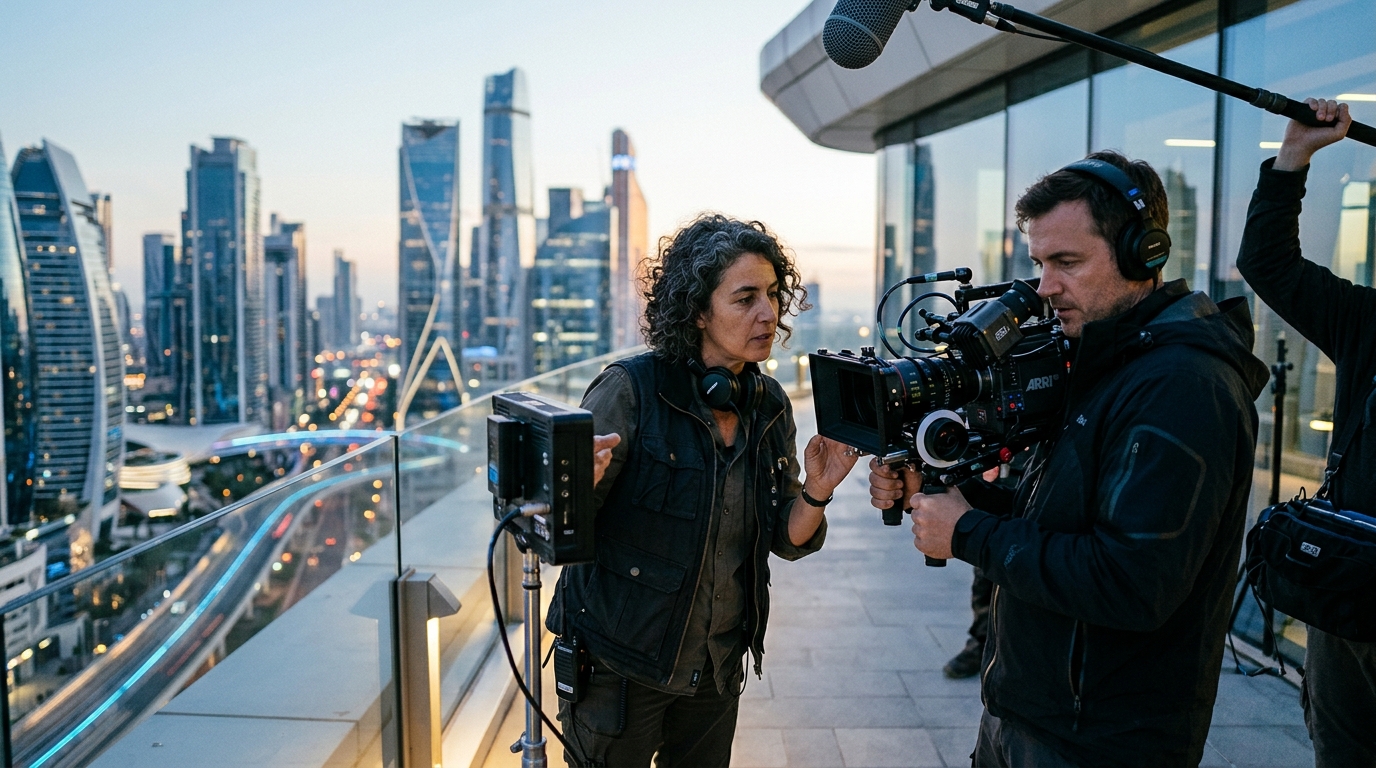
In the hallowed halls of Hollywood, where technology and storytelling have traditionally collided with explosive results, a new philosophy is beginning to take root. Following a year marked by strikes, existential dread, and the fear that algorithms would replace screenwriters and actors, a group of pioneering filmmakers is proposing a different path. For them, Artificial Intelligence (AI) is neither the enemy nor the protagonist. It is an "invisible brush" that, if used correctly, should leave no trace behind. The phrase "If it’s AI-detectable, you’ve failed" has become the industry’s new mantra, emphasizing that the true success of AI in cinema lies in its ability to serve the human vision without overshadowing it.
The Invisible Revolution: Beyond the Uncanny Valley
For decades, the entertainment industry has struggled with the "uncanny valley"—that unsettling feeling audiences get when a digital character looks almost, but not quite, human. The advent of Generative AI promised to bridge this gap, but early attempts often resulted in a "plastic" aesthetic that betrayed its origins. Today, directors and visual effects (VFX) artists are shifting their approach. Instead of letting AI create entire scenes from scratch, they are using it to enhance details that previously required thousands of hours of manual labor.
The use of AI for de-aging actors or correcting lip-syncing for different languages is just the tip of the iceberg. The real revolution is happening in the micro-adjustments: the way light hits an actor's face, the texture of fabrics, the movement of hair. When these elements are produced by AI but guided by human aesthetics, the result is so natural that the viewer never questions whether what they are seeing is "real." This invisibility is the ultimate benchmark of quality.
The Director as Data Orchestrator
The transition from a "traditional" to a "hybrid" production model requires a new set of skills. The director of the future doesn't just need to know where to place the camera, but also how to "speak" to the algorithm. However, the creators highlighted by The Hollywood Reporter insist: technology must never dictate the creative process. The "Human-in-the-loop" process is critical. Every frame generated by an AI passes through the filter of human judgment, is corrected, reworked, and integrated into the narrative in a way that only a conscious entity can conceive.
- Storyboarding and Pre-visualization: AI allows directors to visualize complex scenes in seconds, allowing more time for experimentation.
- Restoration and Preservation: Classic films are coming back to life with quality that was impossible just a few years ago.
- Personalized Experience: The ability to adapt backgrounds or details based on the audience, without altering the core performance.
This approach partially alleviates the concerns of labor unions. If AI is viewed as a tool like Photoshop or the Steadicam, then the creator remains at the center. The problem arises when AI is used to cut costs at the expense of quality—something Hollywood's "craftspeople" are trying to avoid at all costs.
The Ethics of Creation and the Future of Art
The remaining question is whether the ease offered by AI will eventually lead to a homogenization of art. If everyone uses the same generative models, will movies start to look identical? The filmmakers' answer is categorical: art stems from limitations and choices. AI offers infinite choices, but the artist is the one who must choose the single one that serves the story.
Furthermore, the debate over intellectual property remains heated. Using the work of other artists to train AI models is an ethical gray zone that the industry must regulate. Creators who put "human craft" at the center are usually those who support the fairest use of technology, recognizing that without human inspiration, the algorithm has nothing to process. The future of cinema will not be a battle between man and machine, but a symbiosis where the machine makes the impossible possible and the human makes it worth watching.