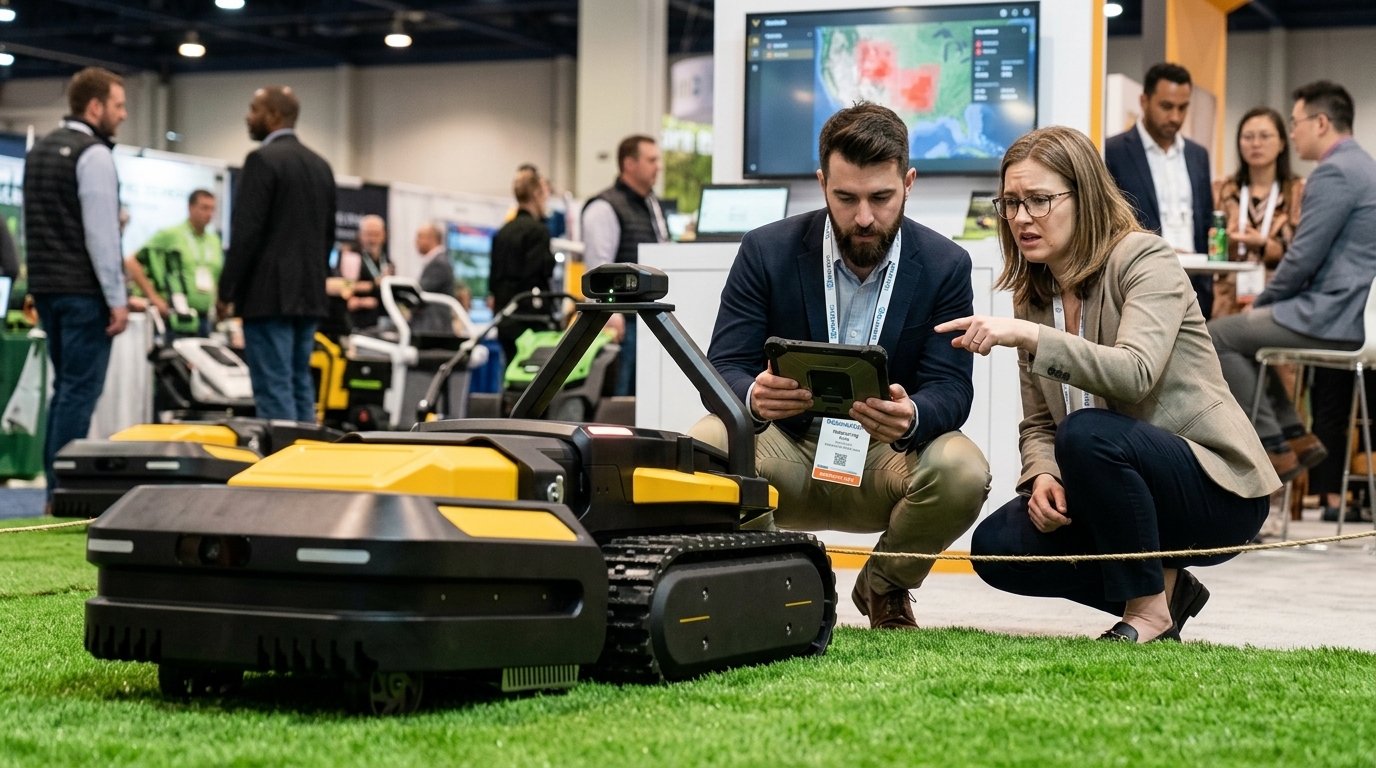
The image of a manicured lawn has long been the ultimate symbol of suburban tranquility. However, in the age of the Internet of Things (IoT), that peace hangs by a digital thread. Recent revelations by security researchers, highlighted by Wired, underscore a chilling reality: robotic lawn mowers—autonomous machines roaming our gardens with blades spinning at thousands of RPMs—are vulnerable to remote hijacking. What began as a convenience for the modern homeowner is morphing into a potential kinetic weapon in the hands of malicious actors.
The Anatomy of a Kinetic Threat
The issue isn't merely about data loss or privacy breaches, though those remain significant. The core vulnerability discovered in models from leading manufacturers allows a hacker to bypass security protocols via Bluetooth or Wi-Fi and take full control of the unit. Unlike a compromised email account, a hijacked lawn mower has physical mass and power. It can be driven outside garden boundaries, cause property damage, or, in the worst-case scenario, inflict serious injury on humans or pets.
Researchers from NCC Group and other independent analysts have pointed out that many of these devices lack basic security features such as firmware signing and robust encryption for their communications. The smart home industry appears to be repeating the sins of the past: prioritizing speed-to-market and user frictionlessness over foundational security. But when your device carries blades, "security as an afterthought" can be fatal.
The Broader Landscape of Digital Insecurity
The news about lawn mowers does not exist in a vacuum. It is part of a broader week of upheaval in the cybersecurity sector. Simultaneously, Meta (formerly Facebook) is facing backlash over changes to encryption policies for Instagram DMs—a move many interpret as a retreat under regulatory pressure, potentially compromising the privacy of millions. Meanwhile, leaked documents have revealed the existence of specialized schools in Russia dedicated to training a new elite of hackers, suggesting that cyber warfare is entering a phase of institutionalized escalation.
In the United States, the political dimension of security is intensifying as the administration targets groups it labels as "violent left-wing extremists," utilizing digital surveillance tools that often push the boundaries of constitutional rights. All these elements form a digital ecosystem where the safety of our private lives—from our conversations to our backyards—is under constant siege from states, corporations, and criminals alike.
Corporate Responsibility and the Need for Regulation
Why is it so difficult to secure a robotic mower? The answer lies in cost and complexity. Implementing robust security features requires better processors and more extensive software development time. However, the European Union, through the Cyber Resilience Act, is beginning to set stricter standards. Manufacturers will now be legally liable for the security of their products throughout their lifecycle.
- Mandatory Updates: Companies must guarantee security updates for at least five years.
- Security by Design: Products must be developed with security as a core pillar, not an add-on.
- Vulnerability Transparency: Manufacturers are required to report active exploits to authorities within 24 hours.
The mower case is a warning shot. As we move toward a world where robots will care for our elderly, deliver our packages, and clean our cities, the ability to trust the code that drives them becomes a matter of public safety. The "smart" life cannot be a privilege if it comes with the threat of a digital amputation. The nightmare in the garden is only the beginning of a conversation that should have started a decade ago.