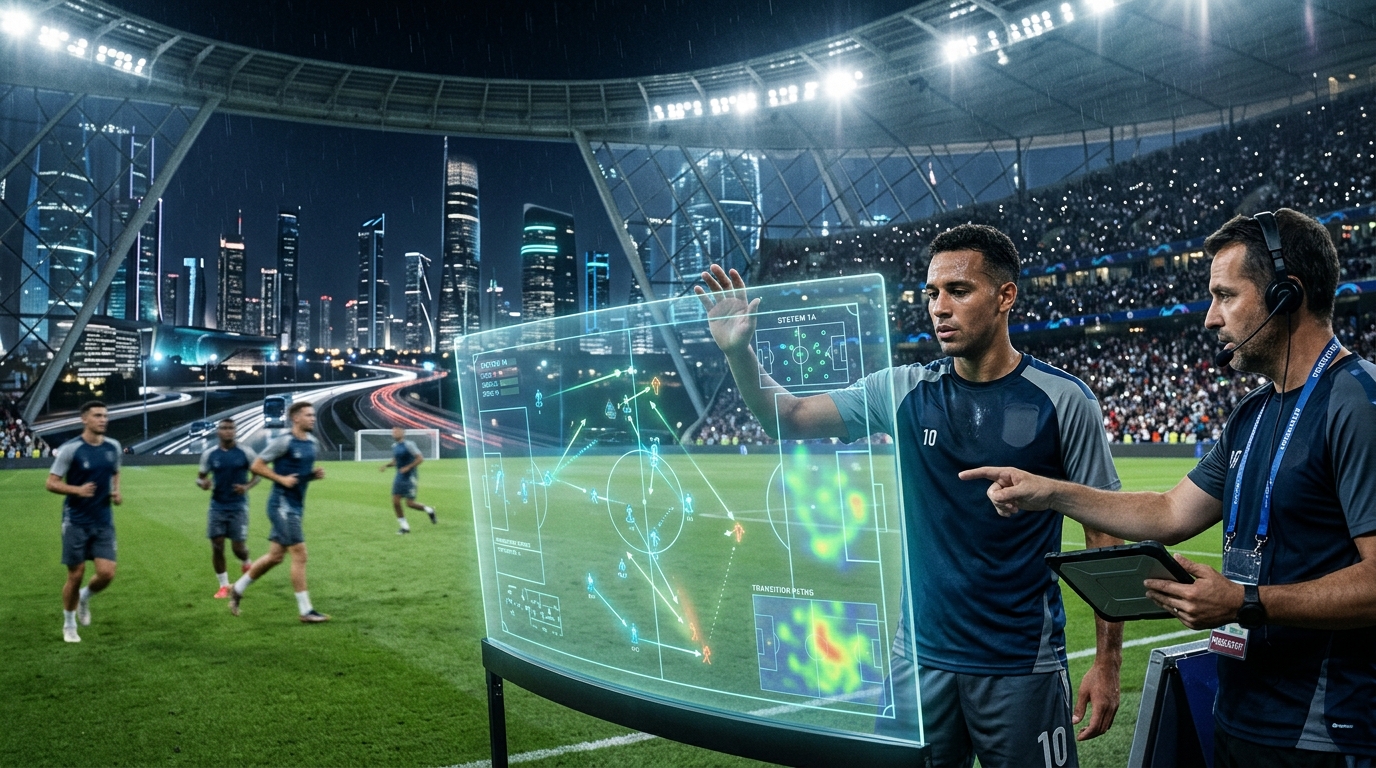
As the world gears up for the 2026 World Cup, the conversation is no longer just about football stars, but about the algorithms watching them. The integration of Google Gemini into the planet's largest sporting event marks a new era where artificial intelligence is not just a background assistant, but a protagonist influencing everything from team strategy to the fan experience on the sofa.
The Fan Experience in the Age of Gemini
Google's partnership with World Cup organizers brings Gemini directly into the hands of billions of fans. Through multimodal capabilities, spectators can now point their phone cameras at the pitch and receive real-time analytics that previously required entire teams of analysts. Gemini can identify the player in possession, display their performance history, and predict the probability of a successful pass or shot.
- Personalized match analysis through mobile applications.
- Interactive statistics displayed via Augmented Reality (AR).
- Instant commentary translation into dozens of languages for traveling fans.
This technological penetration is not limited to viewing. Gemini acts as a virtual assistant for fans visiting the stadiums, helping them with navigation, ticket purchases, and finding the best food spots, effectively eliminating linguistic and cultural distances.
From VAR to Predictive Refereeing
Refereeing has always been the most controversial part of football. While VAR (Video Assistant Referee) introduced a form of technological justice, Gemini promises to take the game a step further. Using advanced computer vision models, Google's AI can analyze thousands of data points per second to identify infractions that escape the human eye or even traditional VAR cameras.
"Artificial intelligence is not here to replace the referee, but to provide them with a panoramic and infallible view of reality," say Google Cloud executives.
Gemini's ability to simultaneously process video, audio, and data from sensors in the ball and player uniforms allows for decisions to be rendered in fractions of a second. This reduces the long interruptions that have been criticized in the current VAR system, keeping the flow of the game seamless.
Strategic Analysis and Team Preparation
Beyond the spectacle, national teams are already using Gemini to analyze their opponents. The AI can "read" thousands of hours of matches, identifying patterns in defensive movements or a goalkeeper's weaknesses during free kicks. This democratization of data means that even smaller federations with limited resources can access elite-level analytics, closing the gap between traditional powerhouses and underdogs.
However, this evolution raises questions about the "sterilization" of the sport. If every move is predictable and every mistake analyzable, is the spontaneity that made football the "king of sports" being lost? The answer lies in the balance between technological precision and human intuition.
Ethical Challenges and the Future
Google's entry into the World Cup is not without its critics. Issues of data privacy for fans tracked by AI systems, as well as the dominance of Big Tech in sports, are subjects of intense concern. The 2026 World Cup will be the ultimate experiment: can AI enhance public passion without turning football into a cold numbers game?