In an era where the planet's biodiversity is under unprecedented strain, the announcement of a partnership between Colossal Biosciences—the company promising the "de-extinction" of the woolly mammoth—and the US Department of the Interior to create a "BioVault" evokes both awe and intense skepticism. The project aims to collect, sequence, and store genetic material from hundreds of endangered species, creating a digital and biological legacy for the future. However, the timing of the announcement, amid efforts by the Trump administration to weaken the Endangered Species Act (ESA), lends the project a dark political undertone.
The Technological Promise of Genetic Rescue
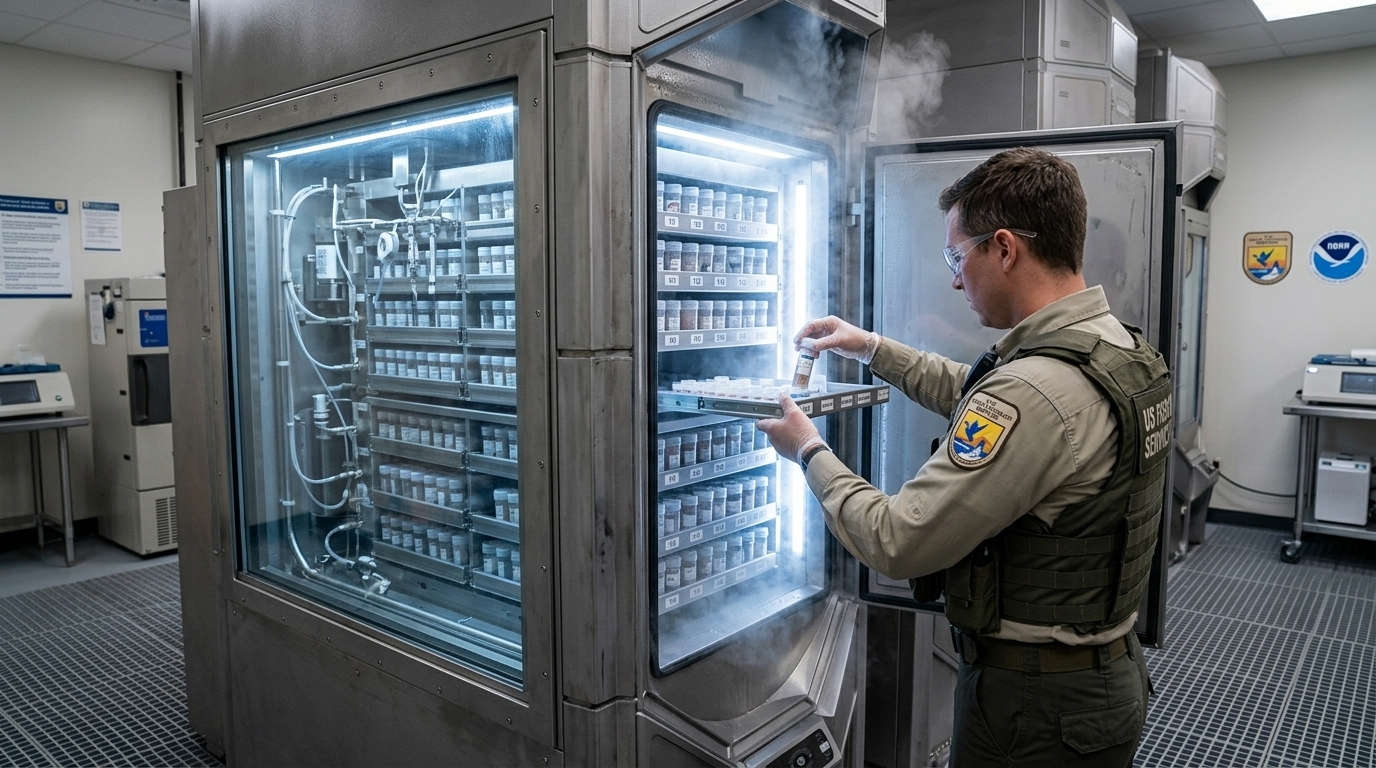
The BioVault is not merely a storage facility for DNA samples. Colossal Biosciences, led by Ben Lamm and scientifically guided by Harvard geneticist George Church, is bringing cutting-edge technologies like CRISPR and computational biology to the table. The goal is "genetic rescue": the ability to introduce genetic diversity into populations threatened by inbreeding or to make species more resilient to climate change and disease. The partnership stipulates that Colossal will provide its expertise for high-fidelity genome sequencing, something the state is unable to fund at the pace required by the biodiversity crisis.
Supporters of the project argue that it is a "life insurance policy" for the planet. In a world where habitats are being destroyed rapidly, preserving the genetic code is the last line of defense. If a species goes extinct in the wild, possessing its full genome theoretically allows for its future revival or at least the study of its biological secrets. Colossal has already made strides in this direction with the mammoth and the thylacine, and the BioVault extends this philosophy to species currently on the brink.
Political Expediency and the Weakening of the ESA
Criticism, however, focuses on the fact that this technological solution is being promoted at the same time the federal government is seeking to relax regulations protecting habitats. The Endangered Species Act (ESA), the cornerstone of American environmental policy since 1973, is under attack with the aim of facilitating mining, logging, and industrial development in protected areas. Critics fear the BioVault serves as a "moral hazard": if we can store a species' DNA in a freezer, then the destruction of its natural environment becomes politically and socially more palatable.
- The partnership raises questions about the ownership of genetic material: Will it belong to the public or a private company valued at billions?
- There is a risk of shifting resources from traditional conservation (protecting forests, wetlands) toward high technology.
- "De-extinction" remains an unproven promise, while species extinction is a painful reality.
Organizations like the Center for Biological Diversity warn that technology cannot replace ecosystems. A lab-grown animal has nowhere to return to if its habitat has become a shopping mall or an oil well. Focusing on DNA, they say, distracts from the root cause of the crisis: human expansionism.
Ethical Dilemmas and the Future of Nature
The BioVault confronts us with a new ontology of nature. If life can be reduced to digital information, then the concept of "extinction" changes. It becomes something reversible, a technical glitch that can be fixed. But this view carries risks. Nature is not just the sum of its genes, but the web of relationships between species and their environment. Isolating DNA in a vault is an act of desperation reflecting our failure to coexist with the natural world.
At the same time, one cannot ignore the need for action. At the rate species are being lost, inaction is equally dangerous. If Colossal's technology can offer even a chance of survival to species that would otherwise be lost forever, rejecting it for reasons of ideological purity might be a luxury we don't have. The gamble is whether the BioVault will complement traditional conservation or substitute it. History will judge whether this initiative was the Noah's Ark of the 21st century or the final surrender of a humanity that preferred laboratories over forests.