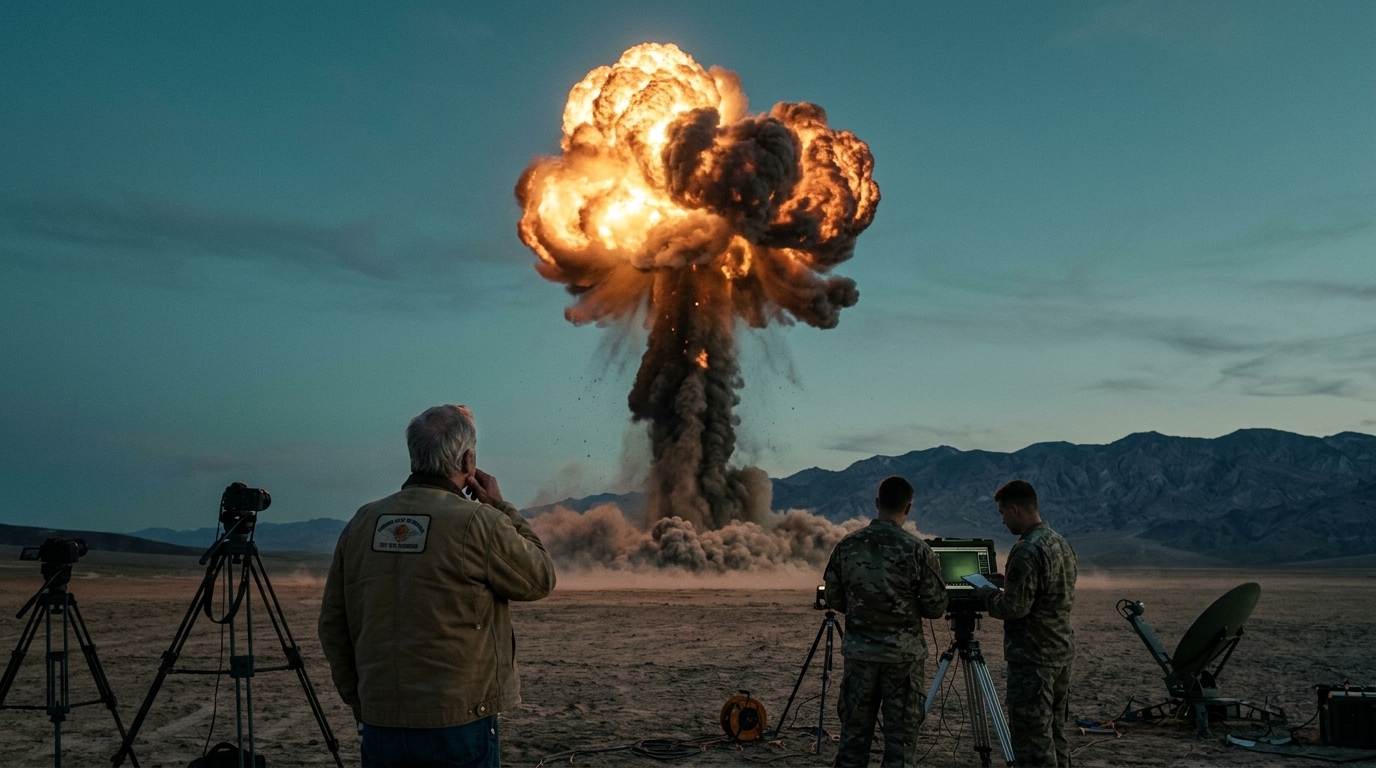
Humanity stands at a critical juncture, where the memory of Hiroshima and Nagasaki seems to be fading in the face of new geopolitical ambitions. According to the latest report from the Stockholm International Peace Research Institute (SIPRI), the world is entering one of the most dangerous periods in human history. Concern is no longer focused solely on the total number of warheads, but on the increasing operational readiness of these weapons. For the first time since the end of the Cold War, diplomacy is retreating before atomic power, and major powers appear to be abandoning their commitments to disarmament.
The Arithmetic of Terror and the Chinese Ascent
While the United States and Russia still hold 90% of the world's nuclear stockpiles, the dynamics are shifting rapidly. China, which traditionally maintained a "minimum deterrent" arsenal, is accelerating its expansion at rates that surprise analysts. The construction of hundreds of new launch silos and the strengthening of its nuclear triad (land, sea, air) suggest a strategic shift toward a "first strike" position or at least an equal nuclear confrontation with the US. This development is not merely quantitative; it is qualitative. New systems are more precise, harder to detect, and incorporate cutting-edge technologies that make the old concept of "Mutually Assured Destruction" (MAD) even more unstable.
In Russia, rhetoric has hardened dangerously following the invasion of Ukraine. The suspension of participation in the New START treaty and frequent references to the use of tactical nuclear weapons have lowered the threshold for nuclear use in the public and military spheres. Moscow uses its arsenal not as a last resort, but as a tool of geopolitical blackmail, forcing the West to balance on a tightrope between supporting Kyiv and avoiding a global holocaust.
The Collapse of the International Control Architecture
The most worrying element of the current situation is the almost complete collapse of arms control mechanisms. The treaties painstakingly built during the 1970s and 80s, such as the INF and Open Skies, are now a thing of the past. A lack of transparency leads to suspicion, and suspicion fuels a new arms race. When states cannot inspect each other's arsenals, they tend to assume the worst-case scenario, proceeding with further armaments to "match" a threat that may be overestimated.
Furthermore, the entry of Artificial Intelligence (AI) into the command and control of nuclear systems adds a layer of unpredictable risk. The speed at which AI can process data and suggest military responses reduces decision-making time for leaders. In a crisis, the "human factor"—which has historically prevented nuclear accidents—may be bypassed by algorithms that prioritize speed over prudence. The possibility of a nuclear war by mistake or misinterpretation of data is higher today than ever before.
Regional Flashpoints and the Risk of Proliferation
Beyond the major players, the situation in Asia and the Middle East remains explosive. North Korea continues to test ballistic missiles capable of carrying nuclear warheads, strengthening its position as a de facto nuclear power. India and Pakistan, two neighbors with a history of hostility, continue to modernize their arsenals, while Iran is closer than ever to enriching uranium to weapons-grade levels. The international community's failure to curb these ambitions creates a domino effect, where neighboring countries may reconsider their own non-nuclear stance.
In conclusion, the SIPRI report is not just a collection of statistics, but a cry for help. The increase in weapons on "high operational readiness" means that missiles are ready to be launched within minutes. In a world characterized by multipolarity and instability, the need for a new global nuclear restraint agreement is imperative. Peace cannot rest forever on the balance of terror because, as history teaches us, these balances eventually tip.