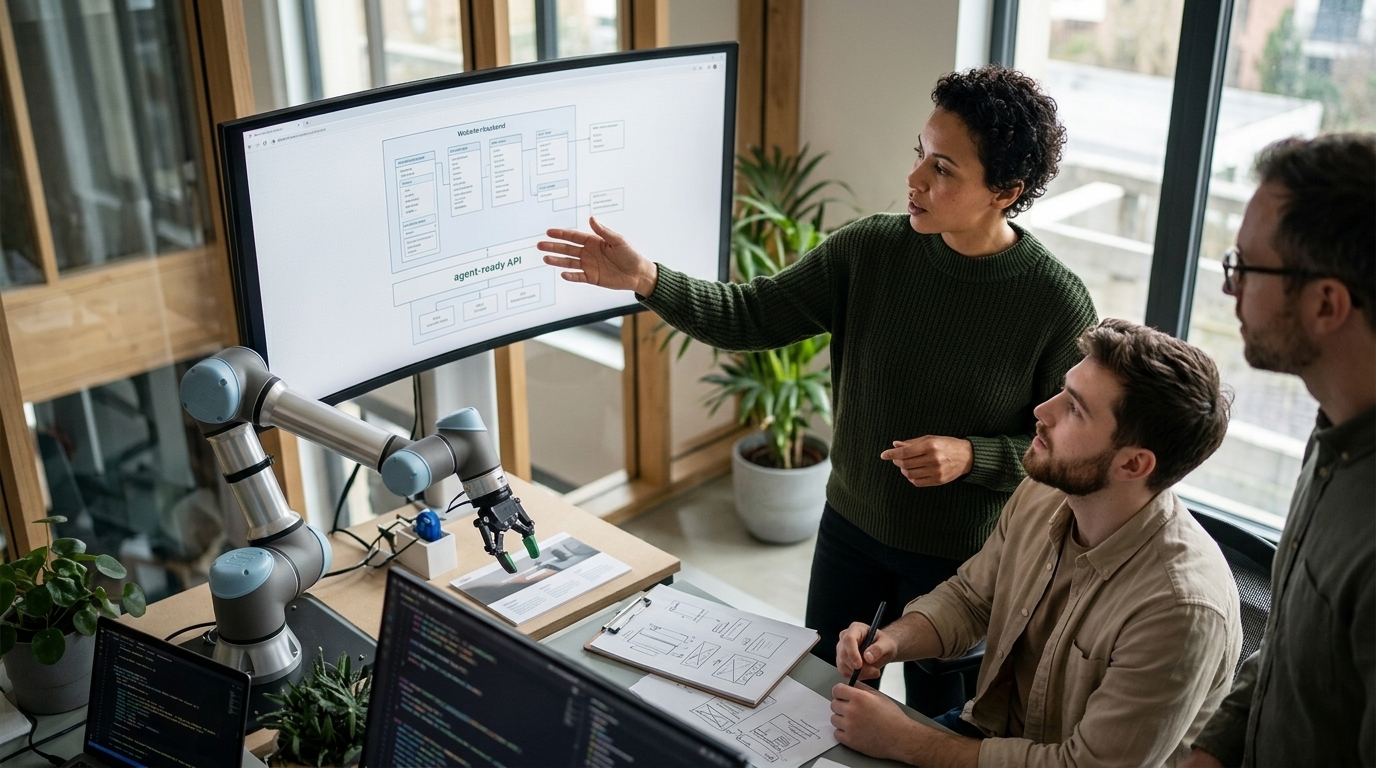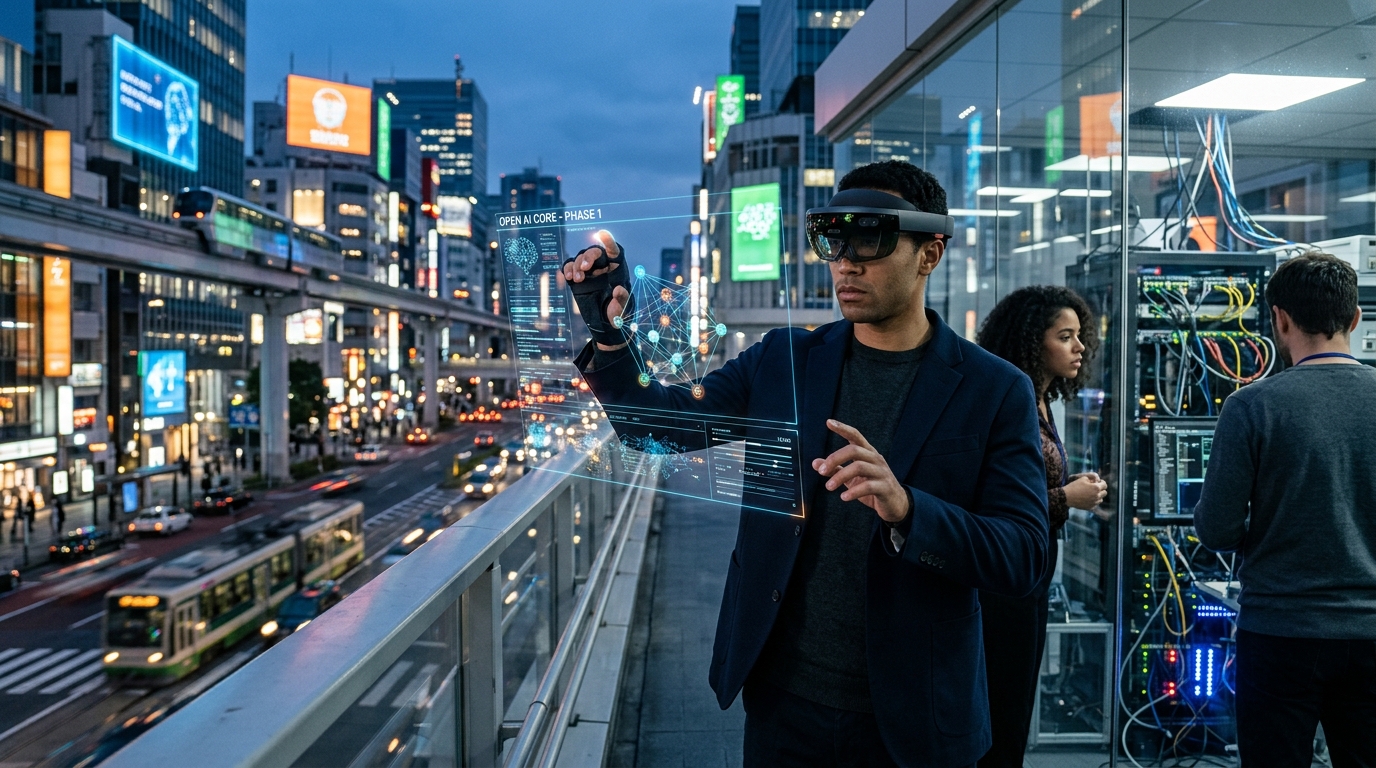
For over two years, the global conversation surrounding Artificial Intelligence (AI) remained largely confined within the borders of a screen. From chatbots composing poetry to image generators disrupting the art world, AI was treated as an intangible productivity tool. However, as we move through 2026, a fundamental paradigm shift is occurring. As recently highlighted by the FII Institute, the true AI revolution will not be judged by who possesses the best algorithm, but by who has the capacity to "build" it into the physical world. The era of software "ownership" is giving way to the era of infrastructure "construction."
The Transition from Digital to Physical
The concept of "Beyond the Screen" is not merely a slogan; it is a description of the integration of intelligence into matter. Until today, AI has been a passive advisor. In the immediate future, it becomes the active operator of our infrastructure. From autonomous energy grids that balance demand in real-time to robotic systems taking over heavy industry, AI is transforming from a "service" into the "operating system of reality." This evolution requires a radical reassessment of what it means to "build" technology. It is no longer enough to access an API from a Silicon Valley giant. Countries and organizations that wish to survive economically must develop their own "Sovereign AI."
Sovereign AI is about a nation's ability to produce intelligence using its own data, its own energy, and its own infrastructure. The model of the "rented" brain, where entire economies rely on foreign platforms, is proving to be dangerous. The move toward "building" means investing in local data centers, specialized semiconductors, and, most importantly, human capital that can tailor models to local needs and cultural nuances.
The Decentralization of Innovation
One of the most interesting conclusions of the current trajectory is the weakening of the monopoly on ownership. In the past, technological power was synonymous with holding intellectual property (IP). Today, with the rise of open-source models and collaborative development, value is shifting from the code to the application. AI is being "built" on common foundations, but the real added value is created where technology meets physical problems: in precision agriculture, water resource management, and personalized medicine.
- Industrial Automation: AI is leaving the office and entering the factory, not as a human replacement, but as a coordinator optimizing the supply chain in fractions of a second.
- Energy Sovereignty: Building AI requires massive amounts of energy, leading to a new convergence between tech giants and green energy providers.
- Redefining Labor: Work will no longer be about operating AI tools, but about designing systems that integrate AI into daily practice.
Challenges and Geopolitical Implications
This new phase of the revolution is not without its risks. The gap between nations that can "build" and those that can only "consume" threatens to widen. The geopolitical chessboard of 2026 is no longer defined solely by borders, but by computational power (compute). A country's ability to maintain its own "intelligence factories" is now a matter of national security. As the FII Institute notes, investment in AI must be treated with the same seriousness as the construction of railroads in the 19th century or electricity grids in the 20th.
"Artificial Intelligence is not a product you buy off the shelf; it is a capability you cultivate on your own soil," industry analysts state.
In conclusion, the revolution beyond the screen calls us to stop looking at AI as a miracle of computer science and start seeing it as the foundation of the new industrial age. The future belongs to the builders—those who manage to bridge the gap between digital code and physical reality, creating systems that are resilient, sovereign, and, above all, useful to human society.