In the heart of Silicon Valley, within the halls of the Stanford Graduate School of Business, Demis Hassabis, the man leading Google DeepMind, made a statement that resonated far beyond the campus. According to Hassabis, humanity is no longer merely in a phase of technological evolution; we are officially standing at the ‘foothills of the Singularity.’ This term, once relegated to the realm of science fiction, describes the point where technological growth becomes uncontrollable and irreversible, fundamentally altering human civilization.
Hassabis’s talk was not a typical corporate keynote. It was an anatomy of the path toward Artificial General Intelligence (AGI) and a reminder that Google, despite fierce competition from OpenAI and Anthropic, remains committed to a goal that transcends chatbots: solving the greatest scientific challenges of our time. For Hassabis, AGI is not a destination for the sake of a power display, but a tool that will accelerate the scientific method by thousands of times.
From Linguistic Mimicry to Rational Reasoning
One of the central points of Hassabis’s analysis was the distinction between current Large Language Models (LLMs) and true intelligence. Although models like Gemini and GPT-4 are impressive at generating text, Hassabis argued that the next great challenge is the transition from ‘statistical prediction’ to ‘reasoning and planning.’ DeepMind is working feverishly to integrate the capabilities of AlphaZero—the system that learned to play chess at a superhuman level through self-play—into language models.
This convergence will allow AI not just to ‘parrot’ information, but to solve multi-step problems, verify the correctness of its own conclusions, and discover new knowledge. “We are at the end of the era where AI is just a mirror of human data,” he noted. “We are moving into the era where AI will be a partner in discovering the unknown.” This shift is critical for moving beyond the current limitations of hallucinations and lack of logical grounding in AI systems.
The Scientific Renaissance: The AlphaFold Paradigm
Hassabis used AlphaFold as the ultimate example of AI’s transformative power. The system’s ability to predict the structure of almost every protein known to science has already saved biologists hundreds of millions of hours of labor. This, according to him, is just the beginning. His vision includes using AI to design new materials for batteries, find solutions for climate change, and create personalized medicines for previously untreatable diseases.
This approach differentiates DeepMind from its competitors who focus primarily on consumer-facing AI. For Hassabis, the true value of the Singularity lies in our ability to unlock the secrets of nature. However, he acknowledged that this path requires immense resources. Google is rumored to be investing over $100 billion in computing infrastructure, a move that underscores the sheer cost of entry into this new epoch of discovery.
Risks and Global Governance
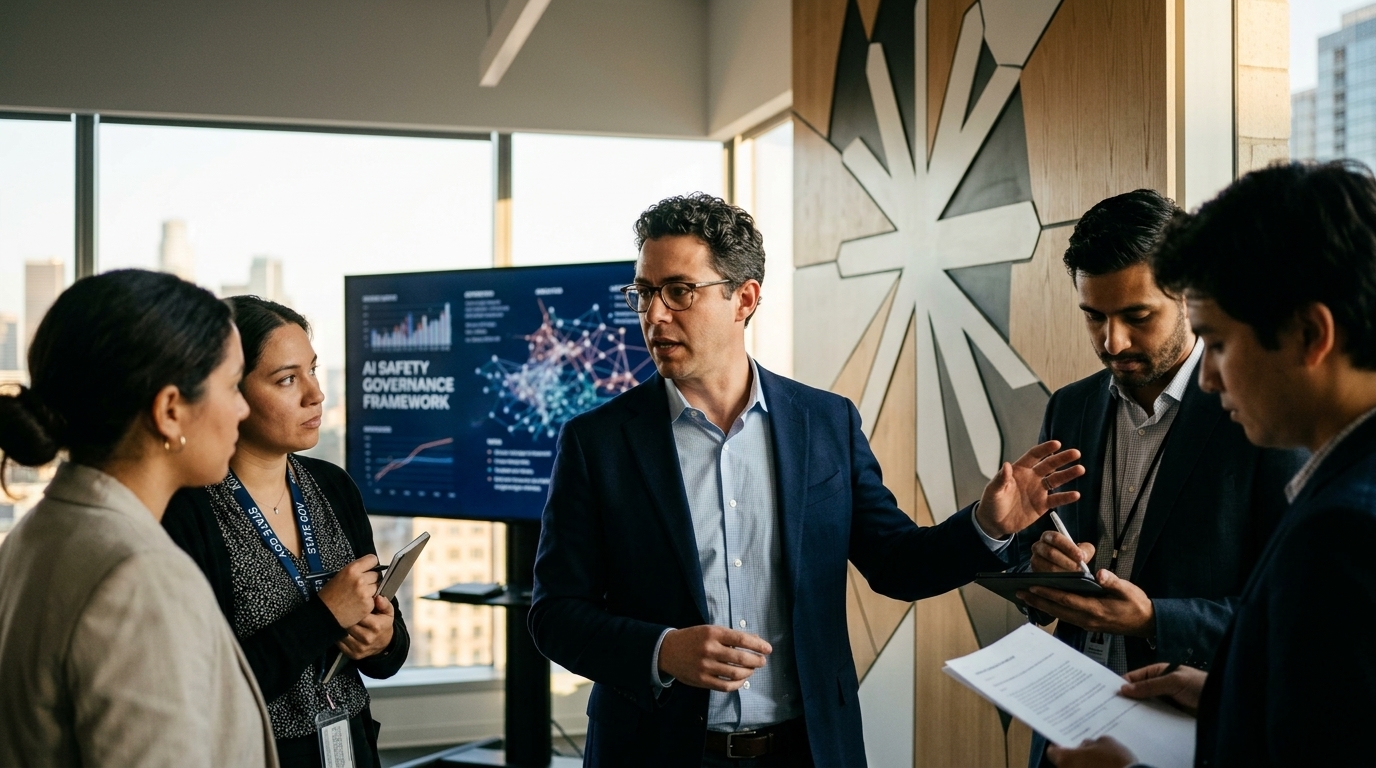
Despite his optimism, Hassabis did not shy away from the difficult questions regarding safety. He described the need for a ‘CERN for AI,’ an international body that would oversee the development of AGI and ensure that risks—ranging from loss of control to malicious use—are mitigated. The idea of the Singularity carries with it an existential anxiety: if AI surpasses human intelligence, how do we preserve our values and ensure alignment?
Hassabis argued that transparency and the staged release of models are essential. “We cannot wait to have all the answers before we start, but we must be ready to hit the brakes if necessary,” he emphasized. The discussion at Stanford made it clear that the journey toward the Singularity is not just a technical issue, but a profound political and ethical challenge that will require unprecedented global cooperation. The ‘foothills’ may be beautiful, but the climb to the summit will be the most arduous task humanity has ever faced.