In the snow-capped peaks of Davos, where the global elite gather to map out the planet's future, the central theme of the 2026 discussions is no longer the "possibility" of Artificial Intelligence (AI), but its profound, systemic, and irreversible impact on the global labor market. This year's reports from the World Economic Forum (WEF) and the International Monetary Fund (IMF) outline a landscape where AI is transforming jobs at every level — from the intern to the Chief Executive Officer.
Market Polarization and Advanced Economy Exposure
According to the latest analyses presented in the Swiss Alps, nearly 40% of global employment is exposed to AI. However, the distribution of this risk — and the corresponding opportunity — is not uniform. In advanced economies, this figure reaches 60%. Unlike previous industrial revolutions that primarily affected manual labor, the AI revolution strikes at the heart of cognitive work.
Analysts at Davos emphasize that AI could lead to unprecedented polarization. On one hand, workers who manage to integrate AI tools into their daily routines will see their productivity and earnings soar. On the other hand, there is a risk for a large mass of workers who may find themselves sidelined as their skills are rendered obsolete by algorithms that can write code, draft legal documents, or analyze medical scans with greater accuracy and speed than humans.
The End of the Traditional "Entry-Level" Role
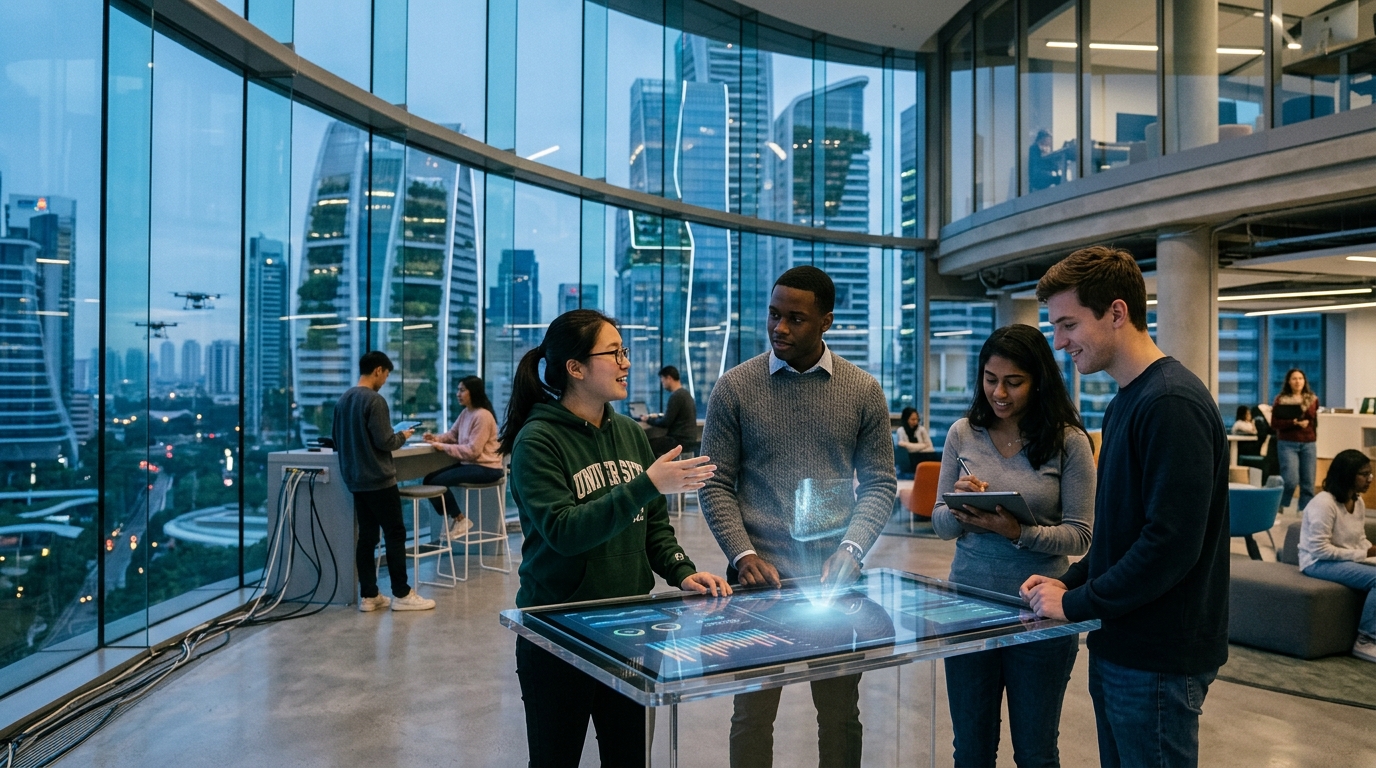
One of the most concerning findings of this year's Forum concerns young professionals. Traditionally, entry-level positions served as the "school" where young people learned the basic skills of their profession. Today, these tasks — drafting reports, basic research, routine programming — are increasingly performed by Generative AI.
"We are facing an apprenticeship crisis. If AI does the work of the junior, how will tomorrow's senior be trained?"
This question dominated expert panels. The proposed solution is a radical overhaul of education and corporate training. Companies are being called upon to invest not just in technology, but in "human augmentation," teaching employees how to become "orchestrators" of AI rather than mere task executors.
Social Implications and the Need for a New Social Contract
The discussion at Davos was not limited to numbers and productivity. There was a strong recognition that AI could exacerbate income inequality. While capital owners and specialized technologists reap the rewards, the average worker feels the pressure of uncertainty. Leaders discussed the need for stronger social safety nets, such as Universal Basic Income or, more realistically, "Universal Basic Education" that allows for continuous reskilling throughout one's life.
- Reskilling: The necessity to learn new digital tools every 18-24 months.
- Soft Skills: Critical thinking, empathy, and strategic decision-making are becoming the new "hard" skills.
- The Geopolitical Divide: The risk that developing nations will be left behind, lacking the infrastructure to exploit AI.
In conclusion, the message from Davos 2026 is clear: AI is not a storm that will pass, but a new climate in which we must learn to live. Success in this new environment will not depend on resisting technology, but on the speed and humanity with which we adapt to it.