As we reach the end of June 2026, Europe is not merely facing another hot summer, but a fundamental shift in seasonality as we once knew it. According to the recent analysis by the Climatehub team, the climate crisis has ceased to be a future threat and has become the primary architect of the new European reality. The Mediterranean, once the global sanctuary for summer leisure, is transforming into a high-risk zone, forcing states, businesses, and citizens to rethink everything: from how we build our cities to where we choose to vacation.
The Thermal Siege and the Rise of 'Coolcationing'
The concept of the 'Greek Summer' or Italy's 'dolce vita' is taking a severe hit from the reality of 45-degree Celsius temperatures. Climatehub's analysis points out that tourism traffic is beginning to shift northward. Countries like Norway, Sweden, and Denmark are seeing an unprecedented surge in bookings, giving rise to the phenomenon of 'Coolcationing' (Cool + Vacation). Travelers are now seeking the safety of coolness instead of traditional sunbathing, which is now accompanied by health warnings and wildfire risks.
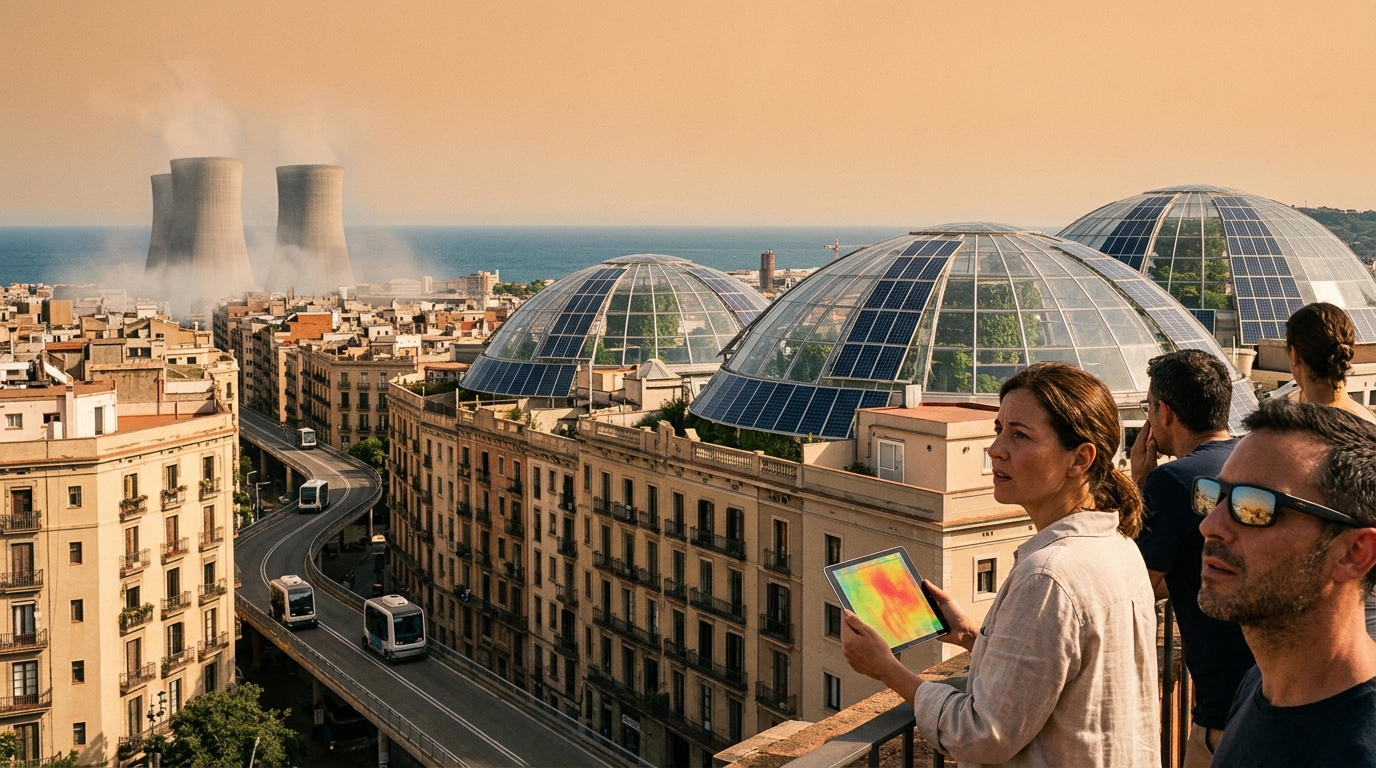
This shift is not only cultural but also deeply economic. Southern Europe, which relies heavily on its tourism product, faces a dilemma: it must either extend the tourist season into the spring and autumn months or face a gradual economic devaluation of its infrastructure during July and August. Climatehub warns that the 'thermal inertia' of buildings in southern cities makes living almost impossible without continuous air conditioning, sharply increasing energy costs and the pressure on power grids.
Artificial Intelligence as a Protective Shield
In this dystopian setting, technology—and specifically Artificial Intelligence (AI)—is taking on the role of a lifesaver. In Greece and Spain, AI systems are now used to predict wildfires with an accuracy reaching 90%, analyzing data from satellites, ground sensors, and historical climate patterns. AI does not just predict where a fire will break out; it simulates its spread in real-time, allowing authorities to evacuate areas with surgical precision.
- Advanced forecasting models for energy consumption, preventing blackouts during heatwaves.
- Smart water management systems that reduce waste in agriculture by up to 40%.
- Urban planning algorithms that suggest the creation of 'cool corridors' and the use of reflective materials in cities.
However, Climatehub emphasizes that technology alone is not enough. A radical change in the mindset of political leadership is required. Climate adaptation requires billions in investment for infrastructure that must be not just 'green,' but 'resilient.' The use of AI in precision agriculture is an example of how we can ensure Europe's food security, as traditional crops in the South are threatened by prolonged drought.
Social Implications and the New Inequality
One of the most alarming aspects of the analysis is the emergence of a new form of inequality: 'thermal inequality.' While wealthy citizens can retreat to air-conditioned environments or travel North, lower social strata remain trapped in urban 'heat islands.' Energy poverty is gaining a new dimension, as the cost of cooling becomes just as essential—and just as expensive—as heating in the winter.
"Summer in Europe is no longer a celebration of nature, but a test of our infrastructure's endurance and our social cohesion," the Climatehub report states.
Political pressure on the European Union is mounting, as Southern countries call for a 'Climate Adaptation Fund' focusing on surviving the heat. The debate on reducing carbon emissions remains critical, but the summer of 2026 proves that adapting to existing heat is now a matter of life and death. Europe is called to redesign itself; otherwise, it risks seeing its most beloved symbol—summer—transform into a season of fear and economic stagnation.