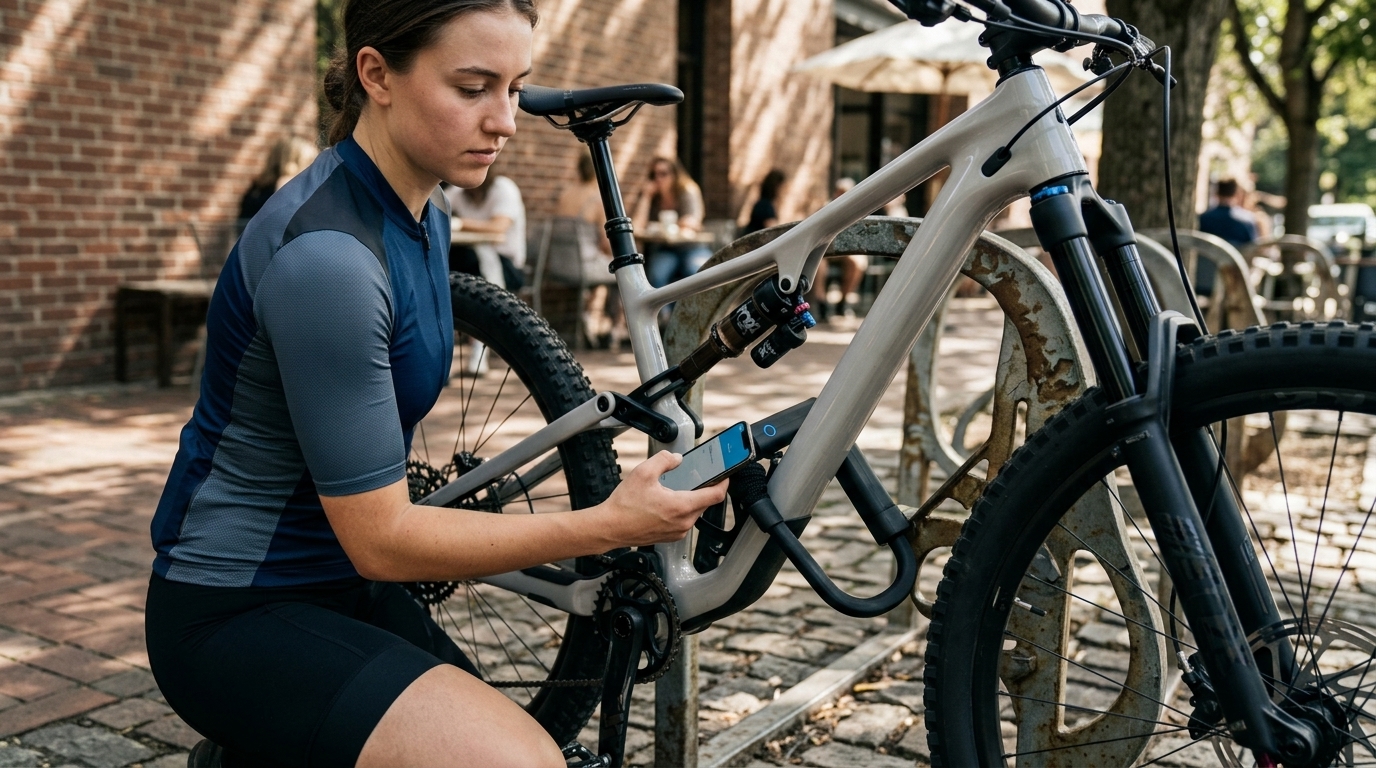
In the evolving landscape of urban mobility, bike security has long been a brute-force battle between hardened steel and heavy-duty bolt cutters. For decades, the gold standard was simple: weight, density, and a physical key. However, as electric bikes (e-bikes) transform from niche gadgets into multi-thousand-dollar investments, a new category of "smart security" is attempting to disrupt the status quo. The latest entry comes from TMD, a company whose pedigree lies not in cycling, but in the high-stakes world of ATM security. Their new chain lock, priced at a staggering $280, promises to eliminate the key without compromising the core integrity of the lock. Yet, the central question remains: is this a sophisticated leap forward, or a classic case of over-engineering a solution for a problem that was already solved for $60?
From Bank Vaults to Bike Racks
TMD is not your typical Silicon Valley startup launched via a flashy crowdfunding campaign. They are established experts in securing automated teller machines—environments where failure is not an option. This industrial background is palpable in the TMD Chain Lock's construction. While previous attempts at smart locks often felt like flimsy gadgets with a Bluetooth chip slapped on, TMD has prioritized the physical deterrent. The chain is composed of high-grade hardened steel, specifically designed to thwart power tools and manual cropping. It carries the Sold Secure Diamond certification, the highest rating possible, ensuring it meets the same mechanical standards as the best traditional locks on the market.
The transition from banking hardware to consumer bike locks reflects a broader societal trend: the "securitization" of the everyday. As urban environments become more congested and our personal transit assets grow more expensive, users are demanding professional-grade protection. TMD argues that by using military-grade Bluetooth encryption, they have closed the digital loophole that plagued earlier smart locks, offering a keyless experience that is as robust as it is convenient.
The Paradox of Smart Convenience
The primary value proposition of the TMD lock is the elimination of friction. The ability to have your bike unlock automatically as you approach—proximity sensing at its finest—is a genuine luxury for the high-frequency urban commuter. No more fumbling for keys in the rain or digging through a backpack while holding a grocery bag. But this convenience introduces a new variable into the security equation: digital reliability. Unlike a traditional U-lock, an electronic lock requires power. While TMD promises impressive battery longevity, the specter of a "dead" lock leaving a rider stranded is a psychological hurdle that traditional manufacturers like Kryptonite or Abus don't have to clear.
Furthermore, there is the looming issue of digital obsolescence. A high-quality steel lock can easily last thirty years, provided the mechanism is oiled. A smart lock, however, is tethered to a mobile ecosystem. It depends on app updates, OS compatibility, and the continued existence of the manufacturer's cloud infrastructure. In a world where IoT devices often become "bricked" once a company pivots or goes under, spending $280 on a device with a software-dependent lifespan is a gamble that many pragmatists are unwilling to take.
Value Analysis in a Premium Market
At $280, the TMD lock is undeniably a luxury item. For a rider on a $300 used hybrid, the purchase is nonsensical. However, for the owner of a $5,000 Specialized or Riese & Müller e-bike, the calculus changes. In this context, the lock represents a small fraction of the total asset value. TMD isn't just selling a piece of hardware; they are selling an integrated experience for the high-end commuter. The ability to share digital keys with family members or colleagues via an app adds a layer of utility that physical keys simply cannot match without significant logistical headaches.
There is also the matter of fleet management. For small businesses or bike-share programs, the ability to track and manage access digitally is a game-changer. Yet, the criticism that this is a "solution in search of a problem" persists. The cycling industry has a history of introducing high-priced innovations that solve minor inconveniences while introducing major complexities. TMD’s challenge will be to prove that their lock is not just a gadget for early adopters, but a reliable tool for the serious cyclist.
Conclusion: The Future of the Lock
As we move through 2026 and toward 2027, the integration of smart tech into our physical security is likely inevitable. The TMD lock represents the vanguard of this movement—a serious attempt to bring industrial-grade reliability to the consumer space. While the price point remains a significant barrier for the average rider, the product serves as a benchmark for what is possible when security experts turn their attention to urban mobility. For now, the TMD lock remains a niche masterpiece: a beautifully engineered, highly secure, and undeniably expensive answer to a question that many cyclists are still happy to answer with a simple piece of metal and a key.