Human history is a continuous sequence of technological disruptions, but none seem to provoke as much existential anxiety as the current rise of Artificial Intelligence (AI). In this climate of uncertainty, the voice of Bill Gates—a man who not only predicted the digital revolution but steered it—carries immense weight. His recent prediction that only three career sectors are truly "safe" from automation has triggered waves of debate in academic circles, boardrooms, and coffee shops worldwide.
The Three Pillars of Security
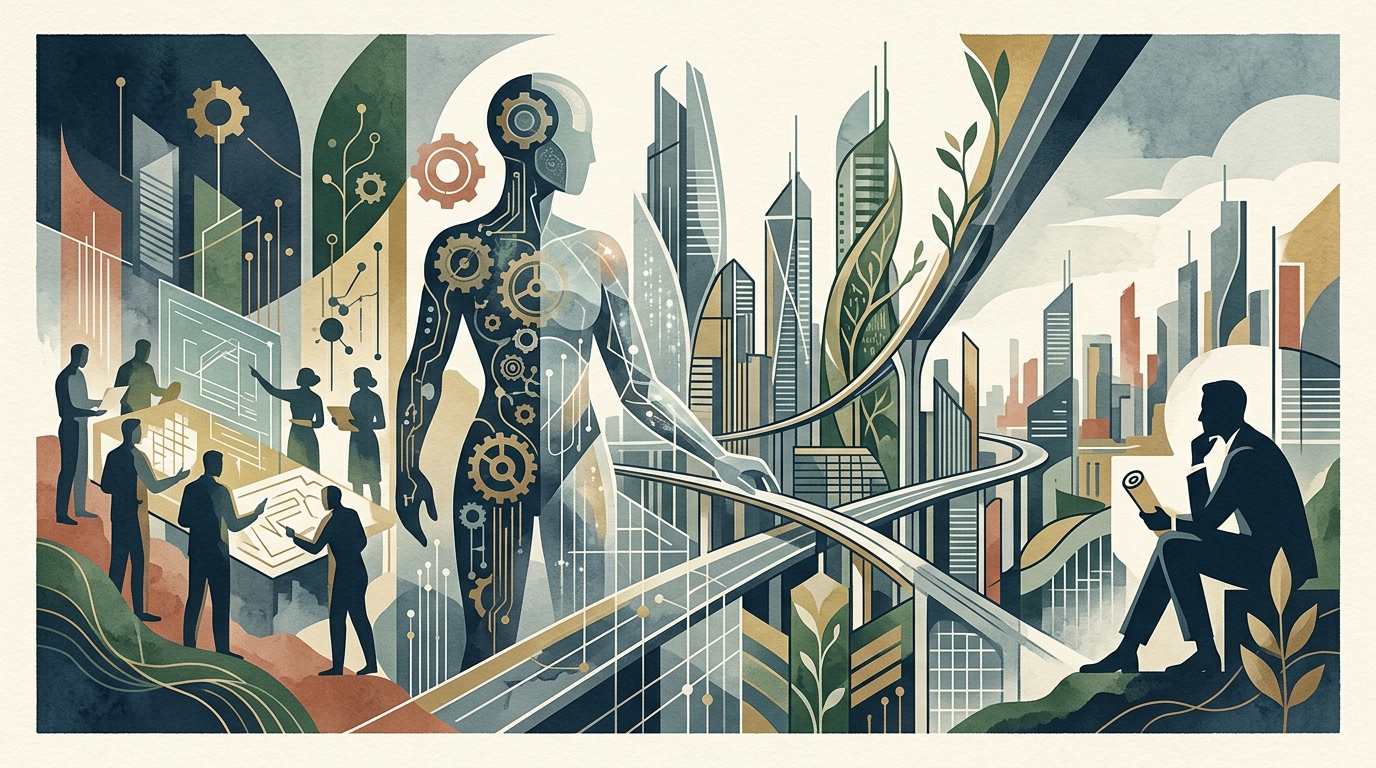
According to Gates, the sectors that will weather the AI storm are Energy, Life Sciences, and AI itself. This selection is not accidental. The energy transition represents the greatest physical challenge of our century, requiring complex engineering and geopolitical strategies that AI can assist with but not lead autonomously. Life sciences, on the other hand, combine deep scientific knowledge with ethics and human judgment regarding health and longevity. Finally, the AI sector remains safe for obvious reasons: someone must design, train, and oversee the systems that will manage the rest of the world.
This approach suggests a radical restructuring of the value of labor. While the Industrial Revolution replaced muscle, the AI Revolution targets the mind. Jobs based on information processing, drafting documents, or basic coding are already in the "red zone." AI is no longer a tool that simply speeds up our work; it is a competitor capable of performing cognitive tasks with speed and precision that far exceeds human capabilities.
Who is Most at Risk?
Gates' analysis, which aligns with how AI models "react" to labor data, indicates that middle management and office workers are the most vulnerable. If your job involves moving data from a spreadsheet to a presentation, or drafting standardized reports, your time is limited. The irony is that professions once considered "safe" due to high academic requirements—such as legal research or accounting—are now facing the strongest pressure.
- Administrative Support: The automation of scheduling and communication reduces the need for human intervention.
- Low-Level Content Creation: SEO writing and basic graphic design are being fully handed over to machines.
- Basic Programming: AI is now writing code faster than a junior developer.
However, there is a crucial nuance: AI is not replacing humans, but rather, humans who use AI are replacing those who don't. The ability to collaborate with the machine is becoming the new indispensable skill. As Gates notes, understanding the technology's capabilities will be the dividing factor between success and obsolescence.
The AI's Own Reaction
When advanced language models were asked to comment on Gates' predictions, the response was a blend of optimism and warning. AI admits it can perform tasks but lacks "context" and "empathy." A doctor can use AI for diagnosis, but the relationship of trust with the patient remains human. An energy engineer can optimize a grid with AI, but the decision on where to place a nuclear reactor remains political and social.
"Artificial intelligence will change how we work, but it cannot replace the human will to create and the ability to ask the right questions," notes an analysis from the OpenAI ecosystem.
In conclusion, Gates' prediction should not be taken as fatalism but as a call to action. Education must pivot toward critical thinking, creativity, and ethical judgment—skills that algorithms, no matter how sophisticated, struggle to authentically simulate. The future belongs to those who can bridge the gap between cold computational power and human insight.