In the high-stakes world of aviation, managing an airport operating at peak capacity is akin to repairing an aircraft engine while cruising at 30,000 feet. For Georgios Kallimasias, who took the helm of Athens International Airport (AIA) in February, this metaphor is not just a figure of speech but his daily reality. 'Eleftherios Venizelos' is no longer merely a gateway to Greece; it is a publicly traded powerhouse required to reinvent itself amidst an unprecedented tourism boom.
Expansion Strategy and the Master Plan
The primary challenge facing the new management is managing success. With passenger traffic rapidly approaching the 30-million mark, existing infrastructure is beginning to feel the strain. Kallimasias is tasked with implementing an ambitious Master Plan for expansion, aiming to increase the airport's capacity to 33 million passengers in the first phase, with a long-term goal of 50 million by 2046. This 'facelift' isn't just about concrete and steel; it’s a radical restructuring of how the airport interacts with travelers.
Scheduled investments exceed €650 million for the first phase, including an expansion of the main terminal building by approximately 81,000 square meters. However, the Kallimasias administration understands that physical expansion takes time. Therefore, the focus is shifting toward 'smart' management of existing resources through technology.
Digital Transformation and Artificial Intelligence
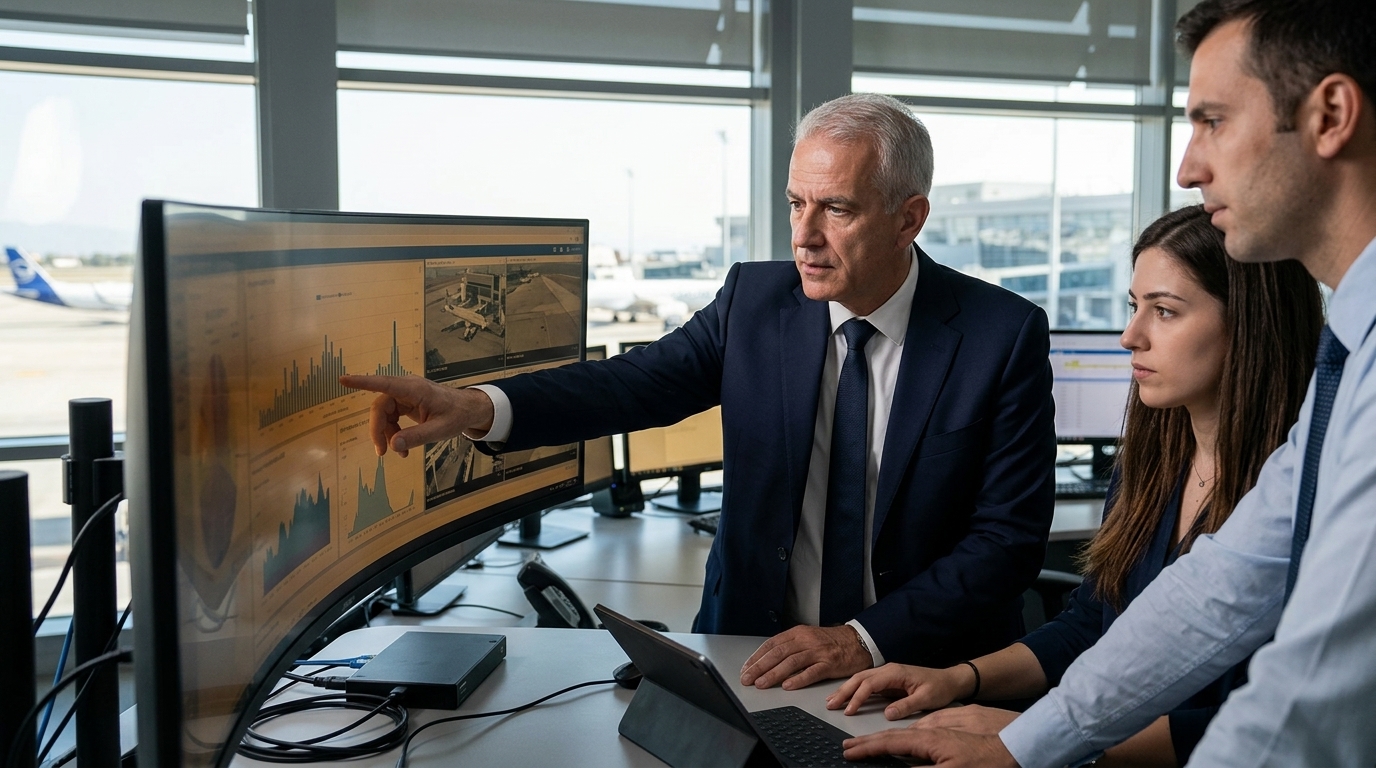
At the heart of the new CEO's strategy lies the integration of advanced technological solutions. AIA is systematically investing in Artificial Intelligence (AI) systems to predict passenger flows and optimize security screening processes. The use of predictive analytics allows management to reallocate staff in real-time, significantly reducing wait times at security checkpoints and check-in counters.
- Implementation of biometric gates for faster boarding processes.
- AI-driven algorithms to enhance baggage handling efficiency.
- Digital Twins of infrastructure for simulating crisis scenarios and flow bottlenecks.
- Expansion of self-service bag drop facilities.
These technological interventions constitute the 'invisible facelift' that improves passenger experience without requiring the closure of airport sections. The goal is 'frictionless travel,' where technology handles the bureaucratic burdens, allowing travelers to enjoy the airport's commercial and leisure offerings.
The Stock Market Challenge and Sustainable Growth
Following AIA's successful listing on the Athens Stock Exchange, Mr. Kallimasias is now accountable to a broad base of shareholders demanding dividends and growth. The balance between profitability and corporate social responsibility is delicate. The airport has committed to the 'Route 2025' program, aiming for Net Zero carbon emissions well ahead of the international 2050 targets. The construction of the largest self-consumption solar park at an airport in Europe is just one testament to this direction.
"The challenge is not just to grow, but to grow correctly. The airport is the country's mirror and the first impression for millions of visitors," management sources noted.
In conclusion, Georgios Kallimasias's tenure marks a transition from the model of a 'simple infrastructure manager' to that of an 'integrated travel experience provider.' The facelift being attempted is deep, structural, and primarily digital, ensuring that 'Eleftherios Venizelos' remains one of Europe's top airports, capable of sustaining the weight of the Greek tourism industry for decades to come.