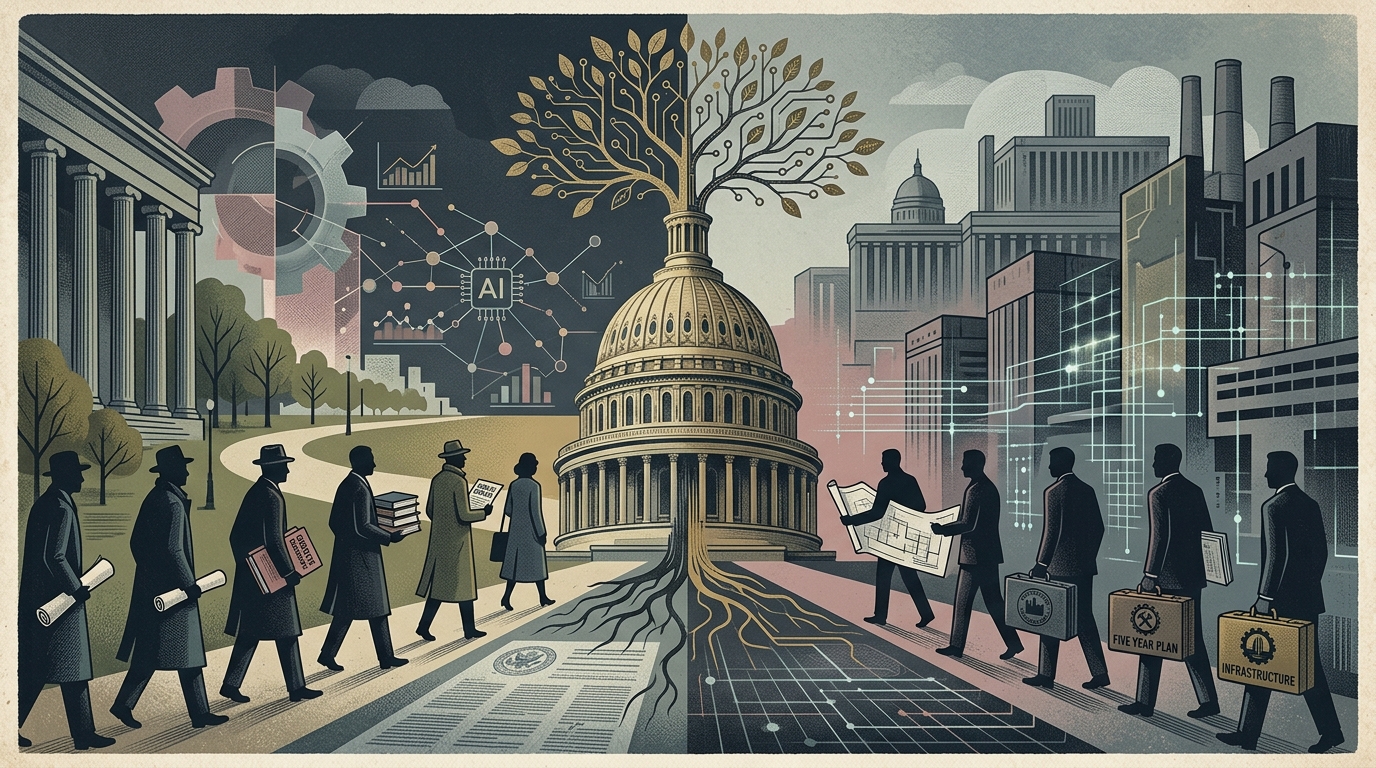
The insurance industry, the traditional bedrock of global financial stability, finds itself in a maelstrom of transformation in 2026. According to the latest risk management reports, the convergence of advanced Artificial Intelligence (AI) and an increasingly fragmented geopolitical landscape has created an environment of volatility that legacy actuarial methods struggle to quantify. The era when insurers could rely solely on historical data has vanished. Today, forecasting the future requires a profound understanding of algorithms and diplomatic maneuvers on the international chessboard.
AI as a Systemic Risk Factor
Artificial Intelligence is no longer just a tool for accelerating claims processing or personalizing premiums. In 2026, it has become an autonomous risk factor. Insurance firms are sounding the alarm over the rise of "algorithmic catastrophes," where errors in critical AI systems can trigger chain reactions across supply chains or financial sectors. Furthermore, the ease of creating sophisticated deepfakes and the automation of cyberattacks via Generative AI have sent the cost of cyber insurance skyrocketing.
The issue of liability remains the most contentious. When an autonomous system makes a decision that leads to financial loss or physical harm, who bears the responsibility? Legislative frameworks, such as the now fully implemented EU AI Act, attempt to provide answers, but technology often moves faster than bureaucracy. Insurers are being forced to design new products covering "algorithmic bias" and "ethical failure," areas that were considered science fiction only five years ago.
Geopolitical Fragmentation and the "Return of History"
Alongside the technological revolution, geopolitical instability has emerged as a dominant risk for 2026. The shift away from globalization and the strengthening of regional blocs have created an environment where trade routes are more uncertain than ever. Marine and cargo insurance have seen premiums spike in regions like the South China Sea and the Eastern Mediterranean, as the risks of state interference or localized conflicts are now daily realities.
"Economic nationalism" is also affecting the ability of insurance companies to diversify their portfolios. With the restriction of data flows between the West and the East, creating a unified global risk model is becoming impossible. Companies are forced to operate with "localized data," which increases costs and reduces predictive accuracy. Political risk insurance is no longer a niche product for the few but a necessity for any multinational corporation wishing to survive in 2026.
The Shift from "Repair" to "Prevent"
To survive in this environment, insurance giants are pivoting their business models. Instead of waiting for a loss to occur to indemnify it, they are investing in prevention technologies. Using IoT (Internet of Things) sensors and real-time analytical tools, insurers now offer lower premiums to businesses that adopt active risk management via AI. This shift toward "Predict and Prevent" is the industry's response to the growing complexity of threats.
- Automated real-time monitoring of cyber threats.
- Use of satellite data for immediate assessment of geopolitical risks in industrial zones.
- Dynamic premium pricing based on a country's current political stability.
In conclusion, 2026 is the year insurance ceases to be a passive service and becomes a strategic partner in navigating a dangerous world. The ability of firms to balance AI innovation with traditional prudence will define the winners of the next decade.