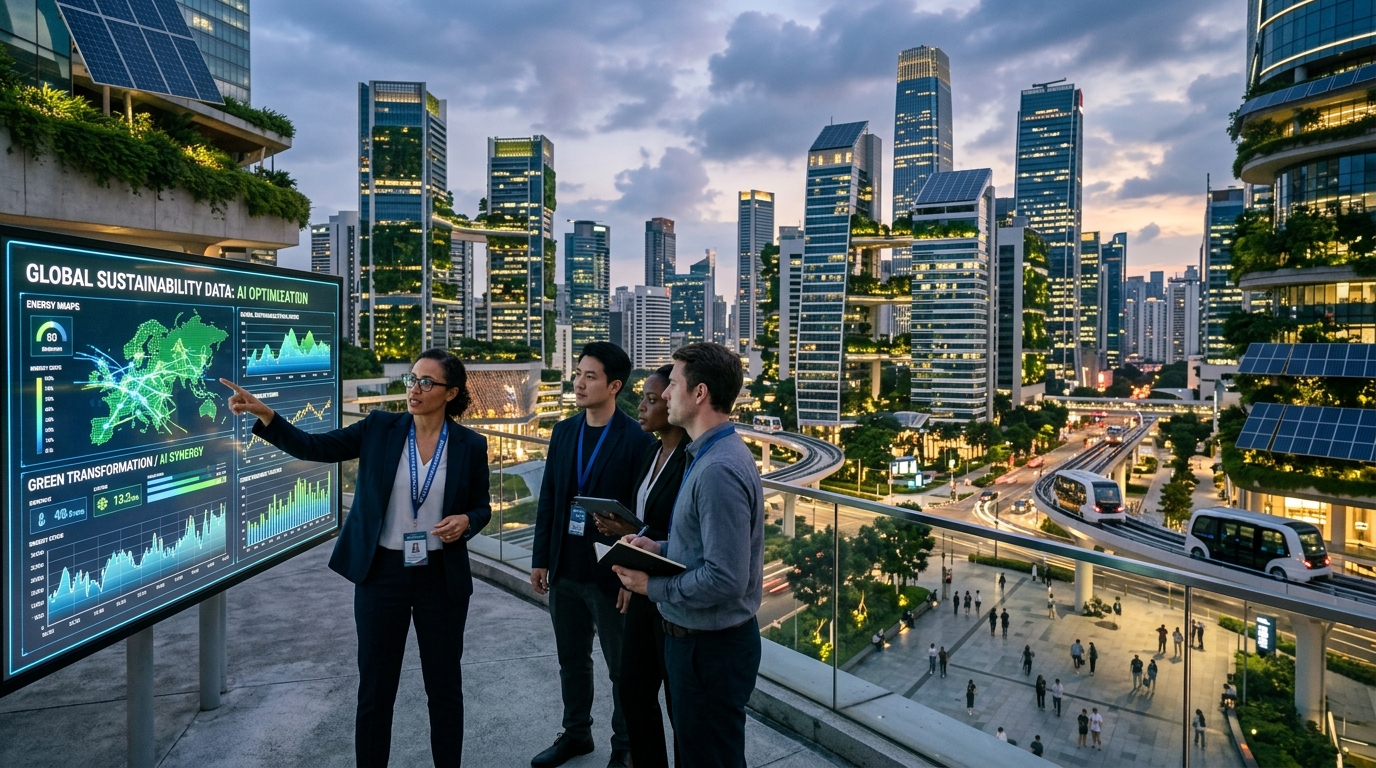
As we navigate the first half of 2026, the global economy faces a paradoxical challenge. On one hand, the explosive rise of Artificial Intelligence (AI) promises a new era of productivity and innovation. On the other, the urgent need for the Green Transformation demands a drastic reduction in energy consumption and carbon emissions. These two forces, often described as the "Twin Transition," are beginning to create significant friction and pressure on national systems rather than complementing each other, with Vietnam and other emerging economies at the epicenter of this crisis.
The Energy Gluttony of Artificial Intelligence
Artificial Intelligence is not an "immaterial" technology. Every query to a Large Language Model (LLM), every training session of a new algorithm, and every automated process requires massive computational power. Data centers housing next-generation GPUs consume amounts of electricity comparable to entire cities. According to recent analyses, energy demand from data centers is expected to triple by 2030, just as countries commit to phasing out polluting coal plants.
This thirst for energy jeopardizes climate goals. While AI can be used to optimize power grids or discover new battery materials, its direct environmental burden is immediate and measurable. The pressure is now shifting to energy providers, who are called to balance providing stable power for technological growth with integrating volatile renewable energy sources.
Green Transformation: The Cost of Compliance
For emerging industrial powers like Vietnam, the Green Transformation is not just an environmental choice but an economic necessity for accessing international markets. New regulations from the European Union (such as CBAM) and the US impose strict carbon criteria on imported products. Businesses are required to digitalize (using AI) to become more efficient while simultaneously reducing their footprint.
- Increased capital costs for purchasing "green" technology.
- Need for workforce retraining in both digital and ecological skills.
- Pressure from investors for strict adherence to ESG (Environmental, Social, Governance) criteria.
This dual pressure creates a gap between large multinationals, which have the resources to adapt, and small and medium-sized enterprises (SMEs) that risk being excluded from the global supply chain.
The Geopolitical Dimension and the Vietnam Example
Vietnam serves as a compelling case study. As a hub for electronics manufacturing, it sits in the middle of the Sino-American rivalry for technological dominance. The country is trying to attract investment in data centers and semiconductors while simultaneously battling the impacts of climate change in the Mekong Delta. The Hanoi government faces a dilemma: allow the rapid expansion of energy-intensive technologies to maintain growth, or impose strict green restrictions that might deter investors?
"Technological progress without environmental foresight is a Pyrrhic victory. AI must become the tool of the green transition, not its obstacle," say analysts in Southeast Asia.
The Need for a New Strategic Synthesis
To address these pressures, a new approach is required that integrates AI into the core of sustainability. This means developing "green algorithms" that require less energy, using AI for the circular economy, and creating infrastructure powered exclusively by clean energy. The pressure we feel today is the "alarm bell" warning us that the model of unlimited digital growth on a finite planet has reached its limits. The success of the next decade will be judged by whether we manage to make Artificial Intelligence truly "intelligent" — not just in data processing, but in managing our life on Earth.