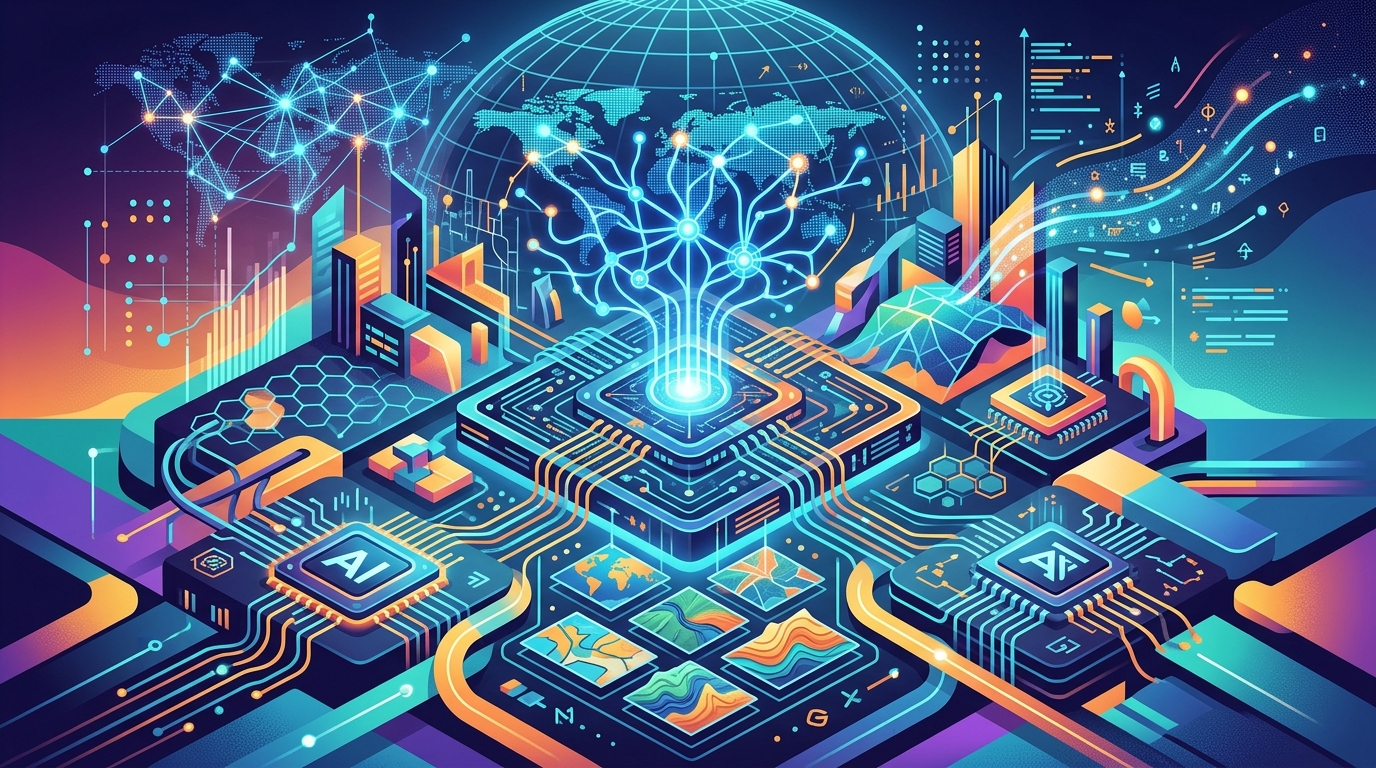
Reflecting on half a century of intense evolution, Artificial Intelligence (AI) is no longer a science fiction scenario, but the very architecture of modern reality. From the first expert systems of the 1970s to today's dominance of Large Language Models (LLMs), the journey has been anything but linear. It has been characterized by periods of extreme optimism, the so-called 'AI Winters,' and ultimately by an explosive renaissance that changed the course of history.
The Era of Logic and the First 'Winters'
Fifty years ago, AI research focused on what we now call 'Symbolic AI.' Scientists believed that if we could encode all the rules of human logic into a computer, we would create an intelligent machine. The 'Expert Systems' of the 1980s were the pinnacle of this approach. However, the complexity of the real world proved too vast to be confined to static 'if-then' rules.
The failure of these systems to meet high expectations led to drastic funding cuts. The AI Winters served as a period of catharsis, where research continued away from the limelight, laying the foundations for the statistical approach that would later dominate.
The Data Revolution and Deep Learning
The real turning point came with the dawn of the 21st century. The convergence of three factors—the massive availability of data (Big Data), the increase in computing power via GPUs, and the improvement of neural network algorithms—created the conditions for 'Deep Learning.' In 2012, the success of the AlexNet network in the ImageNet competition proved that machines could now 'see' and recognize objects with an accuracy approaching that of humans.
This period marked the transition from programming rules to training models. AI ceased to be a tool that followed instructions and became a system that extracted patterns from experience. The economic dimension began to become apparent as tech giants invested billions to integrate AI into search, advertising, and content recommendations.
Generative AI and the New Paradigm
Fast forward to today, in 2026, we are at the height of Generative Artificial Intelligence. The emergence of Transformers in 2017 paved the way for models that can not only analyze but also synthesize speech, code, images, and music. AI has been transformed into a 'cognitive partner.' In Greece, the adoption of these technologies in the public and private sectors is accelerating, aiming to overcome decades of bureaucratic hurdles.
"Artificial Intelligence is not just a branch of computer science; it is the new electricity that will power every human activity in the 21st century," analysts from Oikonomikos Tachydromos note.
The Future: Towards Artificial General Intelligence (AGI)
Looking ahead, the big question remains Artificial General Intelligence (AGI)—a system that can perform any intellectual task a human can. While opinions differ on when (or if) it will be achieved, the debate has shifted from 'whether it is possible' to 'how we will control it.' Ethical alignment, privacy protection, and ensuring labor security in an automated world are the challenges of the next fifty years.
- Ethics and Governance: The European AI Act is the first step towards a framework that protects citizens without stifling innovation.
- Economic Transformation: AI is expected to add trillions to global GDP, but the distribution of this wealth remains a political issue.
- Education: The need for upskilling is more urgent than ever, as skills once considered 'safe' are being redefined.
In conclusion, 50 years of AI have taught us that intelligence is not a static achievement but a continuous process of adaptation. This technology is a mirror of our own evolution: ambitious, imperfect, and full of potential.