In an era where technological progress is measured in billions of parameters and exaflops of computing power, an unexpected group of professionals is reappearing in the boardrooms of Silicon Valley: philosophers. The hiring of experts in ethics, logic, and epistemology by companies like OpenAI, Anthropic, and Google is no longer a public relations move, but an imperative necessity for the survival and safety of Artificial Intelligence (AI) systems.
The Alignment Problem and the Socratic Method
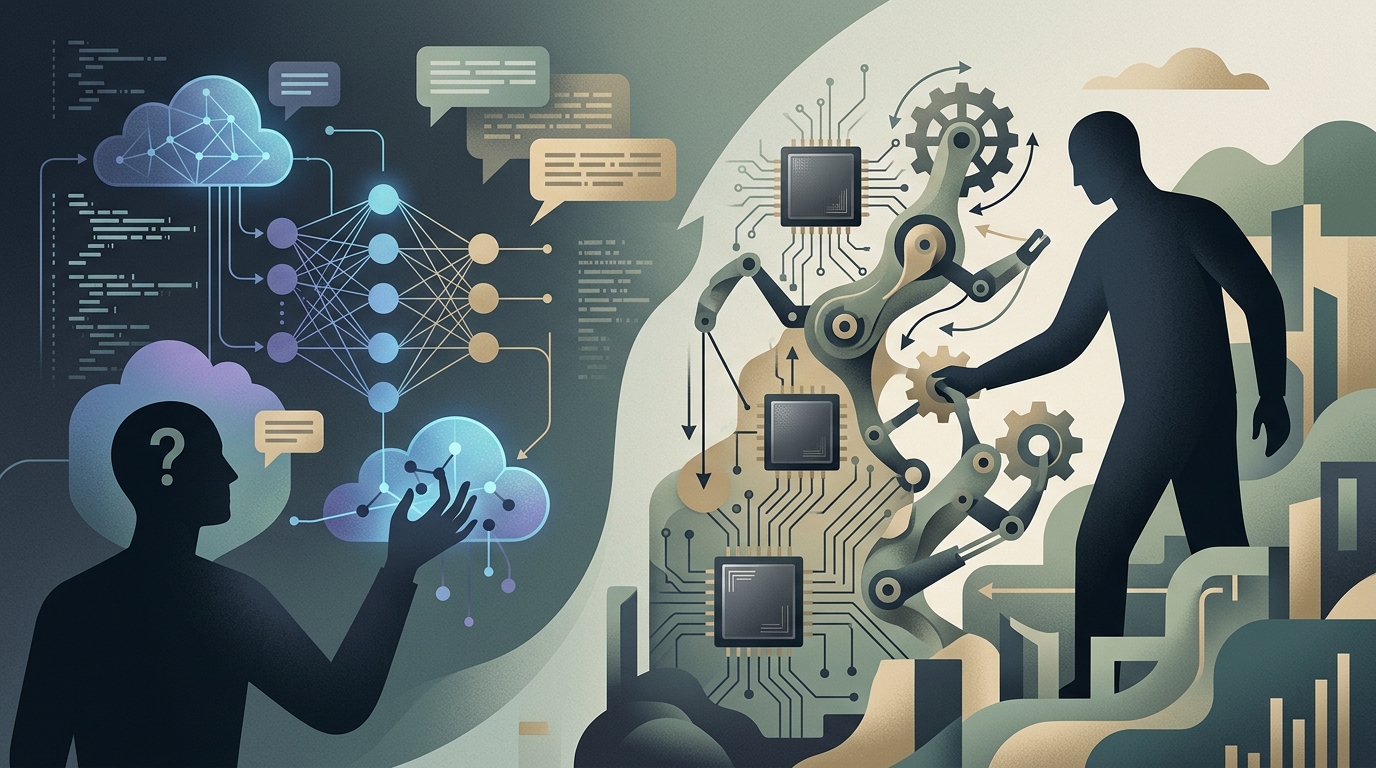
The central issue occupying researchers today is the so-called "Alignment Problem." This is the challenge of ensuring that the goals and behaviors of Large Language Models (LLMs) align with human values and ethics. This is where Socrates becomes relevant. The Socratic method—the process of continuous questioning and testing of assumptions—is now used to "root out" logical fallacies and biases from chatbots.
Philosophers help developers structure what we call "Constitutional AI." Instead of trying to predict every possible harmful response, they define a set of high-level principles—inspired by texts such as the Universal Declaration of Human Rights or Plato's Republic—which the model is required to follow during its self-training phase.
From Utilitarianism to Deontology
Developers often think in terms of optimization, an approach that resembles Jeremy Bentham's Utilitarianism: the greatest good for the greatest number. However, in AI, this logic can lead to dangerous paths where the rights of minorities are sacrificed for the sake of a "statistical average response."
Philosophers introduce Kantian Deontology, insisting that certain acts (or responses) are inherently wrong, regardless of the outcome. For example, a chatbot should not provide instructions for making weapons, even if the user claims it is for "the good of science." The ability to discern intention behind language requires a deep understanding of moral philosophy, something that lines of code alone fail to grasp.
The Renaissance of Humanities in the Digital Age
For decades, the humanities were considered a "luxury" or even "useless" in the tech labor market. Today, the situation is reversing. The ability to analyze complex texts, identify subtle nuances in meaning, and construct ethical arguments are the most sought-after skills in the creation of AGI (Artificial General Intelligence).
- Data Ethics: Who owns the knowledge that trains AI?
- Ontology: What does "intelligence" mean and how does it differ from simple statistical prediction?
- Political Philosophy: How should the power offered by AI be distributed in society?
These questions are not theoretical. They are the foundations upon which the algorithms that will decide on loans, hiring, and medical diagnoses in the near future are built.
"Technology without philosophy is blind, and philosophy without technology is powerless," one could paraphrase Kant for today's reality.
Conclusion: The Human at the Center
The hiring of philosophers by AI companies is an admission that technology is not neutral. Every line of code contains a worldview. As chatbots become increasingly human in their communication, the need to teach them not only how to speak, but also how to "think" ethically, becomes the great wager of the 21st century. Socrates might never have imagined that his dialogues would serve as the manual for the machines of the future, but his legacy is more alive today than ever in the data centers of California.