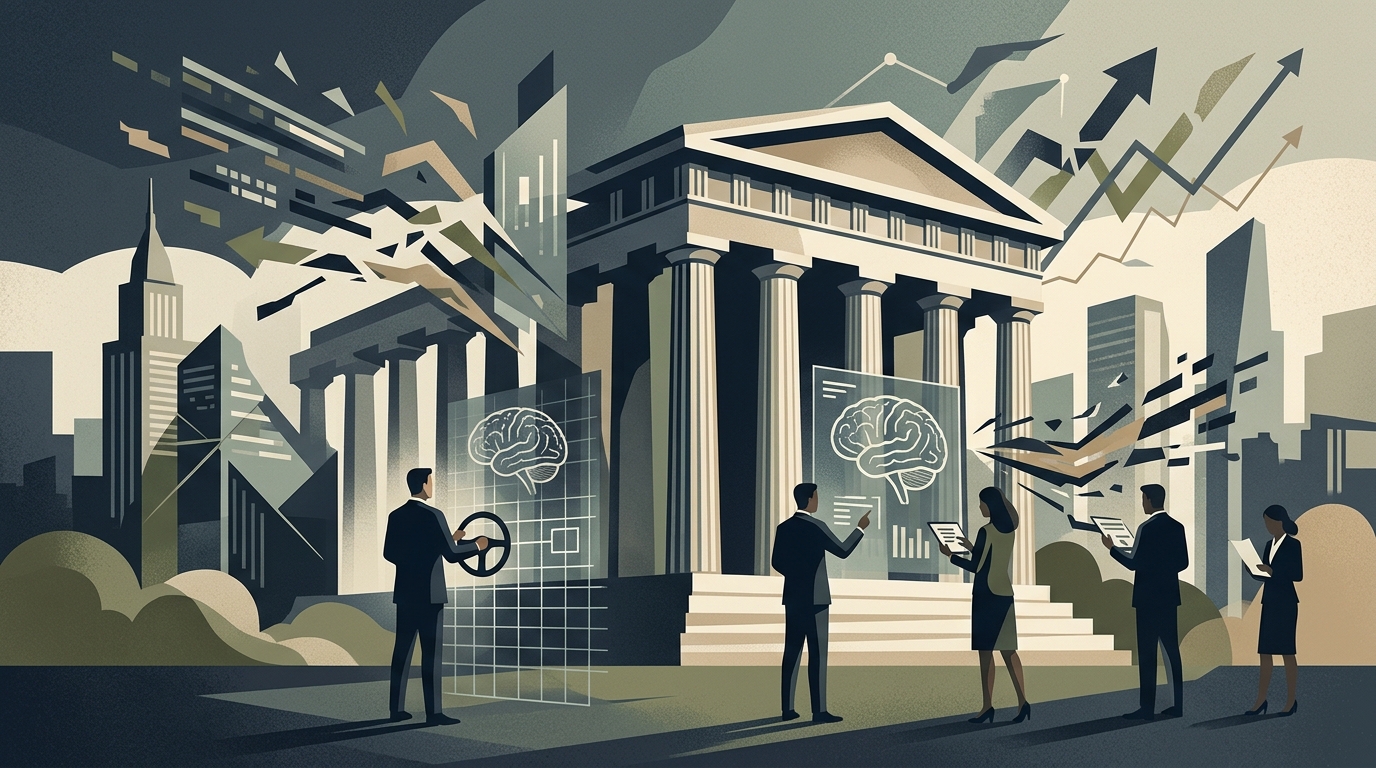
In an era where political polarization and information overload make choosing a candidate an exhausting ordeal, a new trend is emerging on the screens of voters worldwide. The question “Who should I vote for?” is no longer just addressed to friends, family, or analysts, but increasingly to artificial intelligence models like ChatGPT, Gemini, and Claude. This shift from traditional information retrieval to “synthetic advice” marks a critical turning point for the democratic process, raising fundamental questions about objectivity, misinformation, and the very nature of political will.
The Digital Oracle of the Ballot Box
For many voters, the appeal of Artificial Intelligence (AI) is understandable. Party platforms are often hundreds of pages long, filled with technocratic jargon and conflicting promises. AI offers the possibility of instant summarization, comparison of positions on specific issues—such as the economy or climate change—and personalized analysis. Instead of spending hours scouring news sites, a user asks a bot to “compare Candidate A and Candidate B’s positions on middle-class taxation.”
However, this convenience masks significant risks. Algorithms do not “understand” politics; they process statistical probabilities of words based on their training data. As a recent New York Times report highlights, users often treat AI as a neutral authority, ignoring that these models can reproduce the biases of their creators or the data harvested from the internet. The illusion of objectivity is perhaps the most dangerous feature of this new “political compass.”
The Specter of Hallucinations and Political Bias
One of the most significant problems is so-called “hallucinations.” AI can confidently attribute a position to a candidate that they never held or invent entire legislative articles. In an election where details can decide the outcome, such errors are not just technical glitches but threats to the integrity of the vote.
- Systemic Bias: Studies have shown that different models tend to lean toward different political spectrums, depending on how their safety filters have been tuned.
- Lack of Timeliness: Despite improvements, many models rely on data that cuts off at specific dates, ignoring recent political developments or scandals.
- Ethical Neutrality: Tech companies, fearing backlash, often program AI to avoid direct answers, which leads users toward “darker,” less-regulated models.
Major companies like OpenAI and Google have instituted strict restrictions, preventing their models from directly answering the question “who should I vote for.” Yet, users find ways to bypass these guardrails by asking hypothetical questions or requesting analyses that lead to a predetermined conclusion.
The Erosion of Human Judgment
Beyond the accuracy of information, there is a deeper philosophical issue: the delegation of moral and political responsibility. Democracy is built on the idea of the thinking citizen who evaluates, judges, and decides. When this decision is “outsourced” to an algorithm, the citizen ceases to be the primary actor and becomes the recipient of a processed reality.
“The use of AI in elections doesn’t just change what we vote for, but how we think about politics. It transforms political participation from an act of values into an exercise in data optimization,” note digital rights analysts.
The challenge for the future is fostering critical thinking. AI can be an excellent tool for organizing information, but it cannot—and should not—replace conscience. Voters must learn to use these tools as a starting point for research, not as the final verdict. Democracy, ultimately, is a human affair, with all the passion, errors, and complexity that entails.