In the global chess game of artificial intelligence, China is pursuing a strategy that many in the West find paradoxical, if not self-destructive. While OpenAI and Google entrench themselves behind closed, proprietary models to guard their margins, Chinese tech giants—ranging from Alibaba and Tencent to the meteoric DeepSeek—have unleashed an open-source offensive. This move is not merely a technical preference; it is an economic bombshell reshaping the technological landscape, triggering what analysts describe as the "cannibalization of the industry."
The Token Price War and the Collapse of Margins
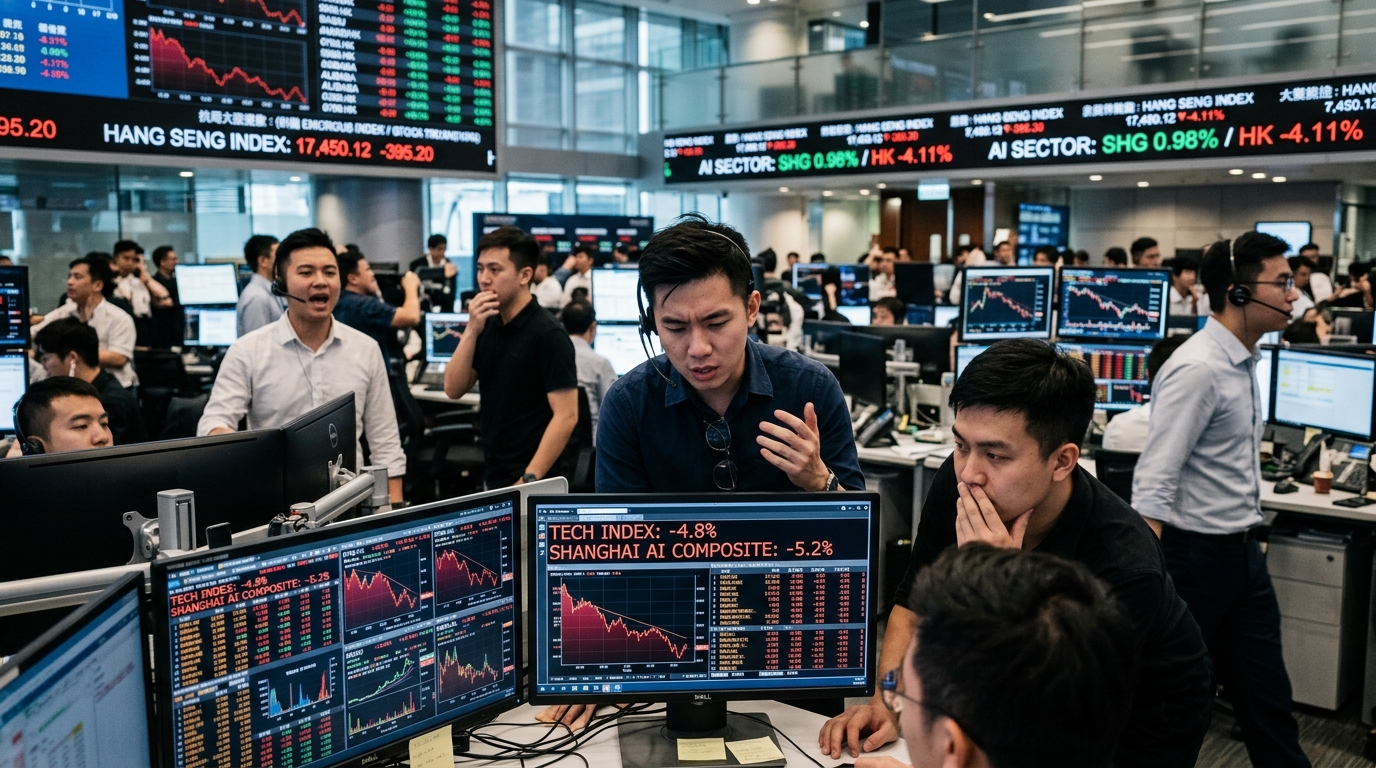
In recent months, the AI market in China has turned into a battlefield where API (Application Programming Interface) prices are plummeting toward zero. When ByteDance launched its Doubao model with prices 99% lower than the market average, it set off a chain reaction. Alibaba Cloud and Baidu were forced to follow suit, offering some of their most powerful models for free or at near-zero costs. This "scorched earth" strategy aims to capture market share, but it simultaneously erodes the profit margins that Silicon Valley once promised investors.
The dilemma lies in the fact that open-source models, such as Alibaba’s Qwen or 01.AI’s Yi, are now so capable that enterprises see little reason to pay for expensive subscriptions to closed systems. In effect, the disruptor (AI) is being disrupted by its own abundance. If access to intelligence is free, where does the business value reside?
A Strategic Response to U.S. Sanctions
The pivot to open source is as much geopolitical as it is economic. With the U.S. restricting access to advanced Nvidia chips (like the H100 and B200), Chinese firms have been forced to innovate at the software layer. DeepSeek, for instance, managed to create models that rival GPT-4 using a fraction of the compute and data, thanks to the Mixture-of-Experts (MoE) architecture.
By releasing these models as open source, China achieves two goals: First, it allows thousands of domestic startups to build applications on top of world-class technology without depending on U.S.-controlled APIs. Second, it creates a global standard that favors the Chinese ecosystem. As experts in Beijing note, "Open source is the weapon of the underdog to upend the status quo."
The Death of Startups and the Reign of Infrastructure
However, this abundance has a dark side. Small AI startups in China are in a state of despair. When the giants give away their core product for free, the smaller players trying to sell "specialized models" lose their footing. Venture capital (VC) has begun to retreat from foundational model development, recognizing that this is a game played only by those with the deepest pockets and massive data centers.
"We are no longer in the era of discovery, but in the era of efficiency. AI is becoming a commodity, much like electricity," says a senior executive at Tencent.
This commoditization means that profits are shifting away from the AI model itself and toward infrastructure (cloud computing) and specialized applications that solve real-world industrial problems. Alibaba is no longer interested in selling Qwen as a product; it is interested in selling the Cloud services required to run Qwen efficiently.
Conclusion: A New Paradigm for Global AI
The Chinese approach is a real-time experiment in the future of the digital economy. If the open-source strategy succeeds, China may neutralize OpenAI’s first-mover advantage by turning AI from a luxury product into a common utility. Yet, the risk is clear: by destroying the industry's profit margins, companies may undermine their ability to fund the next great leap—Artificial General Intelligence (AGI). The question remains: is this a path to dominance, or a race to the bottom?