As the United States gears up for a dual milestone in 2026—co-hosting the FIFA World Cup and celebrating its semiquincentennial (America250)—the festive atmosphere is being shadowed by an invisible yet omnipresent technological infrastructure. Under the guise of national security and crowd management, federal and local authorities are deploying a surveillance network unlike anything the American continent has ever seen. From Kansas City to New York, spectators flooding stadiums and the millions living in host cities may find themselves the subjects of a new, permanent state of digital control.
The Technological Siege of Mega-Events
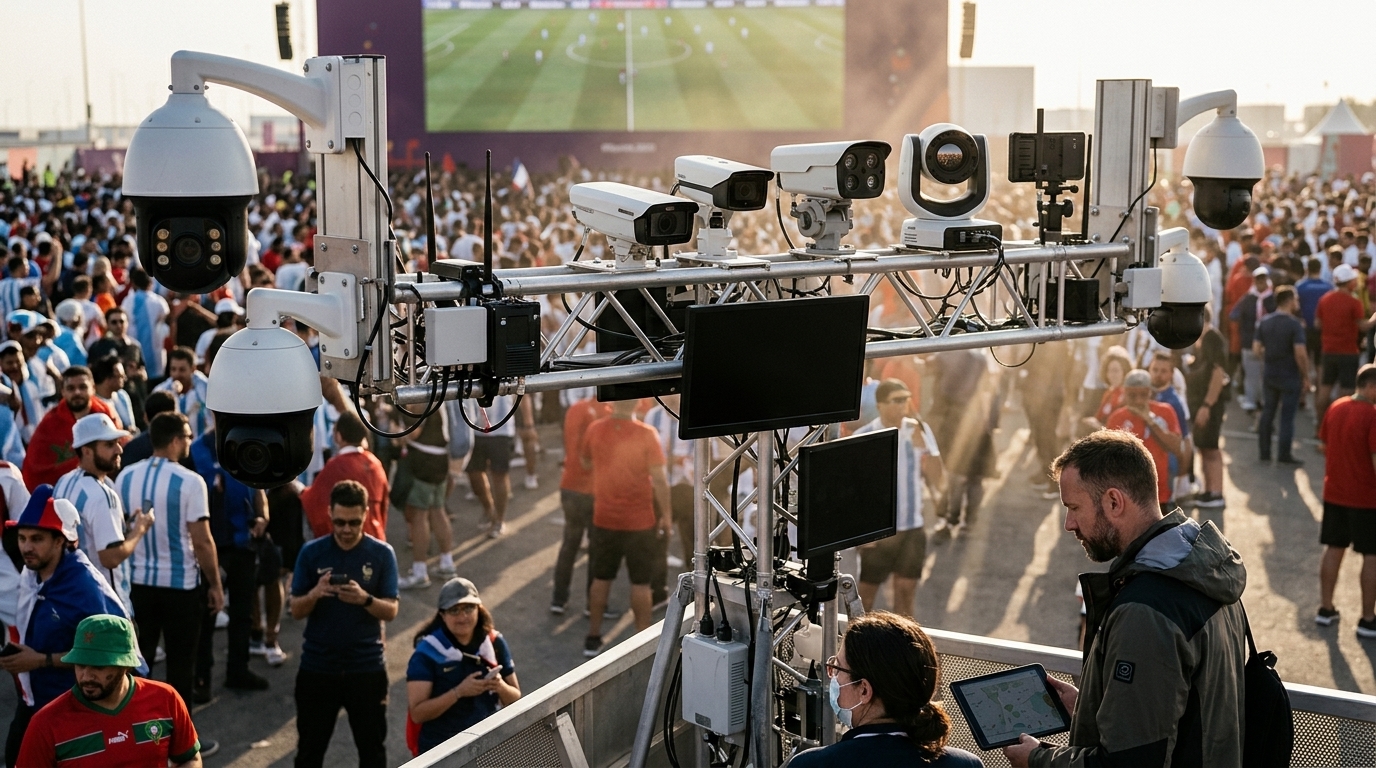
The scale of the operation is unprecedented. This isn't just about a few extra security cameras in stadiums. We are looking at an ecosystem that includes drones equipped with facial recognition technology, AI-driven motion sensors, and fusion centers that integrate data from thousands of sources in real-time. According to recent revelations, cities like Kansas City are receiving massive federal grants to upgrade "smart policing" systems, essentially turning public spaces into a continuous digital footprint.
The use of drones is particularly alarming. These flying machines are no longer limited to simple image recording. With the help of algorithms, they can identify "suspicious behaviors" or track specific individuals within crowds of thousands. The problem, as human rights organizations point out, is that definitions of "suspicious behavior" remain vague and often carry the biases of the algorithm's creators, disproportionately targeting minorities and marginalized groups.
The Pretext of 'Safety' and Permanent Installation
The history of mega-sporting events teaches us that measures taken as "temporary" or "emergency" are rarely dismantled after the closing ceremony. From the London 2012 Olympics to the Qatar World Cup, the surveillance infrastructure built for a few weeks becomes a permanent legacy for local police departments. In the US, the combination of the World Cup and America250 provides the perfect political cover for the nationwide expansion of these systems.
The Department of Homeland Security (DHS) classifies these events at the highest security level (SEAR 1), which allows for the flow of hundreds of millions of dollars to private tech companies. These firms, often with close ties to the military-industrial complex, find a golden opportunity to test their products in real-world conditions, using citizens as free data sources to train their models. Transparency in these contracts is minimal, and citizens are rarely consulted on whether they wish to live in cities that resemble "Minority Report."
Ethical Dilemmas and the Erosion of Democracy
The central question arising is the price of security. Is the prevention of a hypothetical risk enough to justify the abolition of anonymity in public spaces? Freedom of assembly and expression relies on the belief that the state is not watching our every move. But when every street corner and every stadium seat is monitored by an algorithm, self-censorship becomes the norm.
Furthermore, there is the danger of "mission creep." A system designed to detect terrorists can very easily be repurposed to identify protesters, track political opponents, or collect evidence for minor infractions. In the US, where Fourth Amendment constitutional guarantees are already under pressure, this digital onslaught may represent the final blow to the concept of private life.
"Technology always moves faster than legislation, and in the case of surveillance, this gap becomes a black hole for civil rights," say digital ethics analysts.
As we approach 2026, the need for public debate and a strict regulatory framework is more urgent than ever. The World Cup should be a celebration of sport and human connection, not a global experiment in mass surveillance. If limits are not set now, 2026 will not go down in history as the anniversary of liberty, but as the year liberty was sacrificed on the altar of digital omniscience.