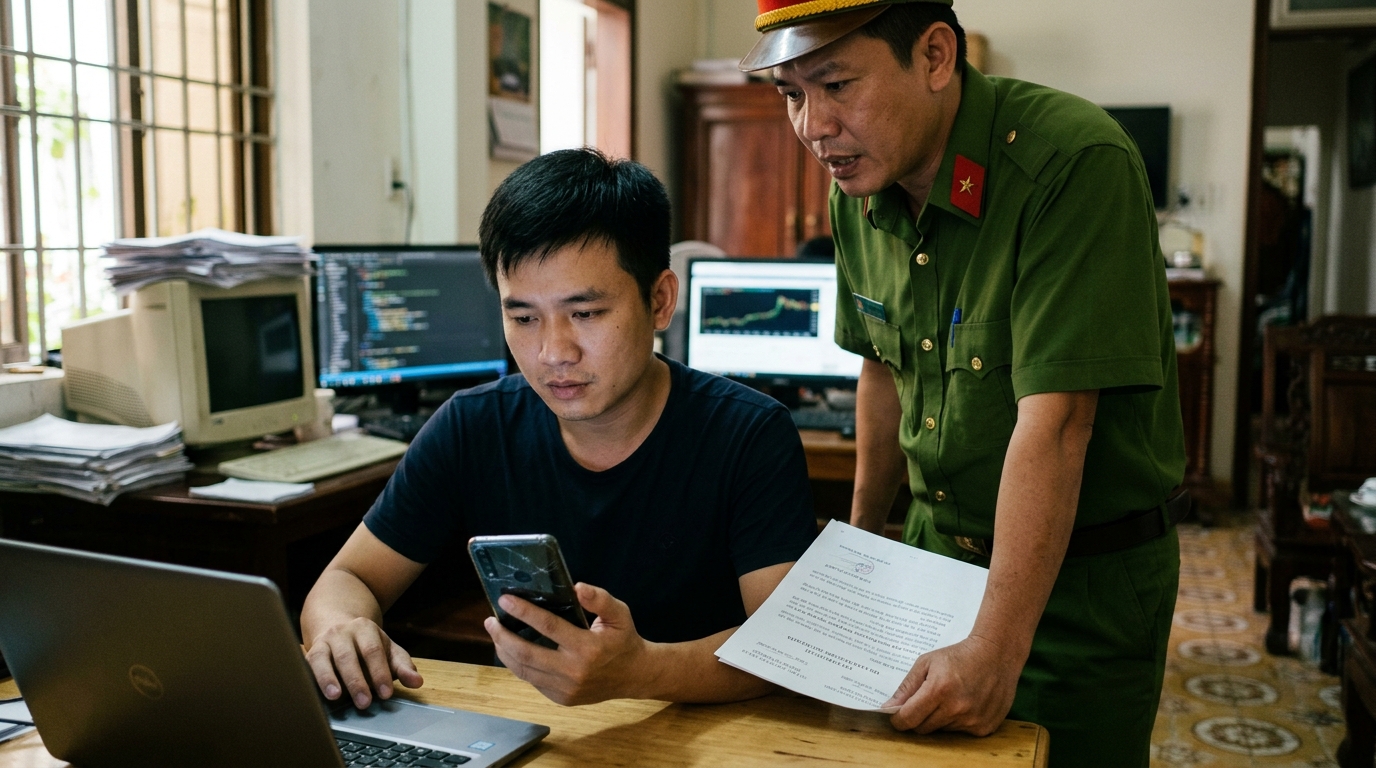
In an era where digital reality is becoming increasingly fluid, the recent news from Vietnam regarding the fining of a citizen who used Artificial Intelligence (AI) to fabricate false accusations against the police serves as a resounding wake-up call. The incident, which took place in late May 2026, is not merely a piece of local police news but a critical moment in the global debate over the ethics of technology and the protection of truth in the public sphere.
According to Vietnamese authorities, the accused used sophisticated image generation tools to create scenes depicting police officers engaging in illegal acts and violence. These images, accompanied by inflammatory texts on social media, aimed to undermine public trust in institutions and incite social unrest. The speed at which this content spread highlights the vulnerability of modern societies to well-designed disinformation campaigns backed by AI.
The Anatomy of a False Image
The use of AI for manipulating visual material has reached a level where distinguishing between the real and the fabricated is nearly impossible for the untrained eye. In the Vietnamese case, the perpetrator did not stop at simple photo manipulation. He utilized diffusion models to generate realistic representations of faces and locations from scratch that appeared entirely authentic. This phenomenon, known as "deepfakes," allows anyone with access to a computer to manufacture "evidence" for events that never occurred.
The problem is exacerbated by the fact that images possess an inherent power of persuasion. The human brain is hardwired to trust what it sees. When an image presents a highly emotional scene, critical thinking is often bypassed, giving way to anger or indignation. This is exactly what the user in Vietnam exploited, creating a narrative that fit into pre-existing biases or social tensions.
The Legal Framework and State Reaction
Vietnam possesses one of the strictest legal frameworks for cybersecurity in the world, which has frequently been criticized by international human rights organizations for restricting freedom of speech. However, this specific case poses a different question: How can a state protect itself from the deliberate manufacture of fake news that can lead to violence? The fine imposed on the man was based on the Cybersecurity Law, which prohibits the dissemination of information that offends the honor and dignity of state bodies.
Proponents of strict legislation argue that without such sanctions, AI will be turned into a weapon in the hands of those wishing to destabilize social peace. On the other hand, there is a fear that the fight against deepfakes could be used as a pretext for suppressing any form of criticism of authority. If every video or image exposing police brutality can be labeled as an "AI product" by the authorities, then the accountability of security forces is placed in serious jeopardy.
The Ethical Responsibility of AI Creators
Beyond state suppression and individual responsibility, this incident brings to the fore the responsibility of the companies developing these tools. AI image generation platforms have begun introducing digital watermarks and metadata indicating the image's origin. However, these measures are often easy to bypass for experienced users.
The international community is called upon to establish common standards for "digital authenticity." Blockchain technology, for example, is proposed as a solution for certifying the origin of journalistic photos and videos. Until such a universal system exists, however, society remains exposed to a constant assault on the truth. Educating citizens in digital literacy is perhaps the only long-term bulwark against this threat.
Conclusions for the Future
The Vietnam case is just the beginning. As AI tools become more accessible and powerful, disinformation campaigns will become more complex. The challenge for democracies and authoritarian regimes alike will be the same: how to maintain order and truth without sacrificing fundamental freedoms. This balance is extremely delicate, and its outcome will determine the quality of public discourse in the coming decades. Truth is no longer something we just "see," but something we must verify with effort and critical thinking.