In an era where digital creativity stands at a critical crossroads, Tidal, the streaming platform long synonymous with high-fidelity sound and artist-centric values, has decided to draw a definitive line in the sand. The company's announcement that it will exclude fully AI-generated tracks from its payment ecosystem is more than a business pivot; it is a profound philosophical statement about the nature of art in the mid-2020s.
Protecting the Creative Ecosystem from 'AI Slop'
Tidal’s decision is a direct response to a phenomenon industry insiders call "AI slop"—a deluge of low-quality musical content mass-produced by generative algorithms. While these tracks often lack emotional resonance or structural complexity, they successfully infiltrate automated playlists, siphoning off royalty payments from the collective pool intended for human creators.
Under the new policy, Tidal will implement two foundational pillars:
- Monetization Block: Tracks identified as having zero human involvement in composition or performance will be ineligible for a share of subscriber revenue.
- Mandatory Labeling: Any content utilizing AI tools for significant processes (such as vocal synthesis or automated mastering) must be clearly labeled, ensuring transparency for the listener.
The Battle for Royalties and the Dilution Crisis
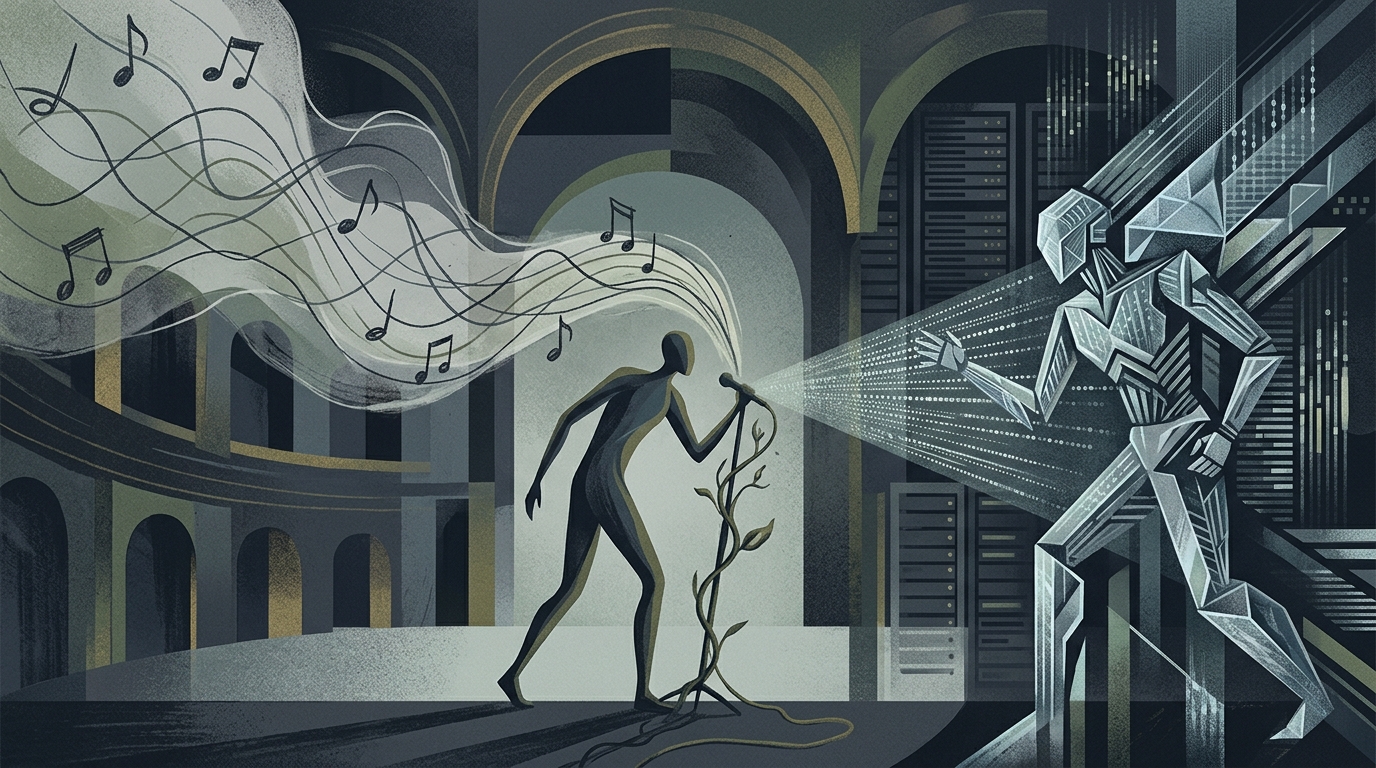
The core of Tidal’s argument, supported by major labels like Universal, Sony, and Warner, centers on "royalty dilution." In a pro-rata streaming model, where revenue is distributed based on total stream counts, every second spent listening to an AI-generated ambient loop is a second of revenue taken away from a struggling independent artist or a dedicated band.
"Music is a human experience. If we allow machines to flood our platforms unchecked, we risk devaluing the very act of creation," stated a Tidal representative during the policy rollout.
This move aligns with broader legal escalations. The Recording Industry Association of America (RIAA) has already launched major lawsuits against AI platforms like Suno and Udio, alleging massive copyright infringement during the training of their models. By acting preemptively, Tidal positions itself as the industry’s moral vanguard, protecting the integrity of the human voice.
The Detection Dilemma: Man vs. Machine
However, enforcing this policy is fraught with technical hurdles. The pace of AI evolution makes distinguishing a "100% AI" track from a human-led production that uses sophisticated AI tools increasingly difficult. Where does the creative use of a neural-network-powered plug-in end and full automation begin? Tidal plans to deploy advanced detection algorithms, but critics fear this could lead to a "witch hunt" against experimental artists who use technology to push boundaries.
Furthermore, this creates a market schism. While Tidal takes a hardline stance, giants like Spotify and Apple Music remain more cautious. They recognize that generative AI might be the future of hyper-personalized background music. Tidal is betting that its core demographic—audiophiles and purists—will value a "curated human" catalog over an infinite sea of algorithmic noise.
Conclusion: A New Equilibrium
Tidal’s blockade against AI music marks a watershed moment in the history of streaming. This isn't a Luddite war against technology, but a necessary recalibration of how we value human labor. In a world where content can be generated with a single prompt, authenticity becomes the new scarcity. Whether other platforms follow Tidal’s lead will determine if the music of the future remains a medium for human connection or becomes merely a highly efficient algorithm designed to fill the silence.