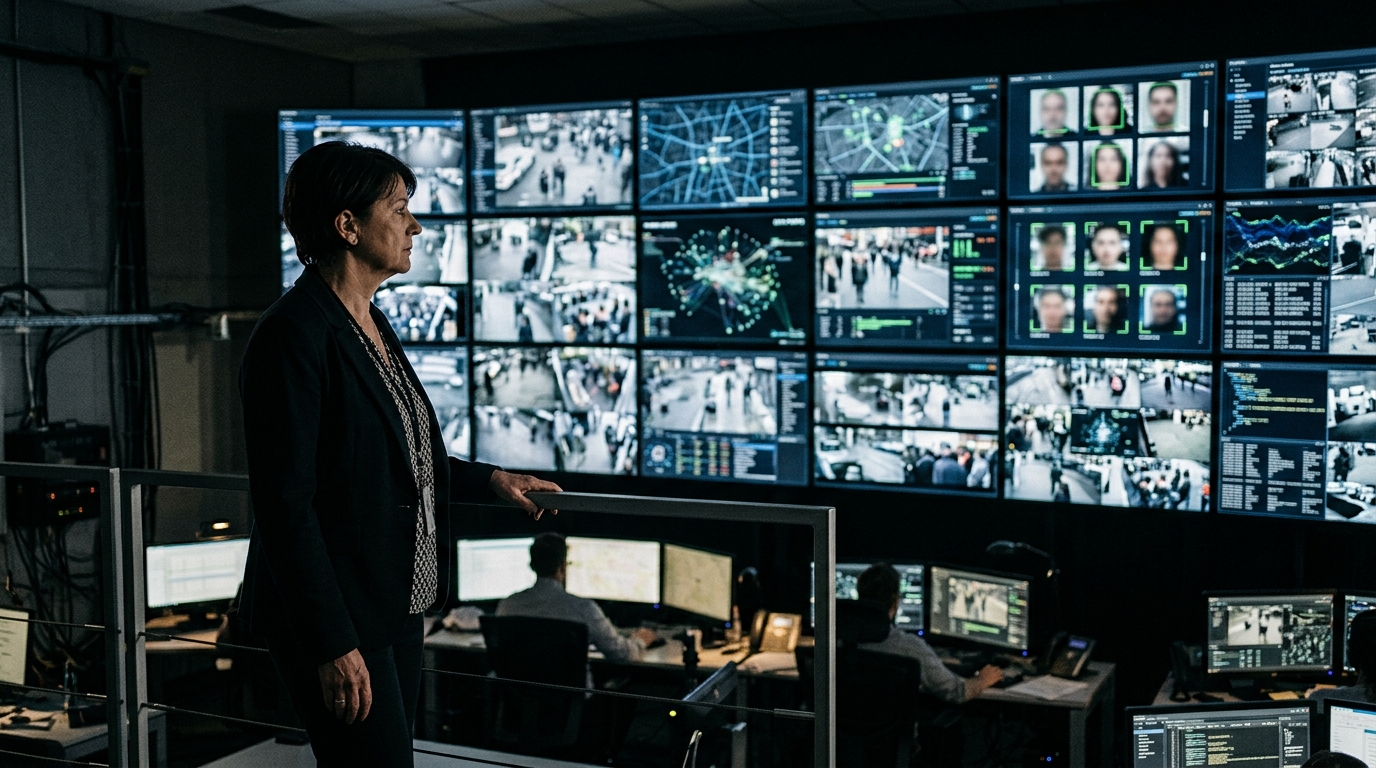
The sensation of being a "stranger in a crowd"—moving through a busy city square or a subway station unobserved—was once a given. It was a foundational characteristic of urban life and, by extension, personal liberty. However, as a recent and chilling investigation by The Washington Post demonstrated, this era of anonymity is drawing to a close. The convergence of facial recognition, Large Language Models (LLMs), and the internet's vast data archives has birthed a mechanism capable of identifying almost anyone, anywhere, in seconds.
The Technology of Identification: Faces as Digital Keys
The problem is no longer theoretical. Tools like PimEyes or Clearview AI allow users to upload a random photo of a person and find every other instance of that face online—from long-forgotten social media profiles to background appearances in news articles or blogs. What once required the resources of a nation-state and specialized Interpol software is now accessible to anyone with an internet connection and a credit card.
The Washington Post's test revealed a terrifying reality: a journalist was able to identify strangers on the street, uncover their names, places of employment, and family connections, starting only with a surreptitious photo taken from a distance. This "radical visibility" effectively abolishes the right to privacy in public spaces, turning every outing into a potential broadcast of one's entire life history.
The Power of Inference: Beyond Facial Recognition
While facial recognition is the most visible threat, AI goes a step further through "inferential identification." Modern AI models can link seemingly disparate data points to reveal an identity. For instance, a combination of location data, writing style (stylometry), and purchasing habits can "de-anonymize" datasets that companies claim are secure.
- Stylometry: AI can analyze the syntax and vocabulary of your writing to identify you across different platforms, even if you use pseudonyms.
- Photo Metadata: Even if your face is blurred, AI can use background landmarks, lighting patterns, and shadows to determine your location and identity.
- Social Graphs: By analyzing who you interact with, AI can predict with 95% accuracy who you are, without ever needing your name.
The Political and Social Dimension: Democracy Under Siege
The loss of anonymity is not merely a matter of personal inconvenience; it is an existential threat to democratic function. Anonymity allows for protest without fear of retribution, the seeking of help for sensitive health issues, and the freedom to experiment with new ideas. In a regime of total identification, self-censorship becomes the default mode of existence.
"Anonymity is a shield from the tyranny of the majority... it protects dissidents from social disapproval and state oppression."
In authoritarian regimes, this technology is already being used to crush dissent. However, the more insidious development in Western democracies is that the erosion of anonymity is driven by the private sector, with companies commodifying our privacy, often with the tacit consent or powerlessness of regulatory bodies.
The Regulatory Challenge: Can Law Catch Up with Code?
The European Union, through the AI Act, has taken significant steps to limit real-time biometric identification. However, these laws often stop at the borders of Europe, while the internet remains borderless. A company based in a jurisdiction with lax regulations can continue to index the faces of European citizens with near impunity.
Furthermore, there is the issue of "technological inevitability." Once a technology becomes accessible and cheap, it is nearly impossible to contain fully. The solution may not lie solely in prohibition but in renegotiating the social contract for the digital age. We need "anonymity rights" that are as robust as the right to free speech.
Conclusion: The Need for Digital Resilience
The end of anonymity appears to be the price we are paying for the convenience and connectivity of the digital era. But if we do not act now—through stricter legislation, privacy-preserving technologies, and social awareness—we risk being locked in a digital cage where every movement is recorded, analyzed, and judged eternally. Privacy is not a luxury; it is the prerequisite for remaining free human beings.