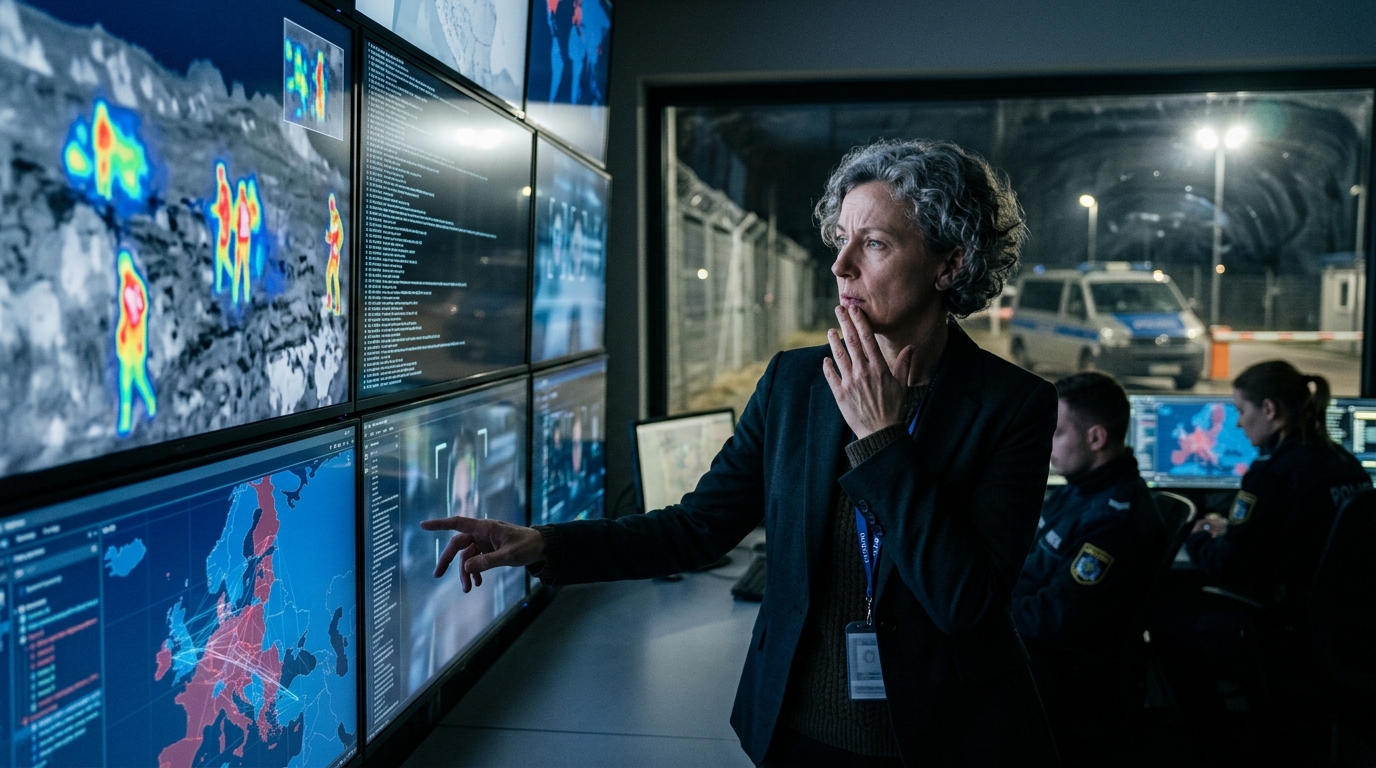
As we navigate the summer of 2026, the initial euphoria that accompanied the explosion of Generative AI is giving way to a more sober, and often painful, reality. The promise of total automation—spanning everything from legal consulting to surgical diagnostics—is hitting an invisible but insurmountable wall: the tacit knowledge held by seasoned professionals. What began as a corporate drive for cost optimization is evolving into an identity crisis for the global workforce, as organizations realize that machine 'intelligence' lacks the profound depth offered by lived experience.
Tacit Knowledge and Polanyi’s Paradox
At the heart of this illusion lies a fundamental misunderstanding of what constitutes 'expertise.' AI algorithms excel at pattern recognition within vast datasets. However, true professional excellence is often rooted in what Michael Polanyi termed 'Polanyi’s Paradox': the fact that 'we know more than we can tell.' An experienced engineer who senses a material failure simply by the hum of a turbine, or a trial lawyer who reads the subtle shift in a juror's body language, utilizes skills that have never been codified in any training manual or digital dataset.
Attempts to replace these individuals with AI models often result in what analysts call 'digital shallowness.' The system may produce a response that appears correct on the surface but lacks context and strategic foresight. In healthcare, for instance, while AI can identify anomalies in imaging faster than any human, it struggles to integrate a patient’s comprehensive history with the social and psychological nuances that determine treatment success. Experience is not merely the accumulation of data; it is the wisdom to know when the data should be disregarded.
The Risk of 'Corporate Amnesia'
One of the most alarming side effects of the rush to replace senior staff is the erosion of institutional memory. Experienced professionals serve as the guardians of an organization’s culture and history. They know why certain strategies failed in the past and how to navigate the messy reality of human crises. When a company chooses to 'clear out' its veteran talent in favor of automated solutions, it is essentially performing a voluntary lobotomy on its collective intelligence.
Furthermore, a critical crisis in mentorship is emerging. If AI replaces the 'masters,' who will train the 'apprentices'? Professional growth has historically relied on observation and guidance from those who have spent decades in the field. Without this middle layer of experience, junior employees risk becoming mere 'prompt engineers'—operators of tools they do not fundamentally understand. This creates a leadership vacuum that will become glaringly apparent in the coming decade, when today’s juniors are required to make high-stakes decisions without the bedrock of human intuition.
Ethical Accountability and the Human Filter
In fields such as journalism, law, and public administration, replacing human judgment with algorithms raises profound ethical concerns. AI lacks a moral compass; it operates on statistical probabilities. A professional’s experience includes a sense of duty, ethics, and accountability. When a human makes a mistake, there is a process of restitution and learning. When a mistake originates from an AI 'black box,' responsibility becomes diffused and ultimately lost.
"Artificial intelligence can mimic knowledge, but it can never simulate wisdom. Wisdom is the distilled essence of our failures and the lessons we’ve learned—something no processor can replicate," notes a veteran of the Silicon Valley tech scene.
The solution lies not in the rejection of technology, but in the recalibration of our relationship with it. The 'Centaur' model—the collaboration between human and machine—is proving to be the most resilient. The experienced professional uses AI to accelerate routine tasks while maintaining absolute control over final decisions and strategic direction. True value in the future will not belong to those who merely know how to use AI, but to those who have the experience to know when the AI is wrong.
Conclusion: The Return to Human-Centricity
The illusion of total replacement is beginning to crumble under the weight of systemic failures and declining quality. The enterprises that will dominate the latter half of the 2020s are those that invest in 'augmented expertise,' blending computational power with human intuition. Experience is not a cost to be cut; it is the most valuable asset in a world flooded with synthetic content and automated decisions. AI is a magnificent assistant, but a dangerous master.