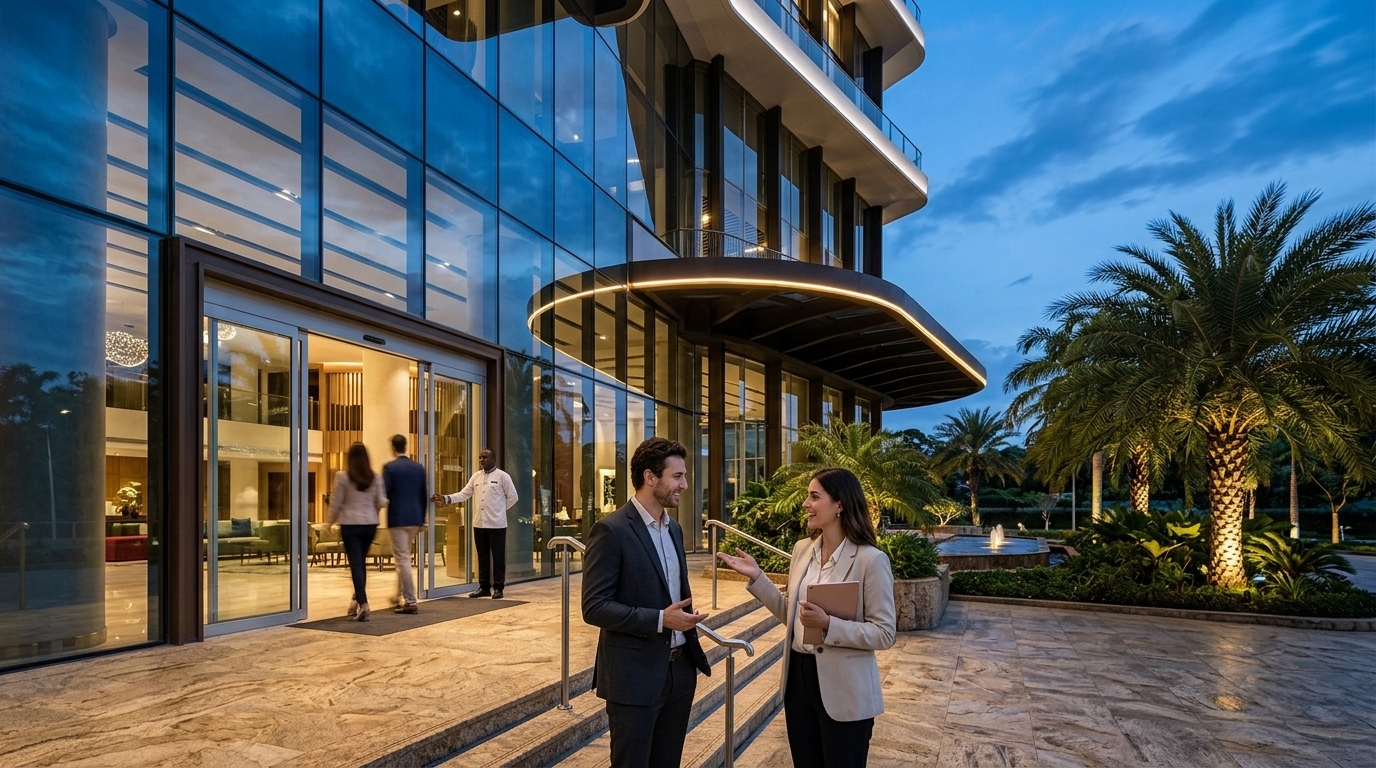
In an era where the climate crisis is no longer a distant threat but a daily reality, the hospitality industry finds itself at a critical crossroads. Radisson Hotel Group, a leading player on the global stage, recently published its 2025 Responsible Business Report, setting new benchmarks for what "sustainable luxury" truly entails. The report moves beyond vague declarations of intent, focusing instead on measurable results, highlighted by the introduction of the group's first "Verified Net Zero" hotels.
The group's strategy, built upon the pillars of environment, people, and ethical governance, reflects a profound understanding of the responsibility held by multinational corporations. According to the report, the path to Net Zero is not merely a technical hurdle but a radical reimagining of how hospitality functions—stretching from the supply chain to the guest experience.
The Net Zero Strategy and the Power of Verification
The most striking element of the 2025 report is its emphasis on verification. In a world saturated with greenwashing and ambiguous environmental claims, Radisson Hotel Group chooses the path of transparency through third-party audits. The group's "Verified Net Zero" hotels serve as blueprints for energy efficiency, utilizing 100% renewable energy and implementing cutting-edge technologies to slash carbon emissions.
The group has aligned its targets with the Science Based Targets initiative (SBTi), committing to a 46% reduction in greenhouse gas emissions by 2030 and achieving full Net Zero by 2050. Reaching these goals requires massive infrastructure investment, including solar panel installations, high-efficiency heat pumps, and the integration of smart Building Management Systems (BMS) that optimize energy consumption in real-time.
"Sustainability is no longer an option; it is the only path to ensuring the long-term value of our business and the planet," the group's leadership states in the report.
Investing in People: Inclusion and Development
Beyond the environmental footprint, the report places significant weight on the social pillar. Radisson Hotel Group recognizes that the heart of hospitality is its people. The 2025 strategy includes ambitious goals for Diversity, Equity, and Inclusion (DEI). The group aims to increase female representation in leadership roles, targeting 45% by the end of the decade.
Furthermore, employee training is a top priority. Through the Radisson Academy, thousands of employees worldwide receive training not only in technical skills but also in ethics, human rights, and environmental protection. This investment in knowledge fosters a culture of responsibility that permeates every level of the organization, ensuring that the group's values are translated into action during daily interactions with guests.
Communities and Ethical Supply Chains
The impact of a hotel group extends far beyond the walls of its buildings. Radisson Hotel Group is committed to supporting the local communities in which it operates, promoting local employment and partnering with local suppliers. The 2025 report highlights the importance of responsible sourcing, with strict criteria for partners regarding labor practices and environmental footprints.
Another vital chapter is waste management and the circular economy. The elimination of single-use plastics and the drastic reduction of food waste—through programs like the partnership with Too Good To Go—are central axes of the strategy. The goal is to create a "closed loop" where resources are used with maximum efficiency, reducing reliance on virgin raw materials.
The Challenge of Global Implementation
Despite the progress, challenges remain. Implementing these rigorous standards across a global portfolio with varying regulations, energy grids, and cultural contexts is a Herculean task. However, Radisson Hotel Group appears to understand that market leadership requires a leading stance on global issues. The 2025 Responsible Business Report is not the end of the road but a roadmap for the future of hospitality, where profitability and ethics walk hand in hand.
In conclusion, Radisson's move to invest in Verified Net Zero hotels sends a clear message to the entire industry: the era of theoretical sustainability is over. The travelers of the future, particularly younger generations, seek experiences that do not burden the planet and that respect human dignity. Radisson Hotel Group seems ready to meet this challenge, turning responsibility into a competitive advantage.