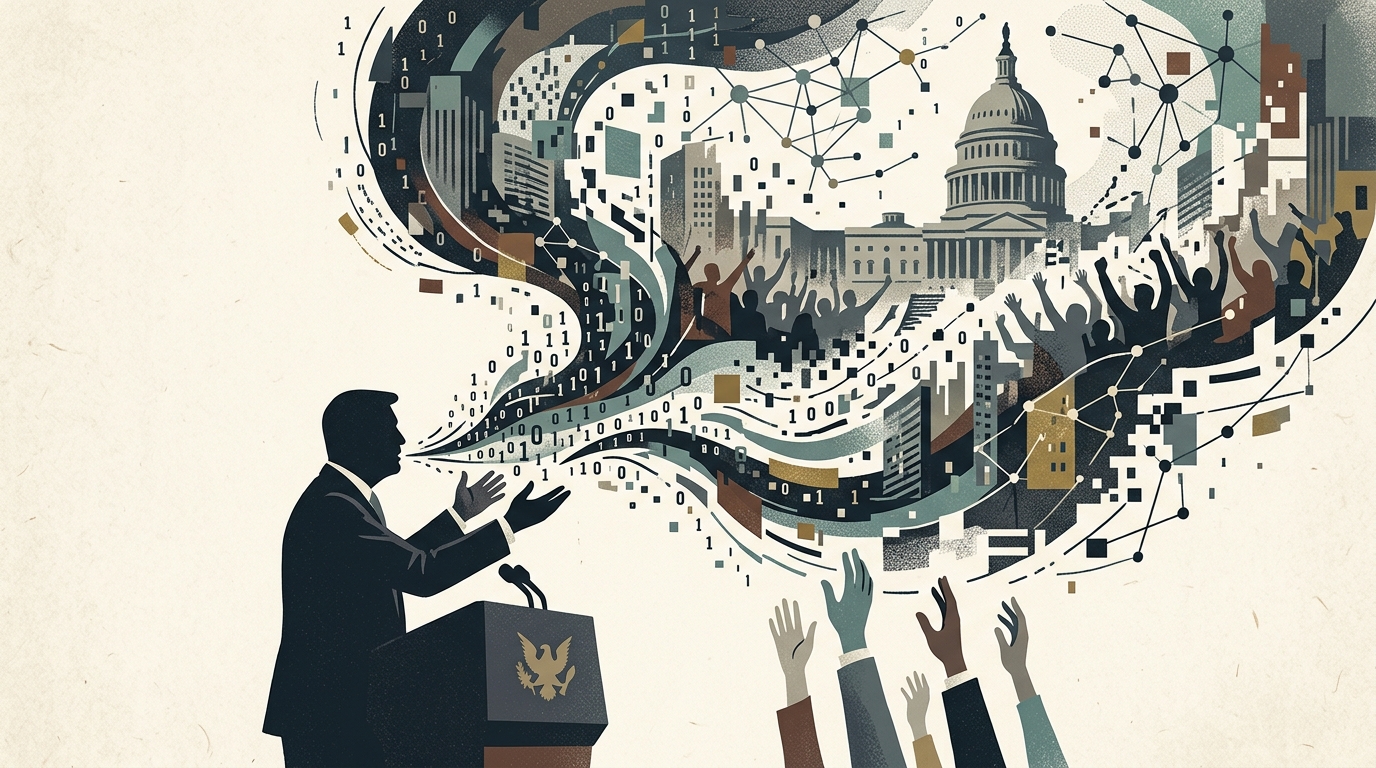
At the heart of the American intelligence apparatus, where satellites monitor every movement across the globe, a new crisis of confidence is brewing. Chris Scolese, Director of the National Reconnaissance Office (NRO), has posed a fundamental question that is now reverberating through the highest corridors of the Pentagon: Can we trust a system that cannot explain itself? AI 'explainability' is no longer merely an academic exercise in ethics; it has become an existential necessity for survival in the modern intelligence landscape.
The Wall of Opacity in Intelligence
The NRO is responsible for designing, building, and operating the United States' fleet of spy satellites. The volume of data collected daily is so colossal that human analysis is practically impossible without algorithmic assistance. However, as Scolese emphasized in recent remarks, the use of AI in image and signal analysis hits a major roadblock: the 'black box' problem. When an algorithm flags a potential missile launch or an unusual troop concentration, decision-makers must know the criteria the AI used to reach that conclusion.
"If the AI tells us something is a tank, we need to know why it thinks it's a tank," Scolese explained. This need stems from the risk of 'false positives,' which in high-tension environments—such as the Taiwan Strait or Eastern Europe—could trigger an unintended escalation or even open conflict. The lack of transparency in the decision-making processes of deep neural networks makes AI an 'unreliable witness' in critical geopolitical assessments.
Strategic Choice: Speed vs. Accuracy
The dilemma facing the NRO is twofold. On one hand, there is the intense pressure of competition with China and Russia, nations that are integrating AI into their military capabilities at a breakneck pace, often bypassing the ethical safeguards prioritized by the West. On the other hand, the American defense community remains committed to the 'Human-in-the-loop' principle. However, if explainability slows down the analysis process, are the U.S. and its allies losing their competitive edge in speed?
The NRO's response appears to favor a more measured approach. The development of 'Explainable AI' (XAI) has become a top priority. The goal is to create models that provide not just a prediction, but a 'map' of the features that led to it. For instance, if an algorithm identifies a threat, it should be able to highlight the specific shadows, shapes, or thermal signatures it prioritized. Without this level of granular detail, intelligence analysts remain hesitant to stake soldiers' lives on the output of a line of code.
Ethical and Operational Implications
The issue of explainability touches the core of military ethics. Under the laws of armed conflict, accountability is individual. If a strike is based on erroneous AI intelligence, who bears the responsibility? The programmer? The commander who gave the order? Or the machine itself? The NRO recognizes that the ethical use of AI is not just a matter of values, but also a matter of operational effectiveness. A system that its users do not trust is a system that will ultimately be discarded or ignored in the heat of battle.
- The necessity of XAI (Explainable AI) as a prerequisite for national security adoption.
- The danger of AI 'hallucinations' in strategic and tactical data processing.
- The delicate balance between rapid data processing and valid human judgment.
- Pressure from the global AI arms race and its impact on development cycles.
In conclusion, Chris Scolese's warning serves as a wake-up call for the technology industry. The era when AI could function as a mysterious 'black box' is coming to an end. For intelligence agencies, knowledge is power, but only if you can prove how that knowledge was obtained. The battle for explainability will define who dominates the skies and space in the coming decades.