Education stands at a critical crossroads. As Artificial Intelligence (AI) tools like ChatGPT and its successors become deeply embedded in the daily lives of students, a fundamental question arises: is the convenience offered by technology leading to a gradual "atrophy" of higher cognitive functions? A recent report highlighted by Vietnam.vn rings the alarm for a generation at risk of losing the capacity for critical thinking, deep analysis, and creative problem-solving.
The Trap of Cognitive Outsourcing
The term "cognitive outsourcing" describes our tendency to delegate tasks to digital tools that previously required significant mental effort. In the past, writing an essay demanded research, source evaluation, structural planning, and linguistic refinement. Today, a student can generate a polished text in seconds. The problem lies not in the AI itself, but in the process that is bypassed. Learning, by its very nature, requires a degree of "productive struggle." When this struggle is eliminated, the brain fails to form the essential neural connections necessary for developing critical thought.
Experts warn that if students grow accustomed to accepting AI outputs as absolute truths, they will lose the ability to question, cross-reference information, and recognize algorithmic biases. Critical thinking is not static knowledge; it is a "muscle" that must be exercised daily through skepticism and analysis.
The Calculator Analogy vs. The AI Reality
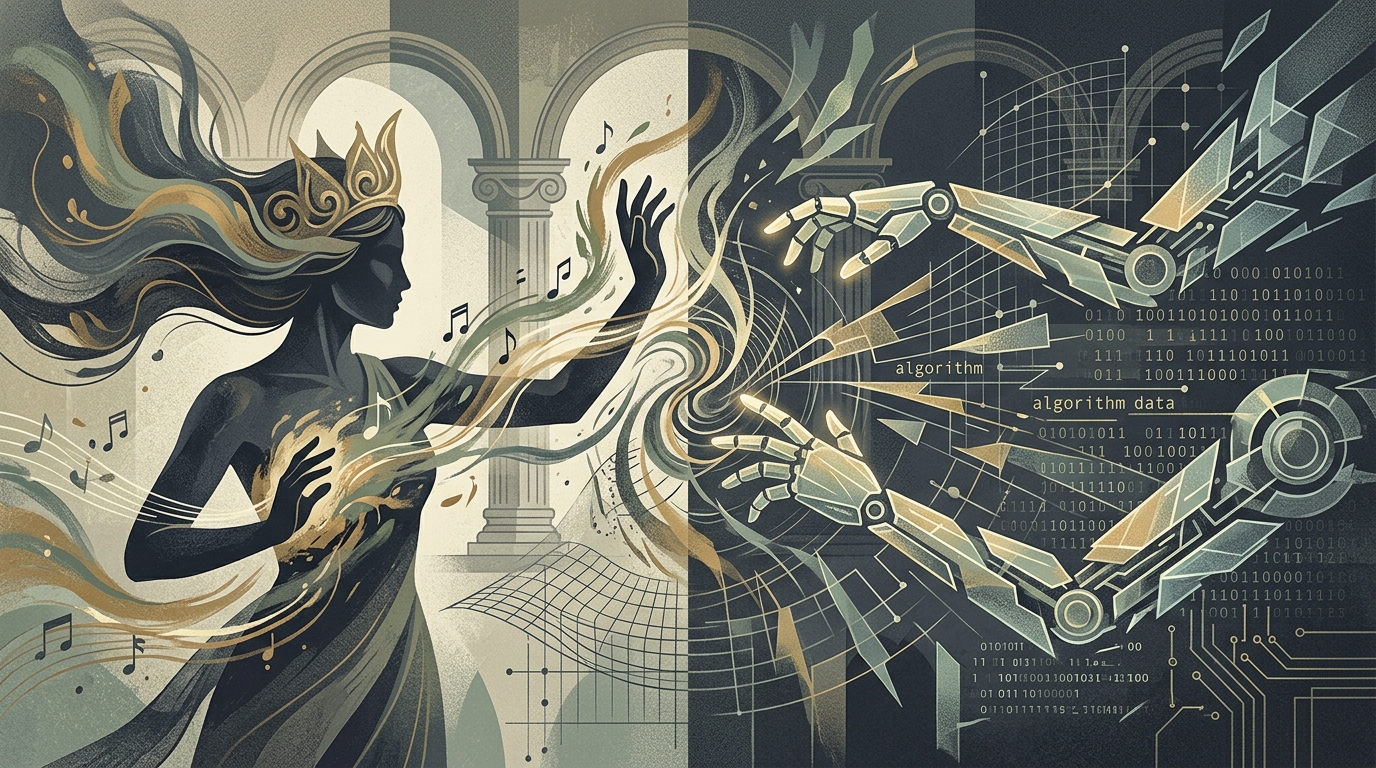
Many argue that similar fears emerged when calculators were introduced to mathematics or when the internet revolutionized research. However, there is a qualitative difference. A calculator performs operations but does not solve the underlying logic of an equation. Generative AI does something far more profound: it produces meaning, arguments, and narratives. It intervenes at the core of human expression and thought.
- Loss of Process: The focus shifts from "how I think" to "what result I get."
- The Illusion of Knowledge: Students may believe they master a subject because they can describe it via AI, without having internalized the concepts.
- Homogenization of Thought: Algorithms tend to produce the most "probable" or average responses, limiting originality and divergent thinking.
Redefining the Educator's Role
The solution is not a ban, which in our era is both practically impossible and pedagogically ineffective. The challenge for educational systems worldwide is to transform AI from a "crutch" into a "springboard." This requires a radical shift in assessment methods. Instead of assignments that can be answered with a simple prompt, teachers must ask students to analyze AI outputs, identify errors, and synthesize differing perspectives.
"Education is not the filling of a pail, but the lighting of a fire," Yeats once said. In the age of AI, the danger is letting the algorithm hold the pail while the fire of curiosity flickers out under the weight of ready-made answers.
In countries like Vietnam, as well as across Europe, the discussion on "AI Literacy" is becoming urgent. Students must be taught not only how to use AI, but also when to distrust it. The ability to distinguish truth from plausibility will be the most vital survival skill of the 21st century.
Conclusion: Human Supremacy in Synthesis
In conclusion, the threat to critical thinking stems not from technology itself, but from our abdication of mental effort. The new generation holds the most powerful tool in human history. The stakes are whether they will use it to reach new heights of cognition or remain trapped in a world of prefabricated ideas. Education must remain the fortress of human judgment, fostering doubt, moral reasoning, and emotional intelligence—elements that, for now, no algorithm can fully replicate.