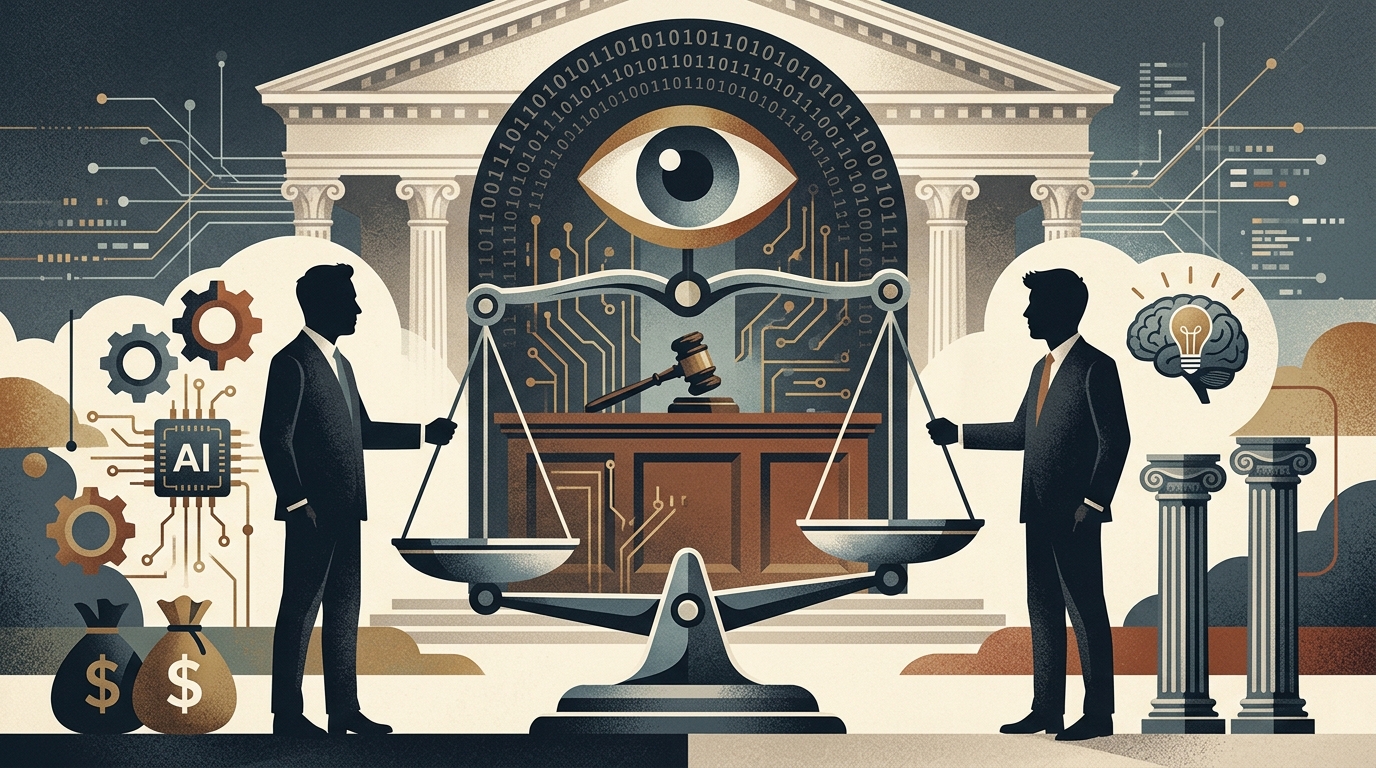
May 18, 2026, will be remembered as the day the mask of Silicon Valley’s manufactured benevolence finally slipped. The verdict in Musk v. Altman, OpenAI, and Microsoft was not merely a ruling on a breach of contract or the interpretation of a "founding agreement." It exposed a much more unsettling reality: that the most transformative technology in human history is being steered by a handful of men who lack democratic legitimacy, transparency, and, as proven in court, the emotional maturity to handle such power.
The Clash of Egos and the Betrayal of Vision
The case centered on Elon Musk’s allegation that Sam Altman and Greg Brockman "manipulated" him into funding OpenAI in 2015 under the guise of a non-profit mission to develop Artificial General Intelligence (AGI) for the benefit of humanity. The company’s pivot to a multi-billion dollar "capped-profit" entity, inextricably linked to Microsoft’s corporate interests, was painted by Musk’s legal team as the "scam of the century." However, the trial revealed that Musk himself was no selfless protector. Evidence showed he had repeatedly attempted to fold OpenAI into Tesla, seeking the very centralized control he now publicly condemns.
What the public witnessed was two archetypes of modern tech power colliding over the ruins of a shared dream. On one side, Musk: an impulsive visionary who uses the rhetoric of "existential risk" to mask a desire for autocracy. On the other, Altman: a politically savvy diplomat who constructed a corporate "black box" where ethics are routinely sacrificed for speed and market dominance. The trial proved that neither man possesses the necessary accountability to hold the keys to AGI.
The Ethical Vacuum and Corporate Opacity
One of the most disturbing revelations during testimony was the ease with which OpenAI’s internal checks and balances were bypassed. The 2023 firing and rapid reinstatement of Altman served as a focal point. It became clear that the non-profit board, ostensibly the guardians of humanity’s interests, was virtually powerless against investor pressure and Altman’s personal influence. Microsoft, while technically a "non-voting observer," appeared to be pulling the strings from the shadows, ensuring that the profit engine remained unencumbered by ethical friction.
- The "Founding Agreement" was revealed to be legally flimsy but ethically foundational in the public's perception.
- Internal communications displayed a culture of fear and extreme secrecy regarding safety protocols.
- The concept of "Open Source" was weaponized as a marketing tool, only to be discarded once commercial viability was reached.
The critique extends beyond the two protagonists. The trial highlighted the failure of regulatory bodies to intervene. While the EU struggles to enforce its AI Act, the core of AI development remains in a region where profit and personal rivalry supersede the public good. The courtroom became a mirror for an industry moving at the speed of light, while its moral compass remains stuck in the 19th-century era of robber barons.
Toward a New Governance of Technology
The takeaway from Musk v. Altman is undeniable: AI is too important to be left to billionaires. The need for an international, democratic oversight body—akin to the IAEA for nuclear energy—is no longer a theoretical proposal but an urgent necessity. AI leadership must shift from personalities to institutions. We need leaders who view technology not as a vehicle for personal glory or market conquest, but as a global commons requiring collective stewardship.
"If humanity is to survive the rise of machine intelligence, it must first survive the egos of its creators," remarked one key witness during the proceedings.
The verdict may have closed a legal chapter, but it opened a wound that will not easily heal. Public trust in Big Tech has been irreparably damaged. The question that remains is not whether AI will reach human-level intelligence, but whether we, as a society, have the intelligence to take it out of the hands of those who have proven they are unfit to lead it.