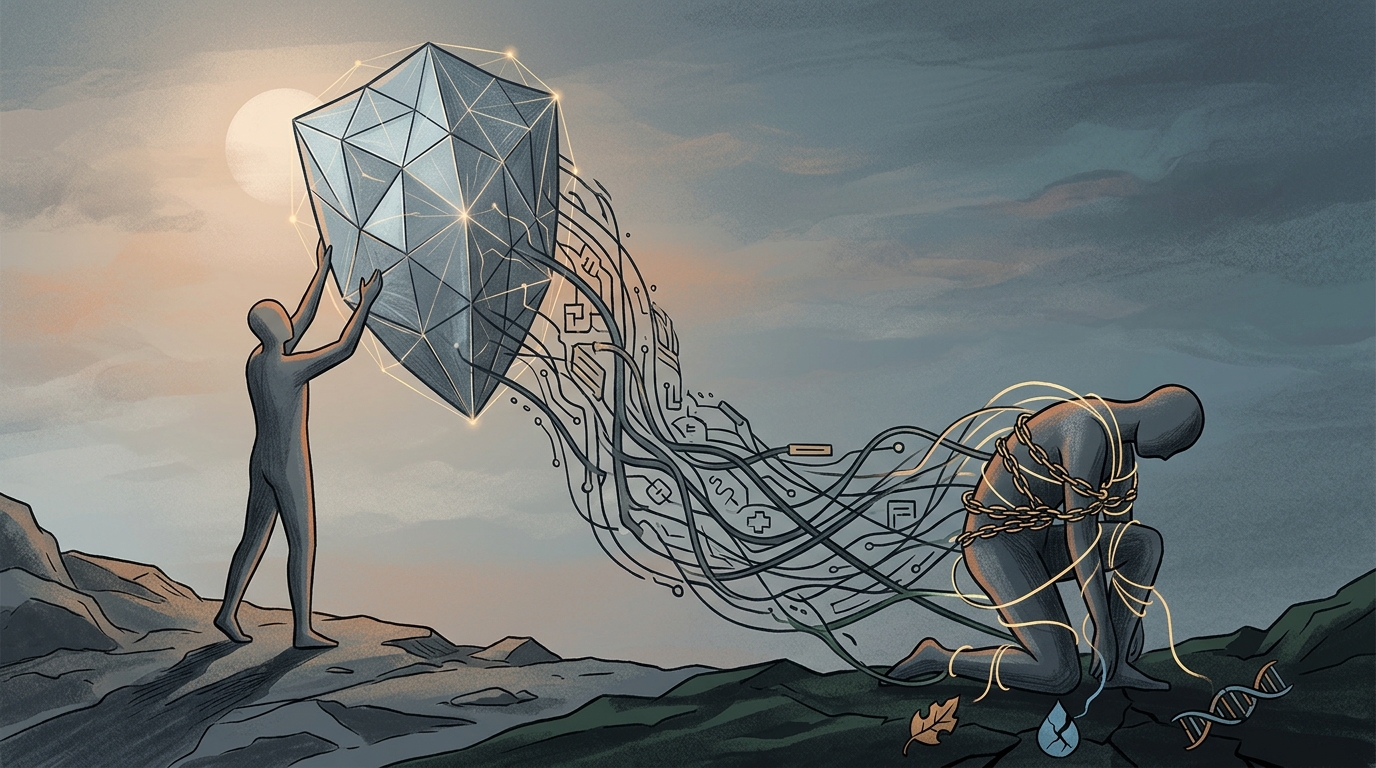
In an era where Artificial Intelligence (AI) is no longer a science fiction trope but the daily infrastructure of our social and economic lives, the intervention of institutions with centuries of history carries unexpected weight. The text "Magnifica Humanitas," as analyzed by The Catholic Weekly, is not merely a theological treatise; it is a cry of concern and simultaneously a call to protect what we call the "humanum." As we move through 2026, the convergence of ancient ethical wisdom and advanced computational power creates a new battlefield for the future of our species.
The Ontological Challenge: Human vs. Machine?
At the heart of Magnifica Humanitas lies the concept of Imago Dei—the belief that humans are created in the "image and likeness" of God. The Catholic Church argues that human dignity is inherent and non-transferable, something that no algorithmic processing can replicate. The challenge posed by AI is not just technical but ontological: if a machine can make decisions, produce art, or simulate consciousness, what is it that ultimately makes us unique?
The analysis warns against "functionalism," the tendency to evaluate human beings solely based on their productivity or cognitive abilities. In a world where algorithms outperform humans in speed and precision, the risk of viewing humans as "obsolete biological material" is real. Magnifica Humanitas insists that our value stems from our being, not our efficiency, establishing an ethical bulwark against unchecked automation.
Algorethics: A New Compass in the Digital Ocean
One of the most innovative terms introduced by the Vatican in recent years, emphasized even more in 2026, is "Algorethics." This is the attempt to integrate ethical values into the very design stage of algorithms. The Church does not reject technology; on the contrary, it recognizes it as a gift of human creativity. However, it emphasizes that technology must be "anthropocentric" and serve the common good.
- Transparency: Algorithms affecting citizens' lives must not be "black boxes."
- Inclusion: AI must not reinforce existing social inequalities or marginalize vulnerable groups.
- Responsibility: There must always be a "human-in-the-loop" who bears ultimate ethical and legal responsibility for the machine's decisions.
Magnifica Humanitas highlights that ethics is not an obstacle to innovation but the guarantee that innovation will not turn against its creator. Algorethics seeks to ensure that justice and mercy are not sacrificed on the altar of statistical optimization.
The Technocratic Paradigm and Digital Colonialism
One of the sharpest critiques in the text concerns what Pope Francis has called the "technocratic paradigm." This is the belief that every problem—social, political, or ethical—can be solved exclusively through technology. This approach tends to ignore the complexity of the human experience and reduce everything to data. Magnifica Humanitas warns that over-reliance on AI could lead to a new form of "digital colonialism," where a few large corporations or states control the flow of information and the lives of people globally.
"Technology is a good servant but a bad master. If we allow algorithms to dictate our ethics, we will have lost our souls before we even realize it."
The analysis concludes that the challenge of Artificial Intelligence is, in fact, an invitation to rediscover what it means to be human. In a world dominated by the artificial, authenticity, empathy, and spirituality become the most revolutionary acts of resistance. Magnifica Humanitas is not a text of the past but a roadmap for a future where technology and humanity can coexist harmoniously, provided that the former always remains in the service of the latter.