

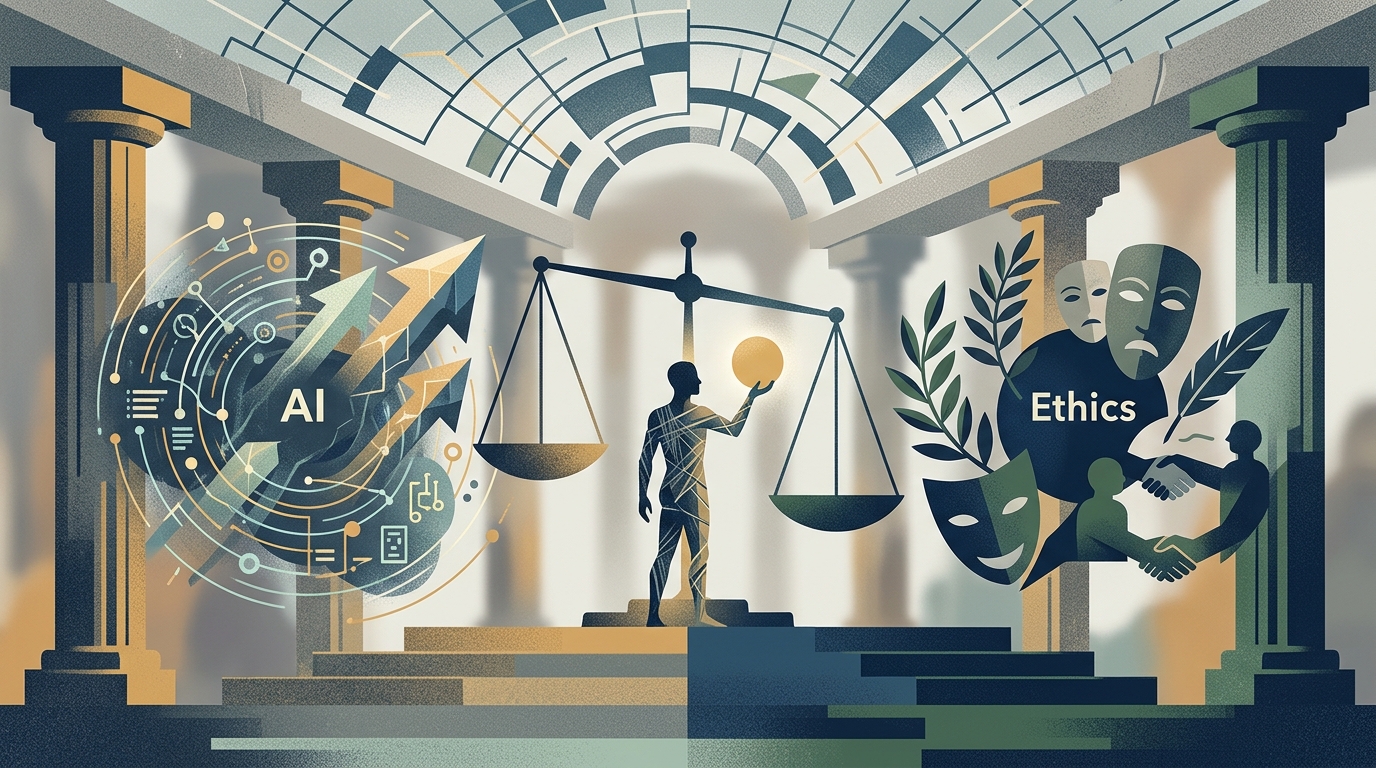
It is a warm June morning in 2026, and as I sit here looking over the Saronic Gulf, the digital world feels as turbulent as the Aegean during a summer meltemi. We are living through a paradox. On one hand, we see a frantic rush toward modernization—AI-native development teams are rewriting the rules of software engineering, and hotels from Singapore to Sydney are racing to automate the guest experience. On the other hand, there is a growing, quiet realization that without a foundation of ethics and 'Paideia' (education), we are simply building a faster ship without a compass.
The Rush to the Market and the Apple Lesson
I have been watching the markets lately, specifically the recent correction in Asian tech stocks. It is a reminder that the hype cycle is a fickle master. While some companies are desperate to integrate every new 'intelligent assistant' into their retail platforms, others, like Apple, have played a longer, more deliberate game. I find myself admiring that 'slow and steady' approach. In Greece, we have a saying: 'Opoios biazetai, skontaftei'—he who hurries, stumbles. Apple’s strategy suggests that the real winners won't be those who deploy AI first, but those who deploy it with the most seamless, human-centric integration.
But the market is only one side of the coin. The 'Retail Revolution' and the digital modernization of travel are inevitable. They represent the 'Techne' of our era. However, as we automate global commerce, we must ask: are we serving the consumer, or are we simply optimizing for a machine-led economy that leaves the human element behind?
Education: The True Frontier of Ethics
What moves me most in this week’s news is the shifting landscape of the classroom. We are seeing a fascinating tension between teachers—who are mapping the ethical minefields of generative AI—and a new philosophy that claims exams can be a 'pleasant experience' in the AI era. As a Greek, the concept of education is sacred. It is not just about passing a test; it is about the formation of character.
"Education is the kindling of a flame, not the filling of a vessel." — Socrates (attributed)
The rise of initiatives like 'Code Ninjas' gives me hope. It isn't just about teaching children to write Python; it is about cultivating 'Responsible Digital Citizens.' If we don't teach the next generation the ethics of the tools they wield, we are handing them fire without teaching them how to build a hearth. We see the consequences of this failure already in the rise of AI-powered insurance fraud in the UK—a 'digital epidemic' that proves technology without morality is merely a tool for the opportunistic.
The Mediterranean Shield: Liability and Rights
Closer to home, the discussions around AI and GDPR in Greece are vital. We are finally building the 'architecture of digital liability.' In our ancient city-states, the Agora was a place of commerce, but it was also a place of law and accountability. The new GDPR frameworks are our modern attempt to bring the Nomos (law) to the digital wild west. We must ensure that as AI becomes 'native' to our work, our data rights remain sovereign.
I believe we are at a crossroads. We can choose the path of 'Hubris'—unchecked growth, automated fraud, and the erosion of critical thinking—or we can choose 'Metron.' Moderation. Balance. Using AI to take the drudgery out of retail and travel, while doubling down on the human connection in our schools and our legal systems. Let us use these tools to enhance our humanity, not to replace the wisdom that took us millennia to acquire.