In an era where Artificial Intelligence (AI) has permeated every facet of human endeavor, from medical diagnostics to the composition of symphonic works, John Waters, the legendary filmmaker known as the 'Pope of Trash,' has stepped forward to draw a definitive moral and artistic line. In recent statements, Waters expressed a view that resonates with the anxieties of creators worldwide: while he would welcome AI's use in solving humanity's greatest challenges, such as curing cancer, he categorically refuses to let it touch his pen.
Utility vs. Inspiration
Waters' stance is not a blind Luddite attack on technology. On the contrary, he acknowledges the immense computational power of AI and its ability to process data in ways the human brain cannot. "If AI can find a cure for cancer, let’s use it tomorrow," he seems to imply. Here, we see the pragmatism of a man who, despite his transgressive art, understands the value of human life and scientific progress. However, the distinction he makes is sharp: science is about problem-solving, whereas art is about expressing the incomprehensible.
For Waters, writing is a deeply personal, almost visceral process. His films, such as Pink Flamingos and Hairspray, are built on idiosyncrasy, the 'bad taste' that becomes high art, and the subversion of social norms. These are elements that an algorithm, trained on the average of human data, struggles to replicate with any shred of authenticity. AI tends toward homogenization, while Waters lives and breathes for deviation.
The Aesthetics of Imperfection vs. AI Sterilization
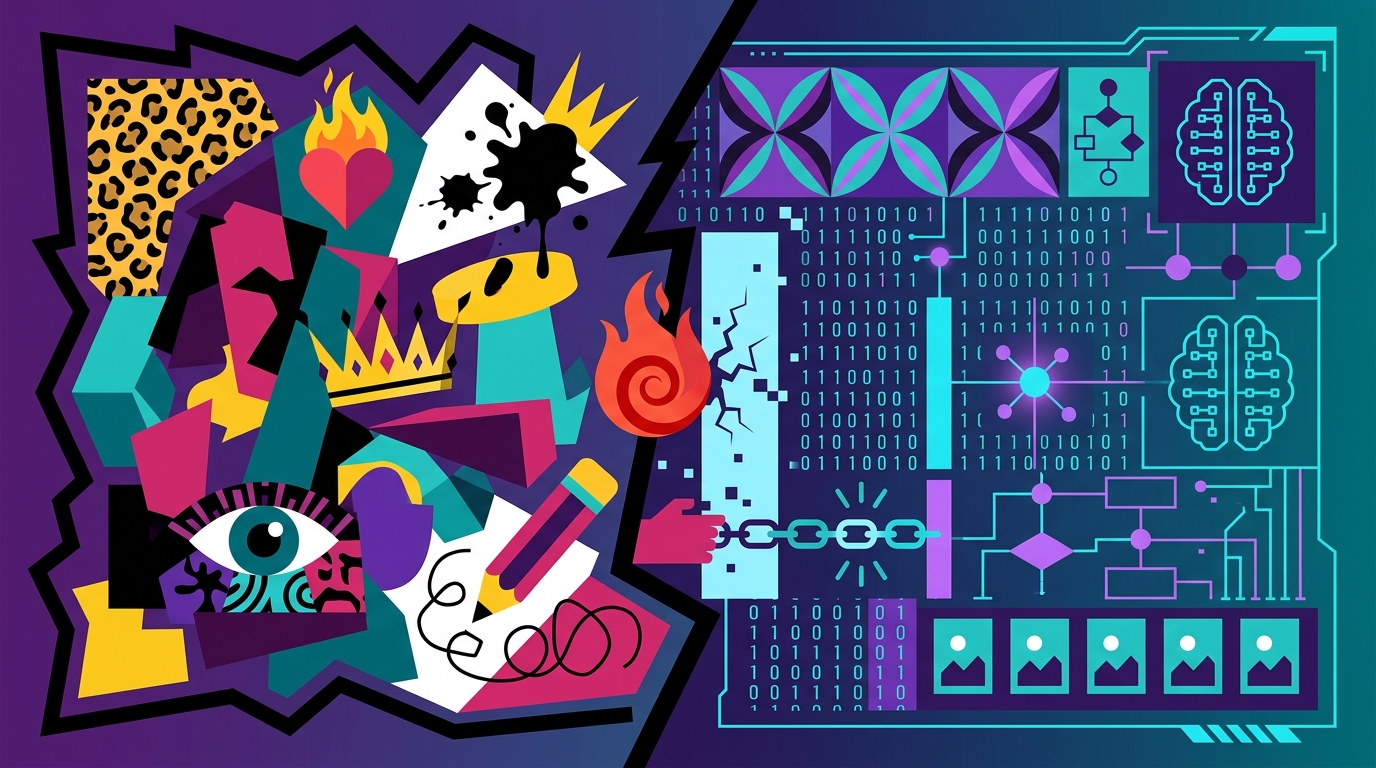
The problem with Generative AI in the fields of literature and cinema is its inherent tendency toward 'safety.' Large Language Models are programmed to avoid extreme offense or the truly bizarre, unless explicitly prompted—and even then, the result often feels like a hollow caricature. Waters argues that art requires human error, obsession, and the creator's personal history. An algorithm cannot have childhood trauma, it cannot feel the thrill of provocation, and it cannot understand why something 'so bad is actually good.'
- AI relies on statistical probabilities; art relies on unpredictable inspiration.
- Waters' creativity stems from marginalization, something AI can only mimic superficially.
- Using AI in writing risks turning culture into an endless loop of recycled existing ideas.
In today's Hollywood, where studios are seeking ways to cut production costs by using AI for scriptwriting, Waters' voice is a vital reminder of the creator's intrinsic value. Art is not a 'product' to be optimized, but a communication between two human souls. When this connection is mediated by a code that lacks consciousness, something fundamental is extinguished.
The Ethical Stakes of Automated Culture
Beyond aesthetics, there is a profound ethical issue. If we allow machines to write our stories, we cede control of our collective narrative to technology corporations. Waters, as an artist who has always stood against the establishment, recognizes that AI is the ultimate tool of the establishment. It is the epitome of efficiency and profit. His refusal to use AI for writing is an act of resistance against the total commodification of human thought.
"I don't want a machine to help me think. I want to think for myself, even if my thoughts are terrible," is the underlying message.
In conclusion, John Waters invites us to consider where we truly want progress. In medicine? Yes. In infrastructure? Certainly. But at the heart of the human experience, where stories, dreams, and provocations are born, the human presence remains irreplaceable. AI may cure the body, but only a human can stir—or redeem—the soul.