In an era where Artificial Intelligence (AI) is touted as the panacea for every social and economic ailment, Cory Doctorow—the author and activist who gifted the world the term "enshittification"—is here to disrupt the narrative. In a comprehensive analysis following his recent interview with The Guardian, Doctorow aims his critiques directly at the Silicon Valley elite, with Elon Musk as a primary target, deconstructing the myth of AI as an inevitable revolution.
According to Doctorow, the current frenzy surrounding AI is nothing more than a "bosses' cruel fantasy." It is not about creating a superior intelligence to liberate humanity, but rather a strategic maneuver aimed at devaluing labor, dismantling unions, and concentrating wealth at levels that, he argues, are impossible to achieve without inflicting widespread harm.
The Myth of Elon Musk and the Collapse of the 'Genius' Archetype
Doctorow does not mince words regarding Elon Musk. For years, Musk was portrayed as a modern-day Tony Stark, a visionary who would take us to Mars and save the planet with electric vehicles. However, the acquisition of Twitter (now X) and its subsequent management have, according to Doctorow, revealed the true nature of this power. "You can't make billions without hurting people," he states pointedly, noting that wealth of this magnitude almost always stems from exploitation, monopolistic behavior, and regulatory arbitrage.
The case of Tesla, for instance, is analyzed not as a triumph of engineering, but as a triumph of subsidies and financial engineering. Doctorow argues that Musk's image as a "genius" was a necessary marketing tool to keep the stock price at astronomical levels, far removed from the economic fundamentals of a traditional automaker. When the mask slipped, what remained was a man using his platform to promote reactionary ideas and attack anyone who dares to challenge his authority.
The AI Bubble and the 'Enshittification' of Everything
Doctorow's central argument regarding AI is that it follows the same trajectory as previous technological promises like crypto or the metaverse. "Enshittification" describes the process where a platform is initially good to its users, then becomes bad for them to benefit business customers, and finally becomes bad for everyone to extract maximum profit for shareholders.
- Value Extraction: AI is trained on stolen content from creators, artists, and writers without compensation or consent.
- Quality Degradation: Large Language Models (LLMs) frequently produce "hallucinations," yet companies push them as human replacements to cut costs regardless of accuracy.
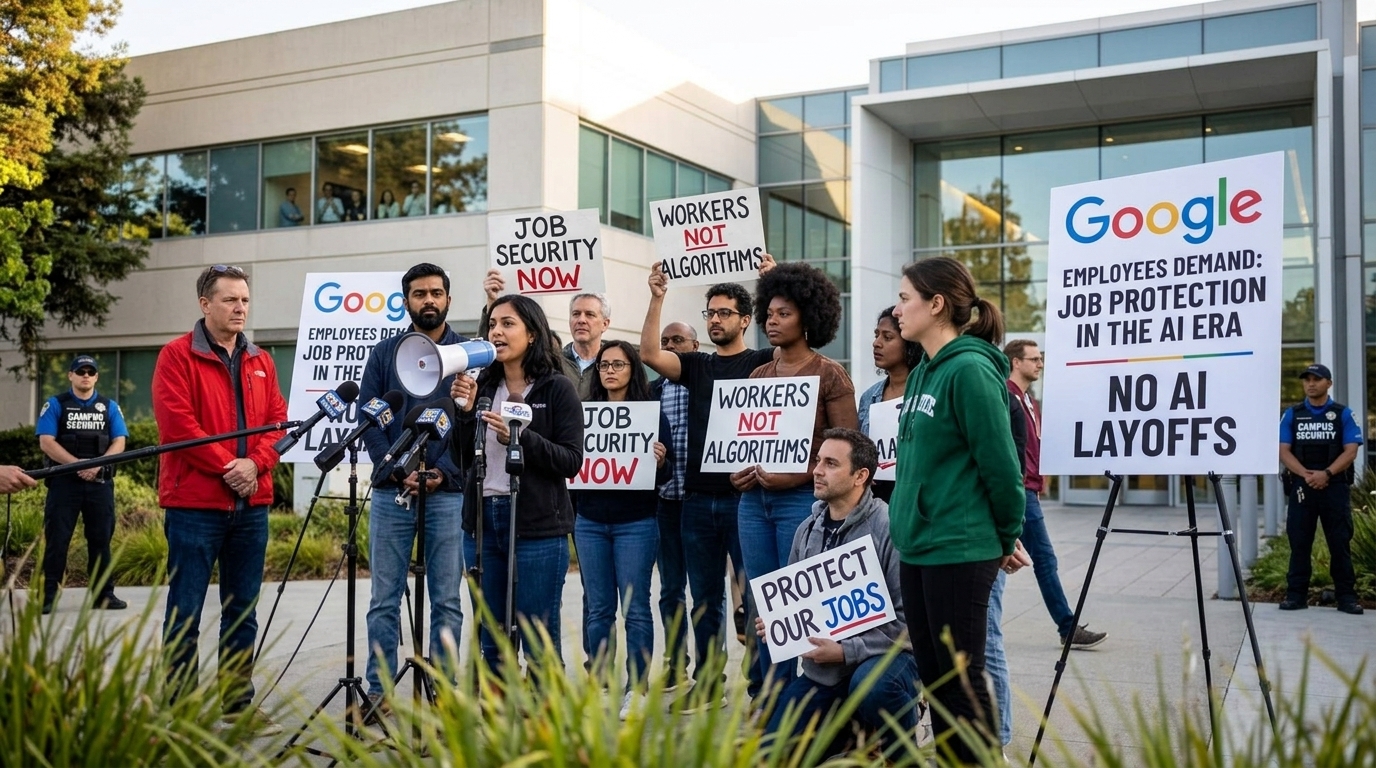
- Labor Discipline: The threat of AI replacement is used to force workers into accepting lower wages and precarious conditions.
Doctorow warns that AI is not "intelligent" in the human sense. It is a sophisticated statistical prediction mechanism that, while impressive, lacks understanding and an ethical compass. Promoting it as "Artificial General Intelligence" (AGI) is, in his view, a way to distract from the real issues: intellectual property theft and the environmental catastrophe caused by massive, energy-hungry data centers.
The Political Economy of Deception
"AI is a technology designed to make the rich richer by convincing the rest of us that we are obsolete."
This sentence encapsulates Doctorow's perspective. He argues we are living in an age of "techno-feudalism," where big tech companies control digital infrastructure much like feudal lords controlled land. Users and small businesses are the "serfs" producing value within these closed ecosystems, while rules are changed arbitrarily to benefit the owner.
The solution, according to Doctorow, is not just "ethical AI," but active antitrust policy and the strengthening of labor rights. We must break the monopolies of Google, Amazon, and Microsoft, and ensure that technology serves human needs rather than the fantasies of billionaires seeking total control. The saga of Elon Musk and the AI bubble serves as a cautionary tale of what happens when technological power operates without democratic oversight.
In conclusion, Doctorow invites us to look beyond the shimmer of algorithms. Technology is a tool, and the question is not what it can do, but who controls it and for what purpose. If the answer is "to make a few people billionaires," then the result will inevitably be the erosion of social cohesion and human dignity.