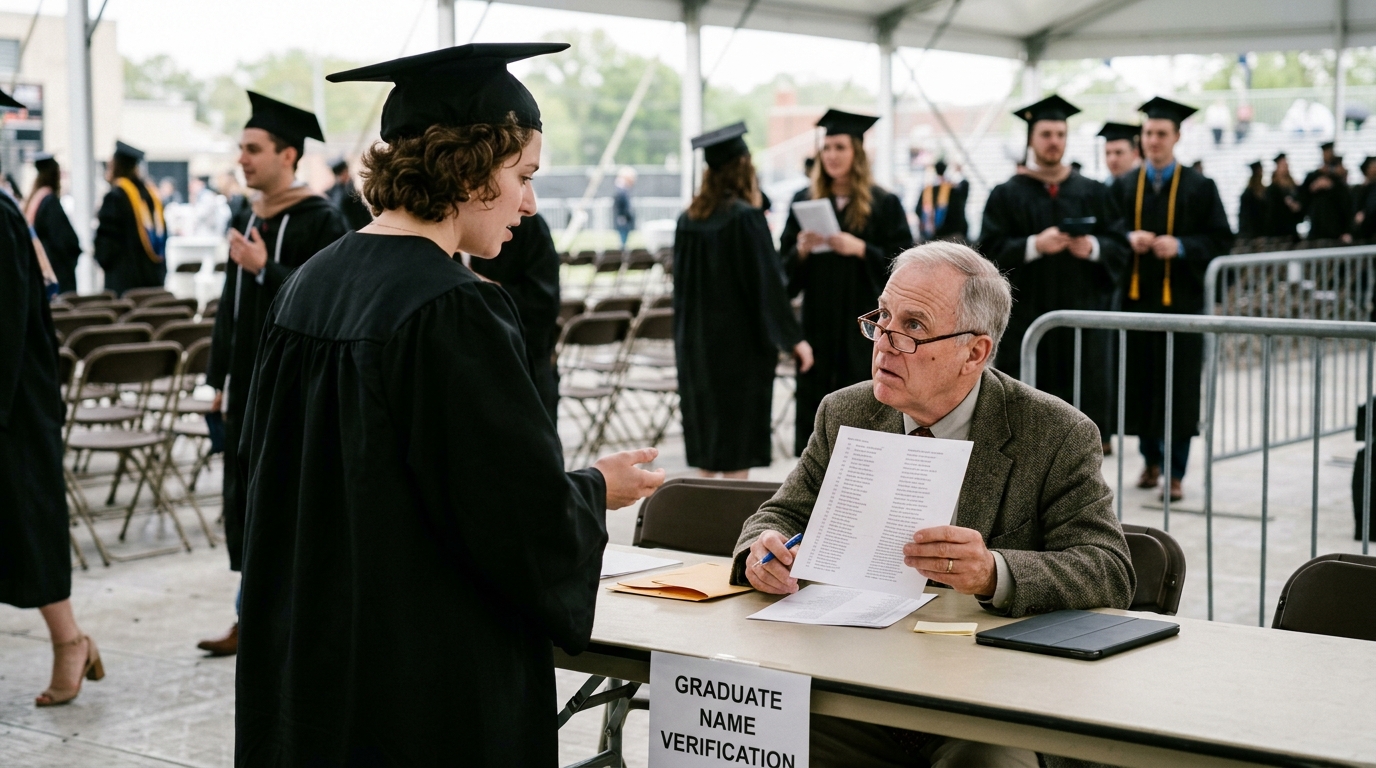
In the heart of Arlington County, Virginia, a seemingly minor administrative decision has sparked a profound debate over the boundaries of technological intervention in our most sacred human milestones. Wakefield High School, celebrated for its rich diversity and vibrant student body, found itself at the epicenter of a national conversation when it announced plans to utilize an Artificial Intelligence (AI) system to pronounce student names during the Class of 2026 graduation ceremony. The swift and fierce backlash from parents, students, and faculty led to an immediate reversal, highlighting that some elements of the human experience simply cannot—and should not—be automated.
Efficiency vs. Empathy: The Graduation Dilemma
The school administration's intent was, at least on paper, pragmatic. In a school representing dozens of nationalities and linguistic backgrounds, ensuring the correct pronunciation of every name is a logistical hurdle. An AI tool promised phonetic perfection, aiming to eliminate those awkward stumbles that occur when a faculty member struggles with a complex or unfamiliar name. However, the community perceived the move not as an upgrade, but as a clinical erasure of a vital human connection. The replacement of a teacher’s voice—someone who has witnessed a student’s growth over four years—with a synthetic, disembodied frequency felt like a betrayal of the ceremony's spirit.
"My name isn't just a string of phonemes for an algorithm to process. It is my family's legacy and my identity," remarked one graduating senior during a school board meeting.
This sentiment captures the ethical weight of the issue. Graduation is not a data-processing event; it is a rite of passage. When one human being speaks the name of another, there is a transfer of respect and acknowledgment. Even in 2026, AI lacks the "weight" of presence. Arlington’s decision to return to human readers underscores a growing realization: efficiency is not the ultimate goal of our social structures.
Technical Flaws and Cultural Sensitivity
Beyond the emotional resonance, significant technical concerns fueled the opposition. AI systems, despite the leaps made in the mid-2020s, still carry inherent biases rooted in their training data. Many phonetic AI models are trained predominantly on Western or Anglo-centric datasets, leading them to mispronounce or "Anglicize" names from African, Asian, or Middle Eastern origins. At Wakefield, a school that prides itself on its global representation, the risk of an AI mispronouncing a minority student's name was viewed as a form of systemic microaggression.
- Algorithmic bias in phonetic synthesis and voice modulation.
- The inability of AI to handle real-time corrections or emotional nuance.
- The potential for digital alienation within the school community.
The implementation of technology in such contexts is often viewed as "lazy governance." Instead of investing the time for educators to learn the names of their students, the administration sought a "black box" solution. The reversal is a victory for cultural sensitivity, affirming that the effort a human takes to learn something difficult is, in itself, an act of care and validation.
The Future of AI in Education: Where Do We Draw the Line?
The Arlington incident is not an isolated case. As we navigate 2026, educational institutions worldwide are experimenting with AI for everything from essay grading and exam proctoring to administrative automation. The core question remains: Which functions of education are exclusively human? Teaching, mentorship, and the public celebration of achievement form the bedrock of the pedagogical relationship. When these are automated, we risk turning schools into credentialing factories rather than communities of learning.
Wakefield High School’s retreat provides an important precedent. It demonstrates that civil society has the power to set boundaries on the uncritical adoption of technology. Technology should serve humanity and enhance our capabilities, not replace us in moments where human presence is the defining characteristic. At the June ceremony, names will be read by human voices—perhaps with slight imperfections, but with the warmth and sincerity that the occasion demands.
Concluding Thoughts on a Digital Era
Ultimately, the lesson from Arlington is clear: Artificial Intelligence is a tool, not a substitute for social cohesion. As we move deeper into the age of automation, we must be vigilant not to sacrifice dignity at the altar of convenience. The correct pronunciation of a name by a teacher is a promise that the student has been "seen" and "recognized" as a unique individual. That is a gift that no algorithm, regardless of its processing power, can ever truly bestow.